Pernah Berpetualang di Indonesia & Bapak Evolusi Yang Terlupakan | Alfred Russel Wallace
Summary
TLDRThe video chronicles the remarkable life and perseverance of Alfred Russel Wallace, a pioneering naturalist who explored the Amazon and the Indonesian archipelago. Despite losing years of painstakingly collected specimens in a ship fire, Wallace continued his scientific pursuits, discovering new species and observing patterns in biodiversity. His meticulous observations in the Malay Archipelago led to the groundbreaking concept of the 'Wallace Line,' highlighting the distinct separation between Asian and Australasian fauna. Though overshadowed by Charles Darwin in the publication of natural selection, Wallace's contributions laid the foundation for modern biogeography, earning him recognition as one of the most influential scientists in evolutionary biology.
Takeaways
- 😀 Alfred Russel Wallace was born on January 8, 1823, in a modest family in Wales, which influenced his early education and financial situation.
- 😀 Wallace left formal schooling at age 14 and apprenticed in architecture and land surveying, which fueled his interest in nature and the outdoors.
- 😀 Self-taught in natural science, geography, and exploration, Wallace was inspired by works like Charles Lyell's 'Principles of Geology.'
- 😀 Wallace met fellow naturalist Henry Walter Bates in the 1840s, and they embarked on a joint expedition to the Amazon to collect specimens.
- 😀 From 1848 to 1852, Wallace explored the Amazon extensively, documenting species, ecosystems, and indigenous cultures, but lost most of his collection in a ship fire on the Atlantic Ocean.
- 😀 Despite losing his valuable specimens and notes, Wallace persevered and later conducted an eight-year expedition across the Malay Archipelago from 1854 to 1862.
- 😀 In Southeast Asia, Wallace collected over 125,000 specimens, discovering many new species and noting patterns in species distribution that contributed to evolutionary theory.
- 😀 While in Ternate in 1858, Wallace wrote an essay on natural selection and sent it to Charles Darwin, prompting the joint presentation of their ideas on evolution to the Linnean Society of London.
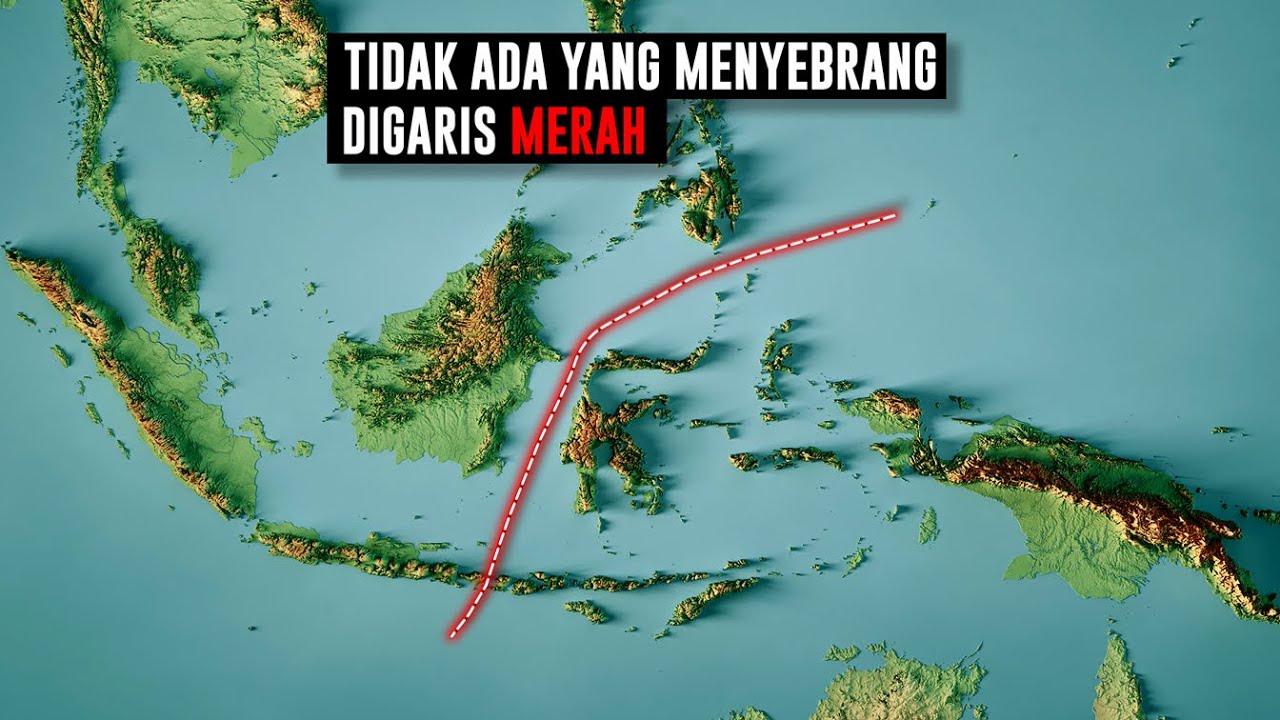
- 😀 Wallace identified a biogeographical boundary between Asian and Australasian fauna, later named 'Wallace's Line' by Thomas Henry Huxley, marking a major contribution to biogeography.
- 😀 Known as the 'Father of Biogeography,' Wallace's legacy lives on through his scientific discoveries, species named in his honor, and his contributions to evolutionary theory despite financial and personal hardships.
Q & A
Who was Alfred Russel Wallace and what challenges did he face in his early life?
-Alfred Russel Wallace was a 19th-century naturalist and explorer, born on January 8, 1823, in Usk, Monmouthshire, Wales. He faced financial difficulties in his family, which limited his formal education to age 14 and forced him to start working early, shaping his self-taught approach to natural science.
What inspired Wallace to embark on his expedition to the Amazon?
-Wallace was inspired by the works of previous naturalists, including Charles Darwin's journals and Alexander von Humboldt's narratives, as well as William Henry Edwards. These works encouraged him to explore tropical regions and collect specimens extensively, alongside his colleague Henry Walter Bates.
What significant setback did Wallace experience during his return from the Amazon?
-In 1852, while returning to England, the ship Wallace was on caught fire in the middle of the Atlantic Ocean, destroying nearly all of his collected specimens, notes, illustrations, and journals. He survived, but the loss was both scientifically and financially devastating.
How did Wallace recover from the loss of his Amazon collection?
-Although the loss was severe, Wallace's specimens were insured, allowing him to receive 200 pounds sterling to survive for a few months. He did not give up and soon planned another, more extensive expedition to the poorly explored Malay Archipelago.
What were the key achievements of Wallace's expedition in the Malay Archipelago?
-During his 8-year expedition (1854–1862), Wallace collected over 125,000 specimens, including more than 1,000 new species. He studied species distribution and observed patterns that led to insights about evolution and biogeography, including the phenomenon later known as 'Wallace's Line.'
What is Wallace's Line and why is it important?
-Wallace's Line is an imaginary boundary in the Malay Archipelago separating Asian and Australasian fauna. Wallace observed distinct differences in animal species between islands like Bali and Lombok, which contributed to modern biogeography and our understanding of geographic barriers in evolution.
How did Wallace contribute to the theory of natural selection?
-While in Ternate in 1858, Wallace developed ideas about how species evolve and compete for resources. He wrote an essay on natural selection and sent it to Charles Darwin, who was already working on similar ideas. This led to a joint presentation of their findings at the Linnean Society of London.
How did Wallace’s relationship with Darwin influence his career?
-Wallace maintained a respectful and supportive relationship with Darwin. Darwin acknowledged Wallace's contributions and even advocated for financial support for Wallace later in life. Wallace, in turn, drew inspiration from Darwin’s works and remained collaborative rather than competitive.
What challenges did Wallace face during his travels in the Malay Archipelago?
-Wallace faced long, difficult journeys across multiple islands, exposure to diseases such as malaria, and logistical challenges in collecting and preserving specimens. Despite these hardships, he meticulously documented both biological and cultural observations.
How is Alfred Russel Wallace remembered today?
-Wallace is considered the father of biogeography. Many species, including the bird-of-paradise Semioptera wallacii, are named after him. His dedication, resilience, and discoveries continue to influence evolutionary biology and the study of species distribution.
Why was Wallace’s work initially less recognized than Darwin’s?
-Unlike Darwin, who was part of the established scientific elite, Wallace came from a modest background and lacked institutional connections. Although he independently formulated the theory of natural selection, Darwin's prior reputation and timely publication of 'On the Origin of Species' led to greater immediate recognition for Darwin.
What motivated Wallace to study the differences in fauna between islands?
-Wallace noticed abrupt differences in species between closely situated islands, such as Bali and Lombok. This observation sparked his curiosity about geographic barriers and how they influence evolution, ultimately leading to his hypothesis of Wallace's Line.
Outlines

This section is available to paid users only. Please upgrade to access this part.
Upgrade NowMindmap

This section is available to paid users only. Please upgrade to access this part.
Upgrade NowKeywords

This section is available to paid users only. Please upgrade to access this part.
Upgrade NowHighlights

This section is available to paid users only. Please upgrade to access this part.
Upgrade NowTranscripts

This section is available to paid users only. Please upgrade to access this part.
Upgrade NowBrowse More Related Video
GARIS PENGHALANG TAK TERLIHAT YANG MEMISAHKAN DUA DUNIA

Tidak Ada Satu Pun Pribumi di Indonesia, Semua Pendatang

Teorias evolutivas - Biologia - Ensino Médio

The Invisible Barrier Keeping Two Worlds Apart

Lesson 9: Biodiversity and Evolution
Darwin and Natural Selection: Crash Course History of Science #22
5.0 / 5 (0 votes)
