Elliott Wave Part 2 || Aturan Counting
Summary
TLDRThis video delves into advanced web analysis using Fibonacci patterns and wave principles. It explores key concepts like impulsive and corrective movements, diagonal formations, and complex patterns such as double and triple corrections. The speaker also discusses practical methods for analyzing web patterns with Fibonacci channels and other tools, emphasizing the importance of practice and observation for understanding market trends. With clear examples, the content aims to guide viewers in mastering wave analysis and improving their chart interpretation skills.
Takeaways
- 😀 Understanding web patterns is crucial for technical analysis; the video covers impulsive, corrective, and complex web structures.
- 😀 Motif webs are categorized into types like Impulsive, Impulsive with Extensions, and Diagonal, each with specific rules regarding length and placement.
- 😀 Fibonacci ratios play a key role in identifying patterns, such as 0.38, 0.5, 1.618, which help validate web formations and corrections.
- 😀 Leading Diagonals and Ending Diagonals occur on larger scales, and their identification relies on pattern length and sequence rules.
- 😀 Volume analysis is essential: impulsive waves often show higher volume, while corrective waves typically display lower volume, helping distinguish wave types.
- 😀 Complex patterns like ABC, triangles, flats, double and triple structures require careful observation of sequence, ratios, and movement direction.
- 😀 Symmetrical, ascending, and descending triangles are challenging to predict; observing the end of impulsive waves and the first corrective move can indicate potential direction.
- 😀 Double tree and triple three patterns involve repeated smaller structures (3-3-3 sequences), and should be analyzed cautiously to avoid misinterpretation.
- 😀 Using channels, Fibonacci channels, and support/resistance lines can simplify the identification of complex sequences and reduce miscounting errors.
- 😀 Practice and experience are critical; while the rules provide structure, hands-on observation is necessary to accurately identify and anticipate web patterns in real scenarios.
Q & A
What is the importance of understanding web patterns in technical analysis?
-Understanding web patterns is crucial for identifying market trends and making informed trading decisions. By recognizing patterns like impulsive, corrective, and diagonal waves, traders can predict potential price movements and optimize entry and exit points.
What are the key rules for an impulsive wave pattern?
-The key rules for an impulsive wave pattern are: Wave 3 should not be the shortest, Wave 4 should never overlap Wave 1, and Wave 2 should not dip below Wave 0. These rules help distinguish impulsive waves from corrective ones, which usually follow a different structure.
How can Fibonacci retracements be applied in web pattern analysis?
-Fibonacci retracements are used to identify potential support and resistance levels within corrective waves. Common Fibonacci levels like 0.38, 0.50, and 0.61 are used to estimate where price reversals might occur during a correction within an impulsive trend.
What differentiates a leading diagonal from an ending diagonal in web analysis?
-A leading diagonal forms at the start of a trend, while an ending diagonal typically occurs at the end. In both cases, the key rule is that Wave 3 should not be the shortest wave, and Wave 4 may overlap with Wave 1 in the case of a diagonal pattern.
What is the difference between impulsive and corrective web patterns?
-Impulsive waves represent strong, directional market movements, and follow specific rules such as Wave 3 being longer than Wave 1. Corrective waves, on the other hand, are generally retracements of impulsive moves, and they are typically shorter, weaker, and follow more fluid patterns like zigzags or flats.
Why is identifying a complex correction important in market analysis?
-Identifying complex corrections like double or triple combinations (w-x-y or w-x-y-z) is important because these patterns are more intricate and can signal extended periods of market indecision or consolidation. Recognizing them early helps traders avoid false signals and better understand long-term market behavior.
How do you distinguish between a regular flat and an expanded flat correction?
-A regular flat correction typically retraces between 0.50 and 0.61 of the previous impulsive wave, while an expanded flat correction goes beyond 1.618, signaling a stronger retracement. The difference is in the length of the correction, with an expanded flat being more significant.
What role does volume play in web pattern analysis?
-Volume is a key indicator of market strength during web pattern analysis. For example, in impulsive waves, volume tends to increase significantly, while in corrective waves, volume is typically lower. Understanding volume patterns helps confirm the validity of the identified wave structure.
What are the key indicators to identify when a web pattern might be ending?
-Key indicators that a web pattern may be ending include a decrease in volume during the final wave, signs of divergence with oscillators (like in Wave 5), and price action that indicates the trend is losing momentum. For example, in an impulsive wave, if the price reaches a point where Wave 5 shows a lower high while the price shows a higher high, this could signal the end of the pattern.
How do you apply Fibonacci extensions to web patterns?
-Fibonacci extensions are used to estimate the potential length of the next wave in an impulsive pattern. By measuring the distance of the first wave and applying the Fibonacci extension ratios (such as 1.618, 2.618), traders can predict where the next major price level might occur after completing the first few waves.
Outlines

This section is available to paid users only. Please upgrade to access this part.
Upgrade NowMindmap

This section is available to paid users only. Please upgrade to access this part.
Upgrade NowKeywords

This section is available to paid users only. Please upgrade to access this part.
Upgrade NowHighlights

This section is available to paid users only. Please upgrade to access this part.
Upgrade NowTranscripts

This section is available to paid users only. Please upgrade to access this part.
Upgrade NowBrowse More Related Video
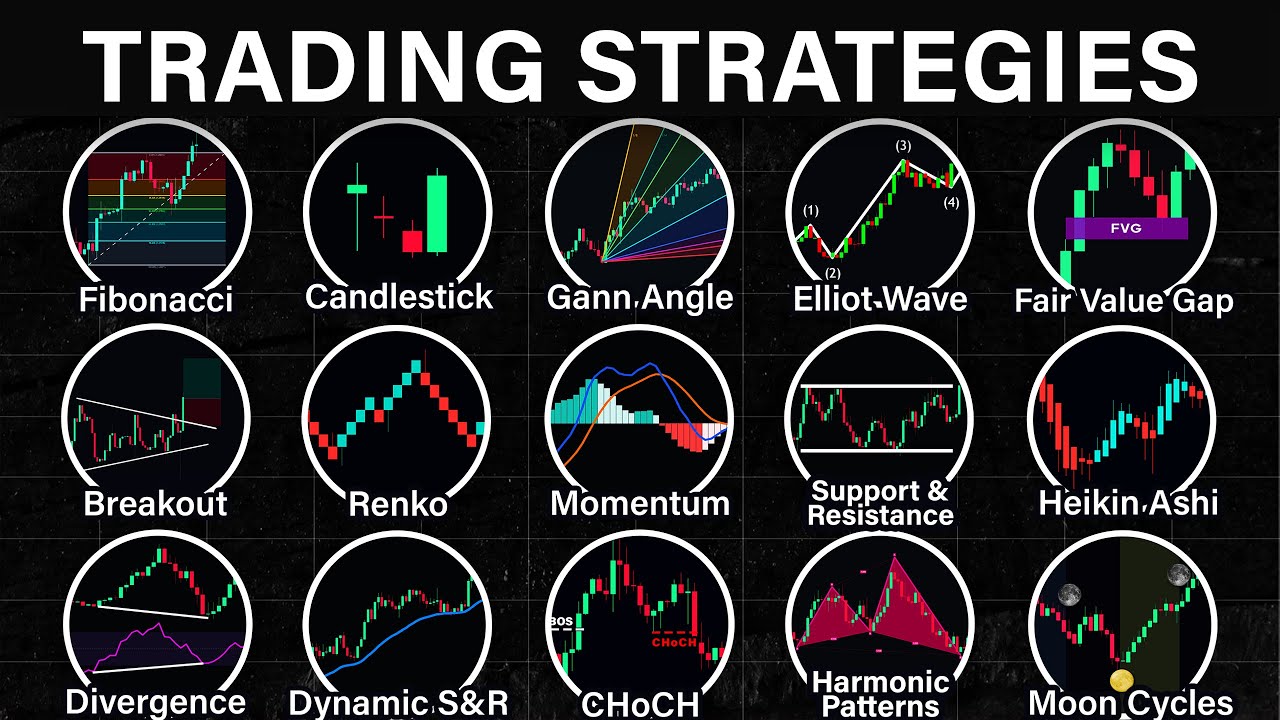
Every Trading Strategy Explained in 12 Minutes

The Simplest Way to Use & Trade Elliott Waves (Changes Everything...)

Padrões de Continuidade

My Incredibly EASY Trading Strategy Made Me $31k This Month

Elliott Waves & Fibonacci Retracement / Extension - Ep. 38 | Trading MasterClass 2.0

2022 ICT Mentorship Episode 12
5.0 / 5 (0 votes)
