The Worst is Almost Over
Summary
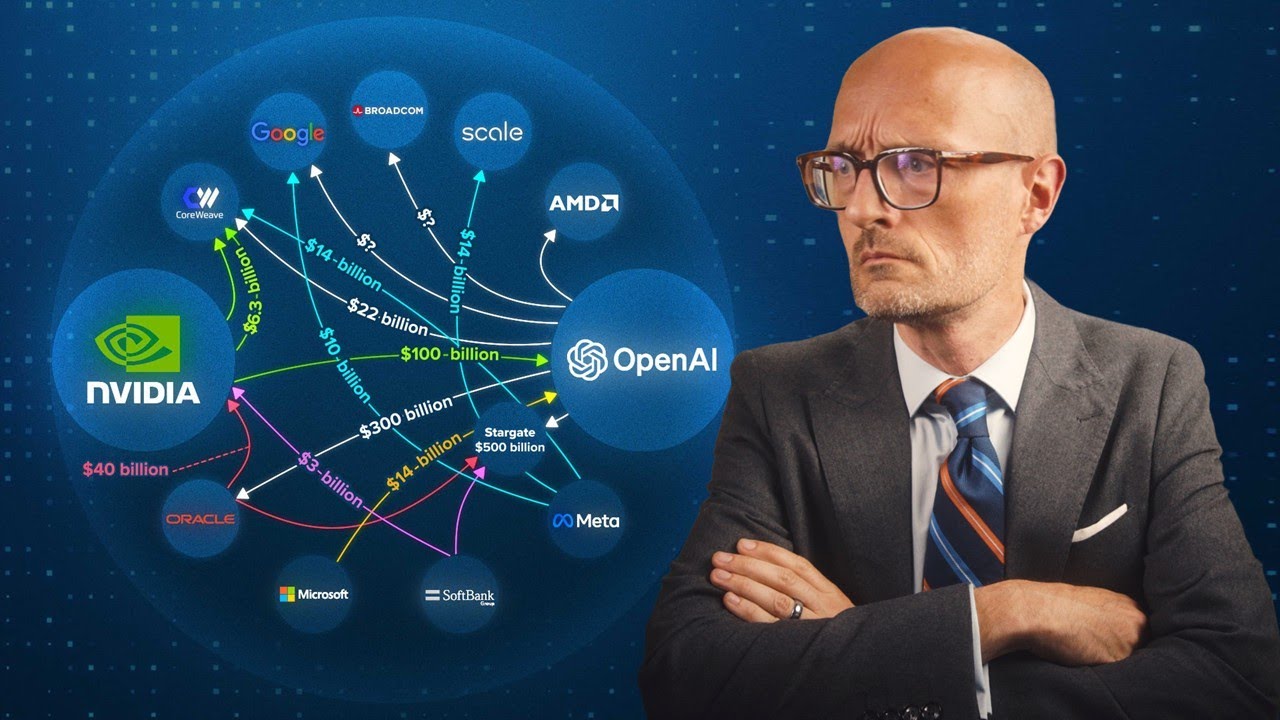
TLDRThe video explores the growing concerns of an AI investment bubble, highlighting the disparity between sky-high valuations and actual revenue and profitability, especially for companies like OpenAI. Drawing parallels with historical financial bubbles like tulip mania, it examines operational challenges such as infrastructure costs, energy consumption, and enterprise adoption hurdles. While giants like Google and Meta maintain stability due to diversified revenue, smaller players face corrections. The discussion underscores that AI as a technology will persist, but the hype-driven market may cool, potentially benefiting consumers and bringing investment back to more rational levels.
Takeaways
- 😀 AI is here to stay, but the financial investment fueling its growth may be unsustainable and could destabilize the economy.
- 😀 Prices for DDR5 memory, which is crucial for AI infrastructure, have started to drop, signaling potential issues in the AI investment bubble.
- 😀 Sam Altman, CEO of OpenAI, acknowledged that AI investments might be irrational and that someone will get burned when the bubble bursts.
- 😀 OpenAI recently made an unexpected move when they pulled back on plans to buy 40% of global DRAM production, which hurt their credibility.
- 😀 A bubble, as defined by Investopedia, happens when asset prices rise far above their real value due to irrational buying, leading to an eventual crash.
- 😀 AI companies like OpenAI are being valued at astronomical numbers (e.g., $852 billion for OpenAI), but unlike traditional tech giants, they lack the same level of profitability.
- 😀 OpenAI has impressive revenue growth but is still burning billions, whereas companies like Samsung generate substantial profits and have diversified income streams.
- 😀 OpenAI plans to use consumer AI subscriptions to generate revenue, but with 900 million users already, it’s uncertain how much more growth can come from this segment.
- 😀 Competitors like Anthropic, Google, and Meta are making moves that could influence AI's future, but OpenAI remains the key proxy for the broader AI market.
- 😀 OpenAI's $600 billion spending target by 2030 may be too ambitious, especially given rising energy costs and unpredictable global events, which could hinder further AI growth.
Q & A
What is the main argument presented in the video regarding AI investments?
-The video argues that while AI is here to stay, the massive investments in AI infrastructure and companies may be unsustainable, with some aspects resembling a financial bubble that could eventually correct, impacting companies and investors.
How does the video define a financial bubble?
-A financial bubble is defined as an asset's price rising far above its real value because many people rush to buy it, hoping to sell at a higher price, illustrated by the historical example of tulip mania in Holland.
Which companies are cited as having potentially inflated AI valuations?
-OpenAI ($852 billion), Anthropic ($380 billion), and XAI ($200+ billion) are highlighted as companies with valuations that may not be fully justified by their current revenue and profits.
What examples indicate OpenAI might be struggling financially?
-OpenAI slashed their spending expectations to $600 billion by 2030, canceled costly projects like the Sora 2 video generation app, and their revenue, while high, still comes with significant operating losses.
Why does the video argue OpenAI might not dominate AI infrastructure long-term?
-OpenAI's approach is likened to a Dropbox model—they may survive due to ubiquity and brand recognition, but converting free users to paying customers is challenging, and other companies like Google and Meta have diversified revenue streams that make them more resilient.
What role does DDR5 memory pricing play in the context of AI investment?
-Falling DDR5 prices indicate a potential cooling in the AI hardware market, suggesting that the demand-driven price surges are leveling off, which may relieve some pressure on companies investing heavily in infrastructure.
How does enterprise adoption of AI factor into the video’s analysis?
-Enterprise adoption is seen as uneven; while AI has potential in internal tools and customer service, many solutions are not yet fully reliable, and outsourcing to companies like OpenAI may not be more efficient than using local open-source models.
Which companies are described as better positioned to weather an AI bubble?
-Google and Meta are described as more resilient because their valuations are based on broader product usefulness and diversified revenue streams, rather than solely on AI hype and infrastructure speculation.
What are the main costs for AI companies outside of hardware?
-Energy costs are highlighted as a major expense, which have increased significantly in recent years and contributed to the financial strain on AI companies, leading to cancellations of some expensive AI projects.
What insight does the video offer about the future of AI and consumer benefits?
-The video suggests that the market correction may eventually benefit consumers by slowing reckless spending, making AI infrastructure and services more reasonably priced and focused on genuine revenue-generating applications.
What does the video suggest about OpenAI's 40% DRAM decommit incident?
-The incident demonstrates the volatility and uncertainty in AI investment planning, highlighting that assumptions about future revenue can be fragile, which in turn could lead to a more rational allocation of AI infrastructure investments.
How does the video recommend viewers think about AI infrastructure investments?
-Viewers are encouraged to recognize the risks of overinvestment and hype, understand the difference between revenue and profit, and consider that AI will persist, but infrastructure and market strategies must be carefully managed for sustainable growth.
Outlines

This section is available to paid users only. Please upgrade to access this part.
Upgrade NowMindmap

This section is available to paid users only. Please upgrade to access this part.
Upgrade NowKeywords

This section is available to paid users only. Please upgrade to access this part.
Upgrade NowHighlights

This section is available to paid users only. Please upgrade to access this part.
Upgrade NowTranscripts

This section is available to paid users only. Please upgrade to access this part.
Upgrade NowBrowse More Related Video


5.0 / 5 (0 votes)
