Pidato Pengenalan Pancasila OLeh Bung Karno I Lingkar Jatim
Summary
TLDRThe video features President Sukarno explaining the foundational principles of Indonesia’s Pancasila, emphasizing its role as the enduring basis of the nation. He highlights that true independence is not merely political freedom, but a pathway to a strong, healthy, and prosperous society. Sukarno stresses that Indonesia’s democracy should prioritize consultation and social welfare over Western-style models, and that the country must serve all citizens, not just the wealthy or powerful. He also underlines religious tolerance, advocating freedom for every individual to practice their faith respectfully, reflecting Pancasila’s values of unity, justice, and inclusivity.
Takeaways
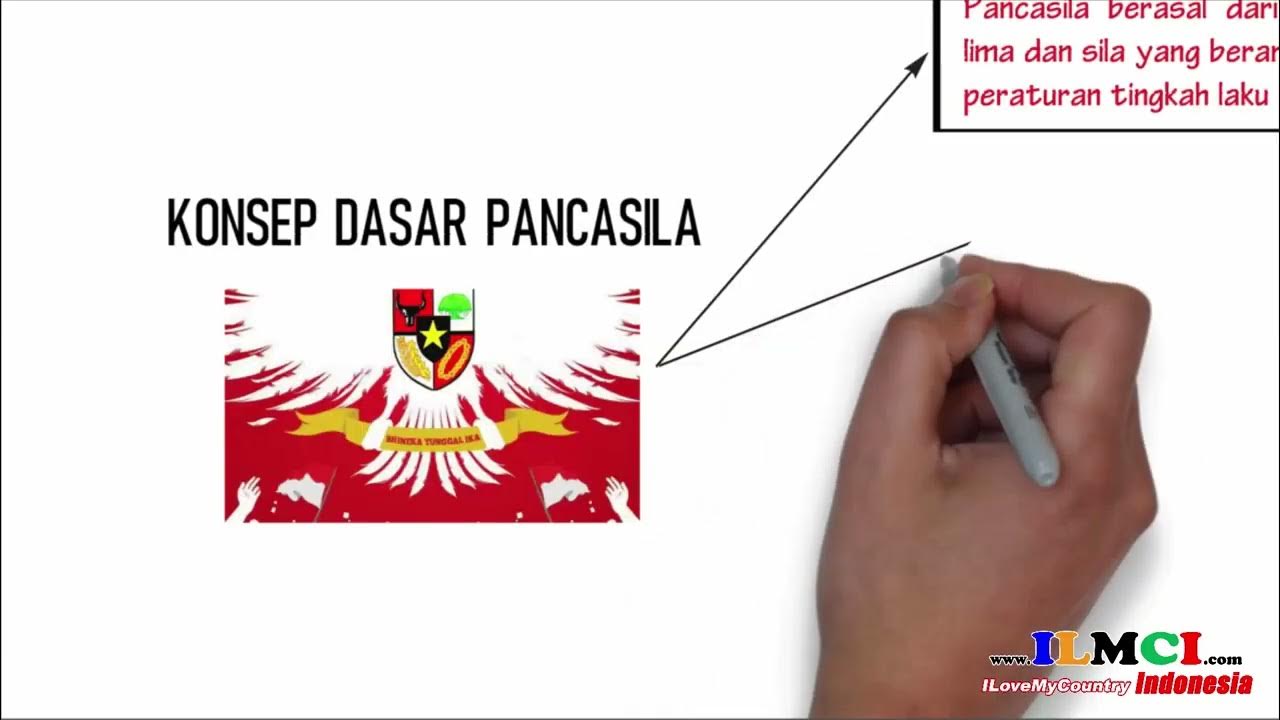
- 😀 Pancasila is the foundational philosophy of Indonesia, with 'sila' meaning principle or basis.
- 😀 President Soekarno played a crucial role in introducing Pancasila to the world through his speeches.
- 😀 True independence is not only political but also involves building a strong, prosperous society.
- 😀 Independence must benefit all people, not just a single individual, rich class, or specific group.
- 😀 Indonesia's independence should be based on unity and the welfare of all its citizens.
- 😀 National strength comes from a system of representation and deliberation (permusyawarat perwakilan).
- 😀 Democracy in Indonesia should focus on social welfare rather than simply adopting Western models.
- 😀 Religious freedom is a core value; every citizen should practice their faith respectfully and freely.
- 😀 Pancasila emphasizes a balance of principles: nationalism, internationalism, deliberation, social welfare, and belief in God.
- 😀 The ultimate goal of these principles is to create a strong, healthy, and everlasting Indonesian nation.
Q & A
What does the term 'Pancasila' mean according to the transcript?
-According to the transcript, 'Pancasila' means 'five principles' where 'sila' refers to a basic principle or foundation. It is the philosophical foundation on which the Indonesian state is built.
What role did President Sukarno play in introducing Pancasila internationally?
-President Sukarno introduced Pancasila to the international community through his speeches, emphasizing Indonesia's independence, unity, and the principles of Pancasila as a model for nation-building.
How does the transcript describe the purpose of Indonesia's independence?
-Indonesia's independence is meant for the welfare of all its citizens, not for a single person, wealthy class, or religious group. The aim is to create a just, strong, and united society.
What is meant by the 'golden bridge' mentioned by Sukarno in the transcript?
-The 'golden bridge' metaphor represents political independence as a bridge to achieve a fully developed, strong, and healthy society in Indonesia. It emphasizes that independence alone is not enough without social and economic development.
According to the transcript, what is the importance of democracy in Indonesia?
-Democracy in Indonesia should be based on deliberation and representation ('permusyawaratan perwakilan'), rather than copying Western democracy. It aims to bring social welfare and ensure that all citizens have sufficient resources and a dignified life.
How does the transcript address religious tolerance in Indonesia?
-The transcript emphasizes that every citizen should be able to worship God according to their own religion, whether Islam, Christianity, Buddhism, or others, with mutual respect and without religious egoism.
What distinguishes Indonesia's Pancasila-based democracy from Western democracy according to Sukarno?
-Indonesia’s democracy emphasizes collective deliberation, social welfare, and economic equality rather than focusing solely on political competition or individual freedoms, which are often the focus in Western democracy.
Why does Sukarno compare Indonesia's independence with other countries in the transcript?
-Sukarno compares Indonesia’s independence with other nations to highlight that while many countries achieved political independence, what truly matters is the strength, unity, and welfare of their society, which Indonesia aims to achieve through Pancasila.
What does Sukarno mean when he says Indonesia should be 'all for all'?
-By 'all for all,' Sukarno means that the Indonesian state should serve the interests of all citizens equally, not just a privileged class or elite, ensuring inclusivity, fairness, and shared prosperity.
What are the key principles outlined in Pancasila as described in the transcript?
-The key principles of Pancasila are: belief in God, just and civilized humanity, Indonesian unity, democracy guided by deliberation and representation, and social justice for all Indonesians. These principles form the foundation for the nation’s governance and moral framework.
Outlines

This section is available to paid users only. Please upgrade to access this part.
Upgrade NowMindmap

This section is available to paid users only. Please upgrade to access this part.
Upgrade NowKeywords

This section is available to paid users only. Please upgrade to access this part.
Upgrade NowHighlights

This section is available to paid users only. Please upgrade to access this part.
Upgrade NowTranscripts

This section is available to paid users only. Please upgrade to access this part.
Upgrade Now




5.0 / 5 (0 votes)
