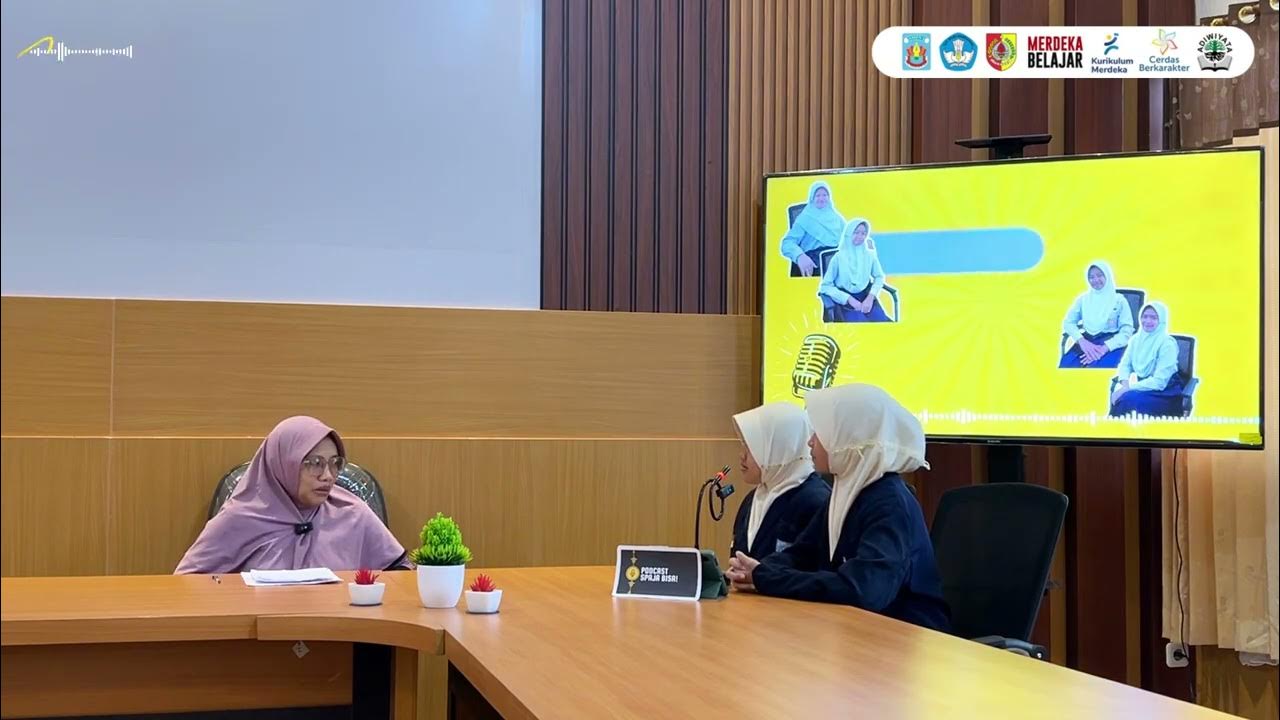
KURMA (Kuliah Ramadhan) Niat dalam Ajaran Islam bersama Marfungah, S.Pd.I
Summary
TLDRIn this insightful episode of *Kurma Kuliah Ramadan*, host Muhammad Yusin Pratista and guest Ibu Marfungah, an Islamic Studies teacher, discuss the concept of niat (intention) in Islam. They explore how niat is crucial in both worship and everyday activities, emphasizing that actions are judged by their intentions. The discussion highlights the importance of sincerity in one's actions, distinguishing between good and bad niat, and how it can transform even simple tasks into acts of worship. Ibu Marfungah provides practical advice on cultivating a sincere niat for spiritual and personal growth.
Takeaways
- 😀 Niat (intention) in Islam is the inner purpose or desire to perform an action for the sake of Allah, and it’s essential for every deed.
- 😀 The famous hadith *'Innamal a'malu binniyat'* ('Actions are judged by intentions') emphasizes that the value of an action depends on its niat.
- 😀 Having a good niat in daily activities like studying or working can transform them into acts of worship if done with sincerity for Allah's sake.
- 😀 If someone performs an action with a bad niat, such as to seek fame or approval, it negates the spiritual benefits of that act.
- 😀 Intentions should be aligned with seeking the pleasure of Allah, and this principle applies to both religious duties and everyday tasks.
- 😀 Sincerity (ikhlas) is crucial when it comes to niat. Even small acts, like giving charity, hold value when done purely for the sake of Allah.
- 😀 When we act with the intention to learn and grow, such as attending school or helping others, it becomes a way of seeking Allah's rewards.
- 😀 A bad niat, such as wanting to steal or deceive, can be avoided by consciously choosing the right intentions before taking action.
- 😀 Niat should be cultivated in the heart, and even if it’s not verbally expressed, a sincere intention is what matters most in Islam.
- 😀 Practicing a positive niat in all actions is an ongoing process that strengthens a Muslim's faith and ensures that deeds are truly for Allah’s pleasure.
- 😀 Developing and refining niat can help Muslims stay focused on their goals and avoid distractions that take them away from their spiritual purpose.
Q & A
What is the importance of niat (intention) in Islam?
-In Islam, niat refers to the intention or purpose in the heart before performing any action. It is essential because actions are judged based on the niat behind them, and it aligns the heart towards seeking Allah's pleasure. A good niat ensures that the action is performed for the sake of Allah, leading to spiritual rewards.
What does the hadith 'innamal a'malu bin niat' mean?
-'Innamal a'malu bin niat' translates to 'Actions are judged by intentions.' This hadith emphasizes the significance of niat in determining whether an action is good or bad, regardless of the outward appearance. It stresses that the intention behind an act is what matters most in Islam.
Why is niat considered necessary before performing daily activities in Islam?
-Niat is considered necessary before any action because it directs the heart and mind toward the right purpose. Whether it’s praying, eating, or studying, having the right niat transforms ordinary activities into acts of worship, leading to spiritual rewards.
Can everyday activities like studying and helping others become acts of worship?
-Yes, everyday activities can become acts of worship if they are done with the right niat, which is to seek the pleasure of Allah. For example, studying with the intention of gaining beneficial knowledge or helping others for the sake of Allah can be considered acts of worship.
What distinguishes a good niat from a bad niat?
-A good niat is one that is sincere and focused on pleasing Allah, while a bad niat may be driven by personal gain, vanity, or wrong intentions. For example, studying for the sake of gaining knowledge is a good niat, while studying only for personal recognition or rewards is a bad niat.
How can one differentiate between sincere intention (ikhlas) and actions done for show (riya)?
-Sincere intention (ikhlas) is when a person does an act solely for the pleasure of Allah, regardless of external recognition. Riya, on the other hand, is when someone performs an act to show off or gain praise from others. One can differentiate by introspecting whether the action is done to please Allah or to seek approval from people.
Does niat need to be verbally stated, or is it enough to have it in the heart?
-Niat can be in the heart, and there is no strict requirement to verbally state it. However, verbalizing the niat can help focus and remind oneself of the intention. In essence, what matters is the sincerity of the intention, whether spoken or internalized.
Is a person still considered sinful if they have a bad niat but don't act on it?
-In Islam, a person is not considered sinful for having a bad niat if they do not act on it. However, if the bad intention leads to harmful actions, then the person may be held accountable. Islam emphasizes purifying one's heart and intention to avoid the temptation to act on bad thoughts.
What is the role of niat in the process of self-improvement and personal growth?
-Niat plays a crucial role in self-improvement by ensuring that all actions are performed with the right purpose. Whether it’s seeking knowledge, improving oneself, or interacting with others, a sincere niat helps maintain focus and encourages continuous growth with the intention of seeking Allah's pleasure.
How can we train ourselves to have the right niat in everything we do?
-Training oneself to have the right niat starts with being mindful of the purpose behind each action. This involves constant reflection, renewing one's intention before starting any task, and reminding oneself that all actions, big or small, should aim to please Allah. Surrounding oneself with good company and practicing sincerity also helps develop the right niat.
Outlines

This section is available to paid users only. Please upgrade to access this part.
Upgrade NowMindmap

This section is available to paid users only. Please upgrade to access this part.
Upgrade NowKeywords

This section is available to paid users only. Please upgrade to access this part.
Upgrade NowHighlights

This section is available to paid users only. Please upgrade to access this part.
Upgrade NowTranscripts

This section is available to paid users only. Please upgrade to access this part.
Upgrade NowBrowse More Related Video
PJJ HARI KE-2 MOTIVASI DAN SEMANGAT BELAJAR : BAGAIMANA KITA BISA MENCINTAI ILMU ?

CINTA DIGITAL #1 - PAISLove RAMADAN 1447H - PEDULI SOSIAL

TEMAN SAHUR EPS. 20 | MENGENDALIKAN DIRI DI BULAN PUASA

Kultum Ramadhan 1446 H YASPIA / PONPES AL 'IMAROH oleh Ust. Komarudin Sarmaya, M.Pd

Makmum Ustadz Isnan Anshory, Lc , M Ag seg 1 5

LAST EPISODE | APA YANG DITAKDIRKAN UNTUKMU, TIDAK AKAN MELEWATKANMU
5.0 / 5 (0 votes)
