Bloom’s taxonomy
Summary
TLDRIn this video, Sir Nestor discusses Bloom's Taxonomy, a framework for understanding cognitive skills. He breaks down the six levels of cognitive learning: Knowledge, Comprehension, Application, Analysis, Synthesis, and Evaluation. The video highlights how knowledge forms the foundation for all subsequent levels, which progress from basic understanding to higher-order thinking. Sir Nestor explains how educators can apply Bloom's Taxonomy in lesson planning to foster deeper learning and critical thinking in students, emphasizing the importance of reaching the highest level of evaluation for students to reach their full potential.
Takeaways
- 😀 Bloom's Taxonomy describes the cognitive processes our brain can perform, helping understand how we learn and think.
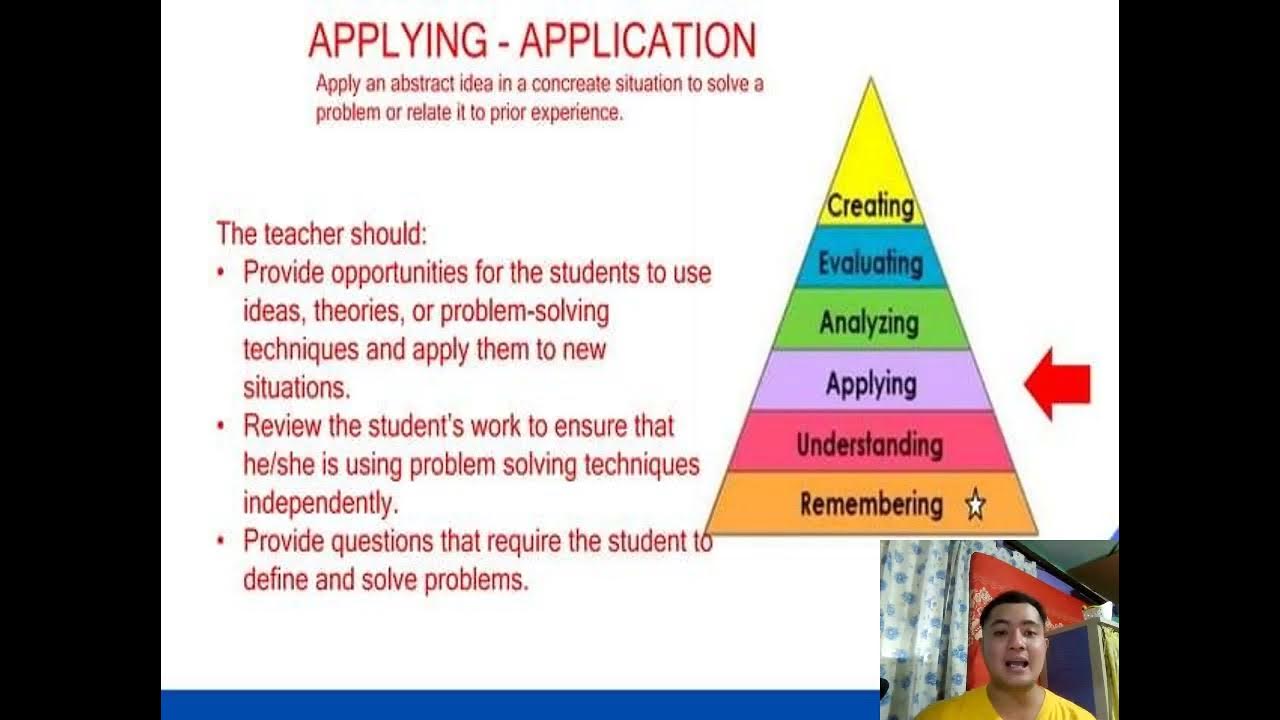
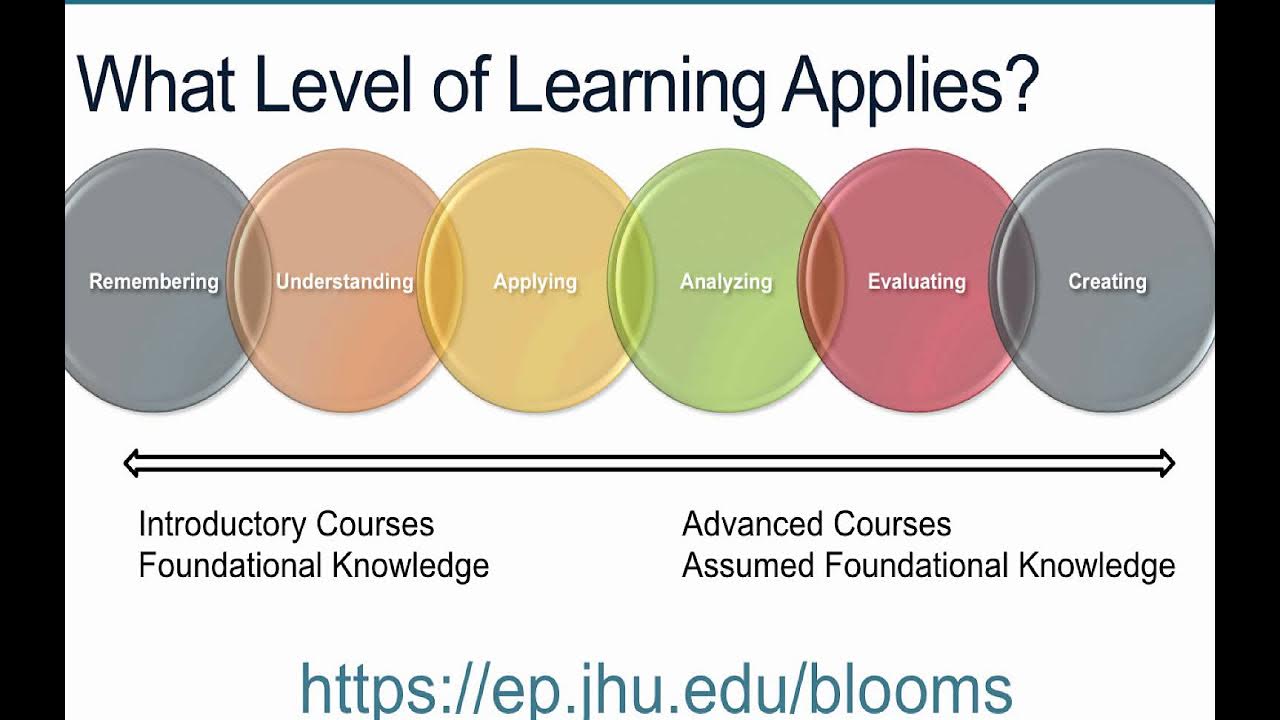
- 😀 The six levels of Bloom's Taxonomy are: Knowledge, Comprehension, Application, Analysis, Synthesis, and Evaluation.
- 😀 Knowledge is the most important level as it is the foundation for all other cognitive processes.
- 😀 Comprehension involves understanding and making sense of information and concepts.
- 😀 Application is about using knowledge in real-life situations to demonstrate what we've learned.
- 😀 Analysis involves breaking down information into smaller parts to understand its structure and meaning.
- 😀 Synthesis is the process of combining different pieces of information to create a general idea or conclusion.
- 😀 Evaluation is the highest level of Bloom's Taxonomy, involving the ability to make judgments based on evidence and reasoning.
- 😀 Lower Order Thinking Skills (LOTS) include Knowledge, Comprehension, and Application, which are foundational and easier to develop.
- 😀 Higher Order Thinking Skills (HOTS) include Analysis, Synthesis, and Evaluation, which are more complex and require deeper thinking.
- 😀 Bloom’s Taxonomy can guide teachers in helping students reach their full cognitive potential, from basic knowledge to complex evaluation.
Q & A
What is Bloom's Taxonomy?
-Bloom's Taxonomy is a framework that classifies different levels of cognitive skills. These levels range from basic knowledge recall to complex evaluation. It helps to understand how people process and apply information.
What are the six levels of Bloom's Taxonomy?
-The six levels of Bloom's Taxonomy are: 1) Knowledge, 2) Comprehension, 3) Application, 4) Analysis, 5) Synthesis, and 6) Evaluation.
Why is 'Knowledge' considered the most important level in Bloom's Taxonomy?
-Knowledge is the most important because it is the foundation for all other cognitive levels. Without knowledge, it is impossible to understand, apply, analyze, synthesize, or evaluate information.
What are 'Lower Order Thinking Skills' (LOTS)?
-Lower Order Thinking Skills (LOTS) refer to the first three levels of Bloom's Taxonomy: Knowledge, Comprehension, and Application. These skills involve basic cognitive tasks like recalling facts, understanding concepts, and applying knowledge in real-life situations.
What does 'Comprehension' entail in Bloom's Taxonomy?
-Comprehension involves understanding the meaning of the information, such as interpreting theories, concepts, and frameworks. It's about making sense of what you know.
What is the difference between 'Analysis' and 'Synthesis' in Bloom's Taxonomy?
-Analysis is the process of breaking down complex information into smaller parts to understand it better, while Synthesis involves combining specific information to create a new, broader idea or conclusion.
Why is 'Evaluation' the highest level of Bloom's Taxonomy?
-Evaluation is considered the highest level because it requires a deep understanding of the previous levels (knowledge, comprehension, application, analysis, and synthesis) in order to make informed judgments and assessments.
What are some common keywords used at the 'Knowledge' level?
-Keywords at the 'Knowledge' level include recall, list, define, and identify. These actions involve remembering and recalling basic facts or information.
How do 'Higher Order Thinking Skills' (HOTS) differ from LOTS?
-Higher Order Thinking Skills (HOTS) involve more complex cognitive tasks, such as analyzing, synthesizing, and evaluating information. They require critical thinking and the ability to handle more intricate problems compared to the basic recall and understanding involved in LOTS.
Can you give an example of how Bloom's Taxonomy can be applied in a classroom setting?
-In a classroom setting, Bloom's Taxonomy can guide lesson planning. For instance, a teacher might start by having students recall facts (Knowledge), then have them explain a theory (Comprehension), apply the concept in a practical problem (Application), break down a case study (Analysis), create a new model based on the theory (Synthesis), and finally, evaluate a real-world example (Evaluation).
Outlines

This section is available to paid users only. Please upgrade to access this part.
Upgrade NowMindmap

This section is available to paid users only. Please upgrade to access this part.
Upgrade NowKeywords

This section is available to paid users only. Please upgrade to access this part.
Upgrade NowHighlights

This section is available to paid users only. Please upgrade to access this part.
Upgrade NowTranscripts

This section is available to paid users only. Please upgrade to access this part.
Upgrade NowBrowse More Related Video




5.0 / 5 (0 votes)
