PARALISIA FACIAL: O QUE É, SINTOMAS, DIAGNÓSTICO, CAUSAS E TRATAMENTO
Summary
TLDRThis video explains peripheral facial paralysis, focusing on its causes, symptoms, and treatments. It discusses how the facial nerve controls facial muscles and how its dysfunction leads to symptoms like facial asymmetry, difficulty closing the eye, and a metallic taste. The video also emphasizes the importance of distinguishing between peripheral facial paralysis and strokes (AVC), as well as seeking prompt medical attention. Treatment options include steroids, antivirals, and in some cases,surgery.Earlyinterventioniscrucialtoreducetheriskoflong-termfacialasymmetry.Thevideoencouragesviewerstostayinformedandconsultspecialistsifexperiencingsymptoms.
Takeaways
- 😀 Peripheral facial paralysis occurs due to damage or inflammation of the facial nerve responsible for facial muscle movements.
- 😀 The facial nerve controls all muscles related to facial expressions, from the forehead to the mouth and eyes.
- 😀 The main symptoms of facial paralysis include reduced movement on one side of the face, difficulty closing one eye, and a crooked mouth.
- 😀 The condition often appears suddenly, with symptoms appearing within hours.
- 😀 It is important to differentiate peripheral facial paralysis from a stroke (AVC), which can also cause a crooked mouth but often affects other body parts.
- 😀 Peripheral facial paralysis can affect only one side of the face, unlike central facial paralysis, which typically does not impact the upper face (forehead).
- 😀 Diagnosis is typically clinical, supported by physical examination and, in some cases, additional tests like audiometry and MRI.
- 😀 Causes of peripheral facial paralysis can include idiopathic (Bell’s palsy), trauma, infections, tumors, or congenital factors.
- 😀 Bell’s palsy, the most common form, may involve viral infections like herpes simplex and usually worsens within the first five days.
- 😀 Treatment often includes corticosteroids, antivirals, and physical therapy to prevent long-term facial asymmetry and promote recovery.
- 😀 Early treatment is crucial to minimize the risk of permanent facial asymmetry, and lubrication of the affected eye is important to prevent corneal damage.
Q & A
What is facial paralysis, and what causes it?
-Facial paralysis is the inability to move one side of the face due to damage or inflammation of the facial nerve. This nerve controls the muscles responsible for facial expressions. It occurs when the facial nerve fails to transmit commands from the brain to the facial muscles, leading to reduced movement and functionality.
What is the role of the facial nerve?
-The facial nerve controls the muscles responsible for facial expressions, including movements of the forehead, around the eyes, mouth, and lips. It also controls the eyelid's ability to blink and provides taste sensation to the front part of the tongue.
How do you differentiate between central and peripheral facial paralysis?
-Peripheral facial paralysis affects the entire half of the face, including the forehead, eyes, and mouth, while central facial paralysis typically affects only the lower half of the face, often sparing the forehead. This difference helps to distinguish between the two types of paralysis.
What are the key symptoms of peripheral facial paralysis?
-Key symptoms include a decrease in facial movement on one side, such as the inability to wrinkle the forehead, a drooping mouth, difficulty closing the eye, excessive tearing or a metallic taste, and facial asymmetry. The symptoms appear suddenly.
What should you do if you experience facial paralysis symptoms?
-It is crucial to seek medical attention immediately, ideally at an emergency department, to ensure a proper diagnosis. Early treatment can help minimize long-term complications.
How does facial paralysis differ from a stroke (AVC)?
-A stroke can also cause facial drooping, but it typically affects more than just the face. A stroke can impair movement in the arms or legs, cause speech difficulties, confusion, and mental disorientation, unlike facial paralysis, which only affects facial muscles.
What diagnostic methods are used for facial paralysis?
-The diagnosis is primarily clinical, based on medical history and physical examination. In some cases, additional tests like audiometry, electromyography, and MRI may be used to further investigate the condition.
What are the potential causes of facial paralysis?
-Facial paralysis can be idiopathic (of unknown cause), traumatic (due to injury or fractures), infectious (caused by viruses like herpes or bacterial infections), tumor-related, or congenital. Idiopathic cases often involve the herpes simplex virus.
How is idiopathic facial paralysis (Bell’s palsy) treated?
-Treatment typically involves the use of corticosteroids to reduce inflammation and antiviral medications if a viral cause is suspected. Physiotherapy may also help in rehabilitation, along with eye lubrication to prevent corneal damage.
Can facial paralysis be fully recovered?
-In many cases, complete recovery is possible, especially if treatment begins early. However, some individuals may experience partial recovery with slight facial asymmetry that persistsaftertreatment.
Outlines

This section is available to paid users only. Please upgrade to access this part.
Upgrade NowMindmap

This section is available to paid users only. Please upgrade to access this part.
Upgrade NowKeywords

This section is available to paid users only. Please upgrade to access this part.
Upgrade NowHighlights

This section is available to paid users only. Please upgrade to access this part.
Upgrade NowTranscripts

This section is available to paid users only. Please upgrade to access this part.
Upgrade NowBrowse More Related Video

[UKMPPD - SKDI REVIEW] Tetanus & Tetanus Neonatorum - Antibiotik DOC? | Sistem Saraf #15, 17

Peripheral vertigo
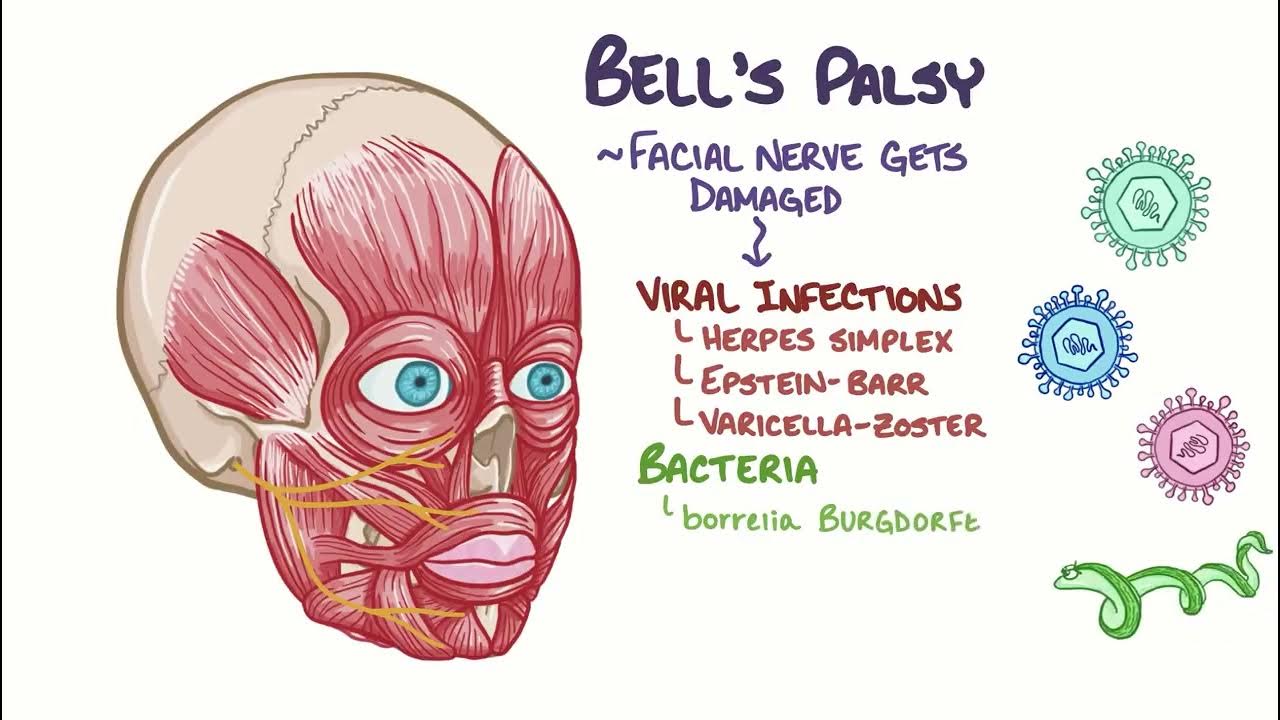
Osmosis | Bell's palsy

꼭 알아야 할 뇌졸중 전조증상 3가지 [숫자로 보는 건강]
Hemorrhagic stroke: intracerebral hemorrhage - causes, symptoms, diagnosis, treatment, pathology
Doença de Parkinson | Fisiopatologia Rápida e Fácil do Flavonoide
5.0 / 5 (0 votes)
