Genetic Disorders | Biology
Summary
TLDRThis video explains genetic disorders caused by chromosomal abnormalities, such as Down syndrome, Turner syndrome, and Klinefelter syndrome. It covers the basics of aneuploidy, where an abnormal number of chromosomes occurs due to nondisjunction during cell division. The video also introduces polyploidy, a condition common in plants, and discusses how certain chromosomal disorders affect human development and health. From cognitive impairments in Down syndrome to infertility in Turner and Klinefelter syndromes, the script provides a thorough overview of how genetic mutations can impact human lives.
Takeaways
- 😀 Genetic disorders can arise due to mutations within genes, changes in the number of chromosomes, or structural changes in chromosomes.
- 😀 Aneuploidy is a condition where an organism has an abnormal number of chromosomes, which can lead to genetic disorders.
- 😀 Nondisjunction is a process where chromosomes fail to separate properly during meiosis, leading to aneuploidy.
- 😀 Down syndrome is caused by trisomy 21, where an individual has an extra copy of chromosome 21.
- 😀 People with Down syndrome may have characteristics such as small noses, broad hands, slanted eyes, and impaired cognitive abilities, though severity can vary.
- 😀 The risk of having a child with Down syndrome increases with maternal age, especially after the age of 35.
- 😀 Polyploidy refers to organisms with more than two sets of chromosomes, common in plants but not viable in humans.
- 😀 Triploid organisms, such as seedless bananas and watermelons, are examples of polyploidy in plants.
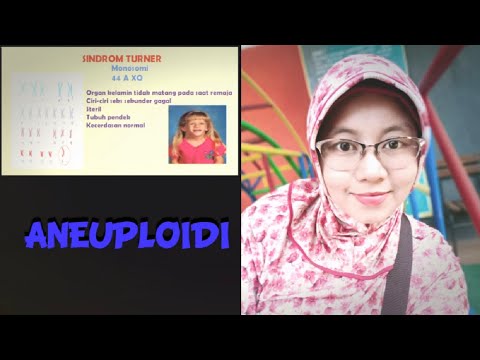
- 😀 Turner syndrome occurs when females are missing one X chromosome, leading to infertility, short stature, and developmental issues.
- 😀 Klinefelter syndrome results from males having two X chromosomes and one Y chromosome, leading to impaired sexual development and often infertility.
Q & A
What is a genetic disorder?
-A genetic disorder is a disease that results from a change in the DNA sequence, either in whole or in part, away from the normal sequence. These disorders are often inherited.
What are the three primary causes of genetic disorders?
-Genetic disorders can arise due to mutations within genes, changes in the number of chromosomes, and changes in the structure of chromosomes.
What is aneuploidy?
-Aneuploidy refers to the condition where an organism has an abnormal number of chromosomes, either too many or too few. This often leads to genetic disorders.
How does nondisjunction contribute to aneuploidy?
-Nondisjunction is a process where chromosome pairs or chromatids fail to separate properly during meiosis, resulting in gametes with an abnormal number of chromosomes. This can lead to aneuploidy in the offspring.
What is polyploidy, and how does it differ from aneuploidy?
-Polyploidy is a condition where an organism or cell has more than two sets of chromosomes. Unlike aneuploidy, which involves an abnormal number of chromosomes, polyploidy involves whole extra sets of chromosomes, and it is common in plants but rare in animals.
What are triploid and tetraploid organisms, and can they exist in nature?
-Triploid organisms have three sets of chromosomes, and tetraploid organisms have four sets. While these conditions are rare in animals, they do exist in nature, particularly in plants, such as triploid bananas and seedless watermelons.
What is Down syndrome, and how does it arise?
-Down syndrome is a genetic disorder caused by trisomy 21, where a person has an extra copy of chromosome 21. It can occur due to nondisjunction or chromosomal translocation.
How does maternal age influence the likelihood of having a child with Down syndrome?
-The likelihood of having a child with Down syndrome increases as the mother’s age rises. Women over the age of 35 are significantly more likely to have a child with Down syndrome, though the exact reason for this is not fully understood.
What is Turner syndrome, and what are its key characteristics?
-Turner syndrome is a genetic disorder in females caused by the absence of one X chromosome. It leads to symptoms such as short stature, infertility, and developmental issues, including underdeveloped ovaries and heart defects.
How does Klinefelter syndrome affect males, and what are the possible symptoms?
-Klinefelter syndrome occurs in males who have two X chromosomes and one Y chromosome. It leads to developmental issues, including infertility, reduced testosterone levels, and sometimes physical traits typically seen in females, though some individuals may show no symptoms.
Outlines

This section is available to paid users only. Please upgrade to access this part.
Upgrade NowMindmap

This section is available to paid users only. Please upgrade to access this part.
Upgrade NowKeywords

This section is available to paid users only. Please upgrade to access this part.
Upgrade NowHighlights

This section is available to paid users only. Please upgrade to access this part.
Upgrade NowTranscripts

This section is available to paid users only. Please upgrade to access this part.
Upgrade NowBrowse More Related Video

Gagal Berpisah Meiosis I Non Disjunction I BAB POLA HEREDITAS

Chromosomal disorders
Aneuploidi (Mutasi Kromosom akibat perubahan jumlah kromosom)

DISORDERS AND DISEASES THAT RESULT FROM THE MALFUNCTION OF THE CELL DURING THE CELL CYCLE

Kelainan Pada Manusia Akibat Mutasi - Biologi Kelas 12

Gagal Berpisah / Nondisjunction Kelas 12 | Materi Pola Hereditas
5.0 / 5 (0 votes)
