Management Information Systems - Basics
Summary
TLDRThis video introduces Management Information Systems (MIS), highlighting their importance to organizations of all sizes. It explains how MIS, developed after the advent of computers in the 1940s, have become ubiquitous in daily life. From banking and utility bills to traffic fines and online purchases, MIS plays a key role in managing data and supporting decision-making. The video distinguishes between transaction processing systems, which handle routine operations, and decision support systems, which help organizations analyze information to make informed decisions.
Takeaways
- 😀 MIS (Management Information Systems) are crucial to organizations of any size and have become ubiquitous in today's world.
- 😀 The development of MIS started after computers were developed in the 1940s, with the first systems appearing in the late 1950s.
- 😀 MIS systems touch nearly every aspect of our lives, from mobile phones to bank statements, electricity bills, and more.
- 😀 Examples of MIS in daily life include using a mobile phone, withdrawing money from an ATM, or receiving your income tax bill.
- 😀 Understanding MIS is essential because they are embedded in various personal and organizational processes.
- 😀 Personal finance MIS, such as online banking, help users track expenses, transfer money, and manage their accounts.
- 😀 Organizational MIS help managers make decisions by providing information on sales, employees, operating expenses, and more.
- 😀 Examples of organizational MIS include systems used in hospitals (patient management), airlines (reservations), factories (inventory management), and universities (student information).
- 😀 MIS serve two key functions: Transaction Processing Systems (TPS) that handle transactions, and Decision Support Systems (DSS) that help with decision-making.
- 😀 Understanding the structure and functionality of MIS can improve efficiency, decision-making, and profitability in both personal and professional contexts.
Q & A
What is the main topic of the video script?
-The main topic of the video script is Management Information Systems (MIS), their importance, and how they are used in both personal and organizational settings.
When did Management Information Systems (MIS) begin to develop?
-MIS began to develop in the 1940s, soon after the invention of computers, and became more widely recognized in the late 1950s.
How are Management Information Systems (MIS) integrated into our daily lives?
-MIS are integrated into daily life through various activities, such as using mobile phones, receiving bills (electricity, water, etc.), banking, shopping with credit cards, and more.
What is an example of a personal finance MIS?
-An example of a personal finance MIS is a bank's website, where users can log in to check account balances, make transactions, transfer money, and pay bills.
What are some key functions of Management Information Systems (MIS) in organizations?
-In organizations, MIS are used to track employee data, monitor product sales, manage financial planning, inventory, and human resources, among other tasks.
What type of MIS would a hospital use?
-A hospital would use a patient management system that stores personal, health, and treatment information, including details about medications and medical history.
What is the difference between a Transaction Processing System (TPS) and a Decision Support System (DSS)?
-A Transaction Processing System (TPS) helps perform routine tasks such as making purchases, withdrawing money, or canceling appointments, while a Decision Support System (DSS) helps analyze data and provide information for decision-making.
What are some examples of organizational MIS in different industries?
-Examples include patient management systems in hospitals, airline reservation systems, store checkout systems, inventory management systems in factories, and student information systems in universities.
Why are MIS considered essential for organizations today?
-MIS are essential for organizations because they help manage operations, improve decision-making, track performance, and ensure efficiency across various departments.
How do MIS support decision-making in organizations?
-MIS support decision-making by analyzing data and providing insights on critical metrics like sales performance, financial health, and operational efficiency, helping managers make informed decisions.
Outlines

This section is available to paid users only. Please upgrade to access this part.
Upgrade NowMindmap

This section is available to paid users only. Please upgrade to access this part.
Upgrade NowKeywords

This section is available to paid users only. Please upgrade to access this part.
Upgrade NowHighlights

This section is available to paid users only. Please upgrade to access this part.
Upgrade NowTranscripts

This section is available to paid users only. Please upgrade to access this part.
Upgrade NowBrowse More Related Video

Management Information System - A-Z of business terminology

SISTIM INFORMASI DAN KOMUNIKASI ORGANISASI (PART 1)
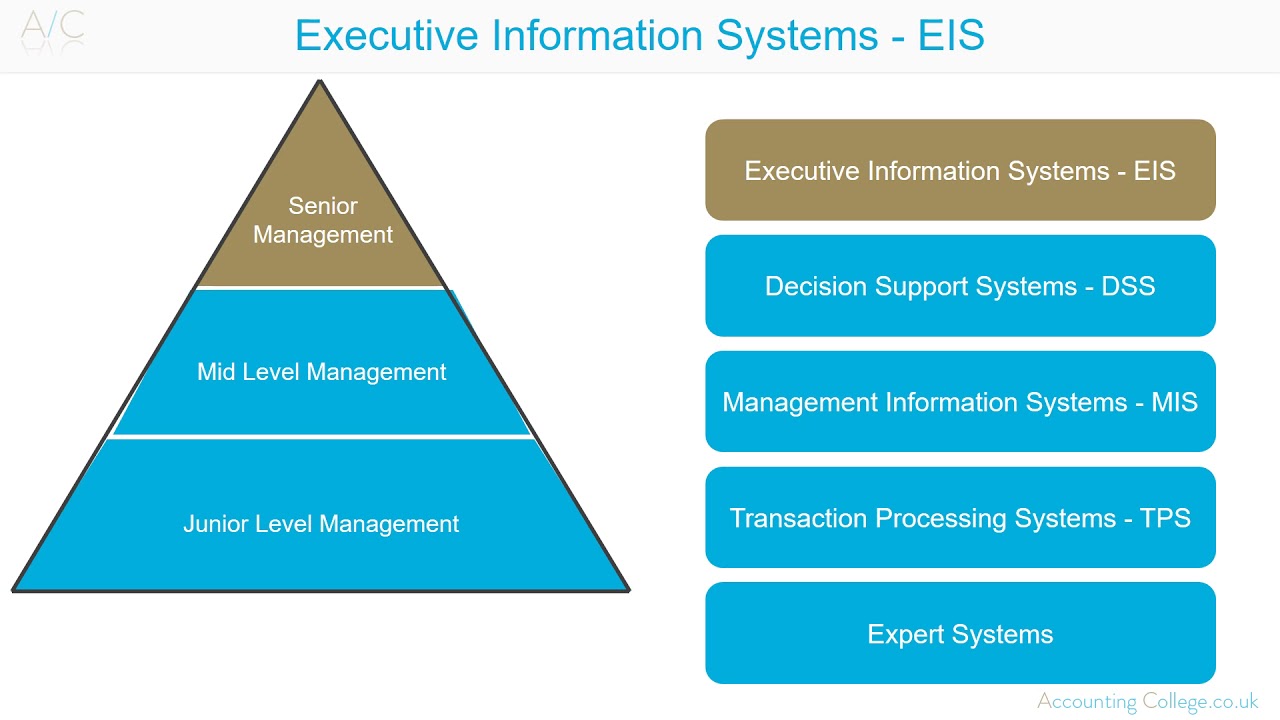
Executive Information Systems - A-Z of business terminology

peran teknologi informasi dalam sistem informasi manajemen

Sistem Informasi Manajemen (SIM) - Bahasan Kuliah Pertemuan Pertama

18 Desember 2024
5.0 / 5 (0 votes)
