RESISTANCE to Power Structures After 1900 [AP World History Review—Unit 8 Topic 7]
Summary
TLDRThe 20th century saw various responses to conflict, ranging from nonviolent resistance to violent measures. Key figures like Gandhi, Martin Luther King Jr., and Nelson Mandela led nonviolent movements that played pivotal roles in political change, such as India’s independence, civil rights in the U.S., and the end of apartheid in South Africa. On the other hand, figures like Augusto Pinochet and Idi Amin used violence to suppress opposition, while the military-industrial complex and terrorism, exemplified by Al-Qaeda, intensified global tensions. The video explores these responses, showing how conflict shaped global history.
Takeaways
- 😀 Nonviolent resistance became a prominent method to address conflicts in the 20th century, with key figures like Gandhi, Martin Luther King Jr., and Nelson Mandela leading significant movements.
- 😀 Mohandas Gandhi promoted nonviolence and civil disobedience to fight for Indian independence from British rule, notably through the Homespun Movement and the Salt March.
- 😀 Martin Luther King Jr. adopted Gandhi's nonviolent methods in the U.S. Civil Rights Movement, organizing protests like the Montgomery Bus Boycott to challenge racial segregation.
- 😀 Nelson Mandela initially supported nonviolence in his fight against apartheid in South Africa, but after the Sharpeville massacre, he shifted to supporting violent resistance.
- 😀 Gandhi's Salt March, where Indians defied British salt laws by harvesting their own salt, led to his arrest but was instrumental in breaking Britain's colonial control over India.
- 😀 Martin Luther King Jr.'s activism contributed to significant political change in the U.S., including the desegregation of schools and the passage of anti-discrimination laws in the 1960s.
- 😀 Nelson Mandela’s involvement in violent acts against apartheid ultimately led to his 27-year imprisonment, but upon release, he became president of South Africa in 1994.
- 😀 Violent responses to conflict were more common in the 20th century, with figures like Augusto Pinochet in Chile, Idi Amin in Uganda, and the military-industrial complex contributing to increased violence.
- 😀 Augusto Pinochet's military coup in Chile led to the violent suppression of opposition, with numerous executions and tortures carried out by the military.
- 😀 Idi Amin’s dictatorship in Uganda was marked by extreme violence, including ethnic persecution and the targeting of political enemies, resulting in hundreds of thousands of deaths.
- 😀 The military-industrial complex, particularly during the Cold War, led to a dangerous arms race between the U.S. and the Soviet Union, perpetuating violence due to the economic incentives tied to weapon production.
- 😀 Terrorist groups like Al-Qaeda, led by Osama bin Laden, employed violence against civilians to pursue political goals, with the September 11th attacks being the most infamous example of such terrorism.
Q & A
What were the key strategies employed by Mohandas Gandhi to resist British colonial rule in India?
-Gandhi promoted nonviolent resistance and civil disobedience. He led movements like the Homespun Movement, encouraging Indians to boycott British-made textiles and make their own clothes. He also led the Salt March, protesting the British monopoly on salt production by harvesting his own salt and encouraging others to do the same.
How did Martin Luther King Jr. draw inspiration from Mohandas Gandhi in his own fight against racial segregation?
-Martin Luther King Jr. adopted Gandhi's methods of nonviolent resistance and civil disobedience. King led peaceful protests, such as the Montgomery Bus Boycott, to challenge racial segregation in the United States. His efforts helped bring about legal changes, including the outlawing of racial discrimination in schools and the passage of anti-discrimination laws.
What caused Nelson Mandela to abandon nonviolence in his fight against apartheid?
-Mandela initially promoted nonviolence but changed his stance after the Sharpeville Massacre, where police killed 69 protesters. His outrage over this event and the government's refusal to end apartheid led him to support violence as a means of achieving equality and freedom for South Africans.
What role did Mohandas Gandhi's personal actions play in the Indian resistance movement?
-Gandhi's personal actions, such as wearing traditional Indian clothing instead of British suits, symbolized his commitment to Indian culture and independence. His actions, like the Salt March and Homespun Movement, inspired millions to resist British rule through nonviolent means, contributing to India's eventual independence.
How did the British respond to Gandhi's acts of civil disobedience, and what was the long-term impact?
-The British responded to Gandhi's acts of civil disobedience, such as the Salt March, with arrests and suppression. However, the resistance weakened Britain's control over India, and after World War II, Britain lacked the resources and public support to continue resisting Indian independence, leading to India gaining independence in 1947.
What was the significance of the Montgomery Bus Boycott in the Civil Rights Movement?
-The Montgomery Bus Boycott was a pivotal event in the Civil Rights Movement. It was a peaceful protest against racial segregation on public buses in Montgomery, Alabama. The boycott caused economic strain on the city and led to the Supreme Court ruling that segregation on public transportation was unconstitutional.
How did Augusto Pinochet's violent response to conflict in Chile affect the country's political landscape?
-Pinochet's military coup, backed by the United States, overthrew the democratically elected socialist president Salvador Allende. Pinochet ruled Chile as a dictator, violently suppressing opposition through raids, executions, and torture, which resulted in widespread human rights violations and the establishment of a military dictatorship that lasted until the early 1990s.
What were some of the key violent actions taken by Idi Amin during his rule in Uganda?
-Idi Amin's regime was marked by extreme violence, including ethnic cleansing of the South Asian population, political repression, and mass killings. Amin's government targeted political rivals, ethnic minorities, and even random individuals, leading to hundreds of thousands of deaths and a legacy of brutality in Uganda.
How did the military-industrial complex contribute to global violence during the Cold War?
-During the Cold War, the U.S. and the Soviet Union engaged in a nuclear arms race, building massive stockpiles of weapons. The military-industrial complex, driven by economic interests and job dependence on defense spending, contributed to escalating global tensions and increased the potential for violent conflict through the production and sale of weapons.
What was Al-Qaeda's primary goal, and how did they use terrorism to achieve it?
-Al-Qaeda, led by Osama bin Laden, was a militant group that sought to challenge U.S. influence in the Middle East. They used acts of terrorism, such as the September 11th attacks, to pressure the United States to change its policies in the region. Their attacks killed thousands of civilians but did not succeed in shifting U.S. foreign policy significantly.
Outlines

This section is available to paid users only. Please upgrade to access this part.
Upgrade NowMindmap

This section is available to paid users only. Please upgrade to access this part.
Upgrade NowKeywords

This section is available to paid users only. Please upgrade to access this part.
Upgrade NowHighlights

This section is available to paid users only. Please upgrade to access this part.
Upgrade NowTranscripts

This section is available to paid users only. Please upgrade to access this part.
Upgrade NowBrowse More Related Video
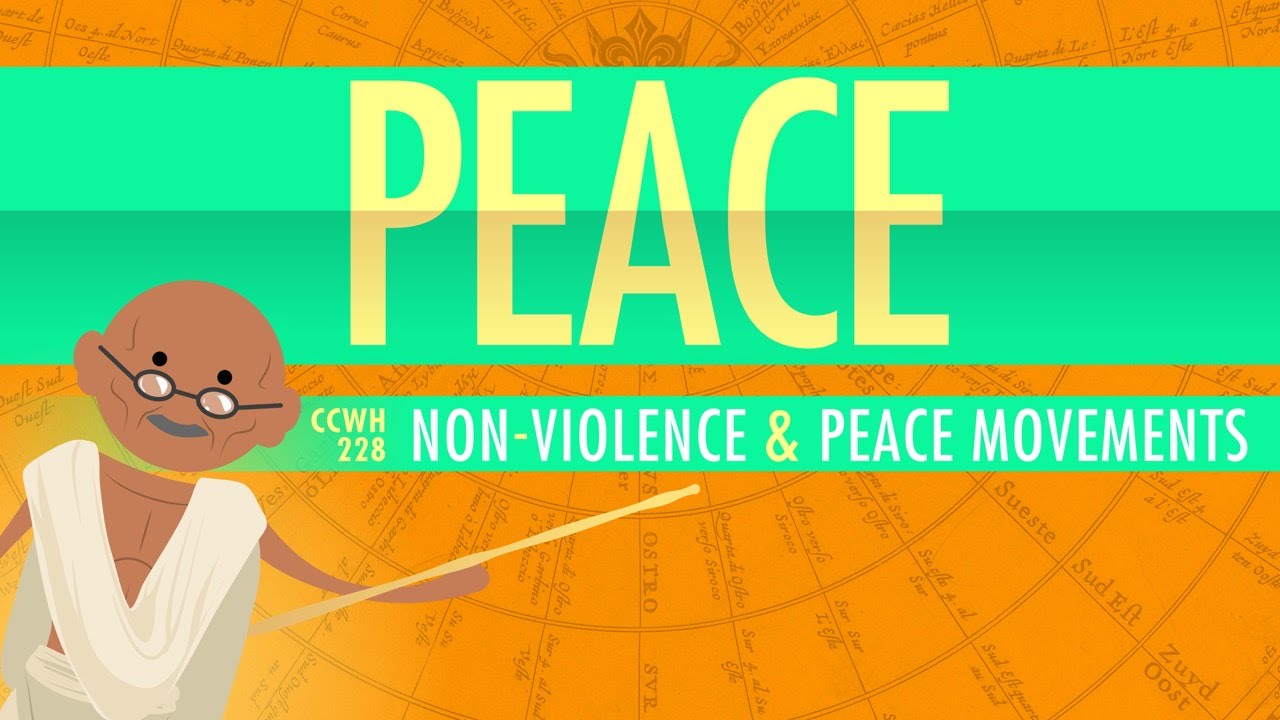
Nonviolence and Peace Movements: Crash Course World History 228

INDEPENDÊNCIA DA ÍNDIA Resumo de História - Polis Consultoria

BULATETE. U1T5 MUSLIM'S CONTRIBUTION TO NATIONAL STRUGGLES. PIC. CE3B. 1pm. MW. Video Report

State Building AFTER Decolonization [AP World History Review—Unit 8 Topic 6]

Resisting Colonialism in Ghana | World History Project

The History of Welding, How It Was Discovered
5.0 / 5 (0 votes)
