33 Aula Teórica História da Educação dos Surdos Idade Contemporânea até os dias atuais
Summary
TLDRThis script offers an insightful historical overview of the deaf community from 1789 to the present. It highlights key moments such as the founding of schools for the deaf, the advocacy of figures like Thomas Gallaudet, the controversy of Alexander Graham Bell's oralism, and the establishment of sign language as a legitimate form of communication. The script also covers major events in Brazil, including the founding of the Instituto Nacional de Educação de Surdos (INES) and the 1994 'Marcha Surdos Venceremos.' The content emphasizes the ongoing struggle for rights and recognition, culminating in important legislative milestones like the 2002 recognition of Brazilian Sign Language (Libras).
Takeaways
- 😀 The year 1789 marked the death of LP, who had founded 21 schools for the deaf in France and Europe.
- 😀 In 1802, Jean Marque Tar from the United States emphasized the importance of education for the development of deaf individuals.
- 😀 In 1814, Thomas Gallaudet observed a deaf girl, Alice, who was excluded from playing with other children, which motivated him to establish the first school for the deaf in the U.S.
- 😀 Gallaudet founded the first school for the deaf in the United States in 1817, which led to the creation of more schools for the deaf across the country.
- 😀 In 1855, the deaf teacher Ruet was sent from Europe to Brazil to educate the deaf, and the Instituto Imperial de Educação de Surdos was founded in 1857 in Rio de Janeiro.
- 😀 In 1864, the first university for the deaf was established in the United States, the Gallaudet University, fulfilling the vision of Thomas Gallaudet.
- 😀 Alexander Graham Bell advocated for oralism and opposed sign language, claiming that it hindered the intellectual development of the deaf.
- 😀 In 1880, the Milan Congress decided to abandon sign language in favor of oral education for the deaf, which was a global milestone.
- 😀 In 1929, the Instituto Santa Terezinha for deaf students was founded in Brazil, and in 1930, the Brazilian Association of the Deaf was created.
- 😀 In 1994, the 'March of the Deaf' (Marcha Surdos Venceremos) took place in Brazil, advocating for the right of deaf people to attend schools for the deaf and to have education in Brazilian Sign Language (Libras).
Q & A
Who was LP and what was his contribution to deaf education?
-LP was a pioneer in deaf education who, by 1789, had founded 21 schools for the deaf in France and across Europe, significantly shaping early formal education for deaf individuals.
What was Jean Marc Gallaudet's key idea regarding the education of deaf people?
-Jean Marc Gallaudet, an American physician, believed education was essential for human development and that deaf individuals could be trained to understand spoken words. He is known for his work with the 'wild boy of Aveyron.'
What motivated Thomas Gallaudet to start working with deaf children in the U.S.?
-Thomas Gallaudet was moved when he saw Alice, a deaf girl, being excluded from play and lacking access to schooling. This led him to personally teach her and eventually establish the first school for the deaf in the U.S.
When and where was the first school for the deaf in the United States founded?
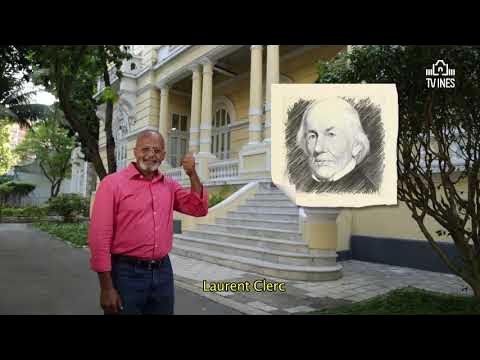
-The first school for the deaf in the U.S. was founded on April 15, 1817, in Hartford, Connecticut, by Thomas Gallaudet and a French deaf teacher named Laurent Clerc.
How did deaf education begin in Brazil?
-Deaf education in Brazil began in 1855 with the arrival of the deaf teacher Ruet from Europe. He helped establish the Instituto Imperial de Educação de Surdos in 1857, which trained both deaf students and teachers using French sign language and methodical signs.
What was the significance of Alexander Graham Bell in deaf history?
-Alexander Graham Bell was a major proponent of oralism. He opposed sign language, arguing that it limited intellectual development, and promoted teaching deaf individuals to speak. He influenced education methods in the U.S. and other countries.
What was published in Brazil in 1875 that was a key milestone for sign language?
-In 1875, Flausino José da Gama published 'Iconografia dos Sinais dos Surdos-Mudos,' the first dictionary of Brazilian sign language.
What was the impact of the 1880 Milan Congress on deaf education?
-The 1880 Milan Congress was a global milestone where educators decided to abandon sign language and emphasize speech, significantly affecting deaf education policies worldwide, including in Brazil.
What was the purpose of the 'Marcha Surdos Venceremos' in 1994?
-The march aimed to advocate for deaf rights, including the recognition of Brazilian Sign Language (Libras), the maintenance of schools for deaf students, and the provision of interpreters in public spaces.
When was Libras officially recognized as a language in Brazil?
-Libras was officially recognized in 2002 through Law 10.436, establishing it as a legal means of communication and expression for the Brazilian deaf community.
What was the significance of the September Azul movement in 2011?
-September Azul was a mobilization by the deaf community against efforts to close deaf schools and force inclusion in regular schools, defending bilingual education in Brazilian Sign Language.
Who is Paulo André in the context of the INES and deaf leadership?
-Paulo André is the second deaf director of INES (Instituto Nacional de Educação de Surdos) in Brazil, representing increased inclusion of deaf individuals in leadership positions within the community and education system.
Outlines

Этот раздел доступен только подписчикам платных тарифов. Пожалуйста, перейдите на платный тариф для доступа.
Перейти на платный тарифMindmap

Этот раздел доступен только подписчикам платных тарифов. Пожалуйста, перейдите на платный тариф для доступа.
Перейти на платный тарифKeywords

Этот раздел доступен только подписчикам платных тарифов. Пожалуйста, перейдите на платный тариф для доступа.
Перейти на платный тарифHighlights

Этот раздел доступен только подписчикам платных тарифов. Пожалуйста, перейдите на платный тариф для доступа.
Перейти на платный тарифTranscripts

Этот раздел доступен только подписчикам платных тарифов. Пожалуйста, перейдите на платный тариф для доступа.
Перейти на платный тариф




5.0 / 5 (0 votes)

