חוק שני של ניוטון במערכת דו-גופית- הדרכת ניסוי ממוחשב שולמן
Summary
TLDRThis comprehensive tutorial guides students through a Newton's Second Law experiment using a two-body system. It details the setup of a dynamic track, cart, pulley, and sensor system, emphasizing precise alignment and calibration. The video demonstrates two key investigations: measuring acceleration as a function of applied force with a constant mass, and as a function of system mass with a constant force. Step-by-step instructions for data collection, graphing, and analysis in Capstone software are provided, highlighting linear relationships between force, mass, and acceleration. The tutorial ensures accurate measurements, effective data recording, and clear interpretation of results, making it ideal for high school physics lab preparation.
Takeaways
- 🛠️ The video is a comprehensive guide for performing a two-body Newton’s Second Law experiment using a Pasco mechanics system with a cart, pulley, and sensor setup.
- 📏 The experiment investigates the relationship between acceleration, net force, and mass, first keeping mass constant and varying force, then keeping force constant and varying mass.
- 🎛️ Proper setup of the sensor is crucial: align it parallel to the cart’s motion and ensure the front of the sensor faces the cart bumper.
- 🧱 Ensure the track is leveled and the cart can move without external forces affecting the motion, minimizing friction.
- 🪢 Use a non-stretchable, tangle-free cord attached to the cart and masses, routed properly over the pulley for accurate measurements.
- 💻 Connect the motion sensor to the computer via the Capstone software and ensure Bluetooth pairing, checking battery levels before starting.
- 📊 In the first part of the experiment, record acceleration while varying the hanging mass; use graphs and tables in the software to calculate net force as weight (mass × 9.8 m/s²).
- 📐 Analyze the linear relationship between acceleration and pulling force to determine the system’s total mass, comparing calculated and measured mass.
- 🔄 In the second part, record acceleration while keeping pulling force constant and varying the system mass; calculate the reciprocal of mass and analyze the linear trend of acceleration vs. 1/mass.
- ✅ Proper labeling, saving of data, and consistent measurement techniques (avoiding collisions or interference) are emphasized for accurate results.
- 📸 The video recommends taking photos of graphs and results for documentation and future analysis, and mentions using a ready-made Capstone template to simplify measurements.
- ⚖️ The experiment confirms theoretical predictions with minimal deviations, demonstrating Newton’s Second Law in a controlled, two-body system.
Q & A
What is the main objective of the experiment described in the video?
-The main objective of the experiment is to explore the relationship between the acceleration of a body, the net force acting on it, and its mass, based on Newton's second law in a two-body system.
How is the experiment divided into two parts?
-The experiment is divided into two parts: the first part keeps the system's mass constant while varying the pulling force, and the second part keeps the pulling force constant while varying the system's mass.
What are the required components for setting up the experiment?
-The required components include a dynamic track with adjustable feet, a dynamic cart, a stopper, a pulley system, a string for the connections, motion sensors, various weights (10g, 20g, 250g), and a computer with the appropriate software.
How should the motion sensor be positioned for the experiment?
-The motion sensor should be positioned at the end of the track, with its front facing the cart. The sensor must be aligned using an angle gauge to ensure that its transmitter is parallel to the track.
What is the purpose of calibrating the track and pulley system?
-The track and pulley system must be calibrated to ensure that there are no external forces acting on the system. This is done by ensuring that the track is level and that the pulley system is properly aligned.
What software and settings are used for the data recording during the experiment?
-The software used is Capstone, where the data collection rate is set to 50 Hz. A graph and table are displayed for the measurements, and the system is configured to record the mass and force on the system, with calculations for the force based on the mass.
How is the force on the system calculated during the first part of the experiment?
-The force on the system is calculated by multiplying the measured mass by the acceleration due to gravity (9.8 m/s²), which is represented as the weight of the hanging mass.
What method is used to analyze the acceleration data collected during the experiment?
-The collected acceleration data is analyzed by fitting a linear trendline to the graph of acceleration vs. force. The slope of this trendline represents the system's acceleration.
Why is it important to check the position of the string before starting the measurements?
-It is important to ensure that the string is correctly positioned in the center of the pulley system to prevent any deviations or errors in the measurements during the experiment.
What happens if the system's mass changes during the experiment, and how is this addressed in the second part of the experiment?
-In the second part of the experiment, the mass of the system is varied while keeping the pulling force constant. This is done by adding weights to the cart, and the acceleration is recorded for each mass configuration.
Outlines

Этот раздел доступен только подписчикам платных тарифов. Пожалуйста, перейдите на платный тариф для доступа.
Перейти на платный тарифMindmap

Этот раздел доступен только подписчикам платных тарифов. Пожалуйста, перейдите на платный тариф для доступа.
Перейти на платный тарифKeywords

Этот раздел доступен только подписчикам платных тарифов. Пожалуйста, перейдите на платный тариф для доступа.
Перейти на платный тарифHighlights

Этот раздел доступен только подписчикам платных тарифов. Пожалуйста, перейдите на платный тариф для доступа.
Перейти на платный тарифTranscripts

Этот раздел доступен только подписчикам платных тарифов. Пожалуйста, перейдите на платный тариф для доступа.
Перейти на платный тарифПосмотреть больше похожих видео

Experimento casero: La vela y el agua que sube. Segunda Ley de Newton

Finding an Individual Force

Introduction to Newton’s Second Law of Motion with Example Problem

Calculating the Force of Impact when Stepping off a Wall

Newton's Third Law | Common Misunderstandings | Doc Physics
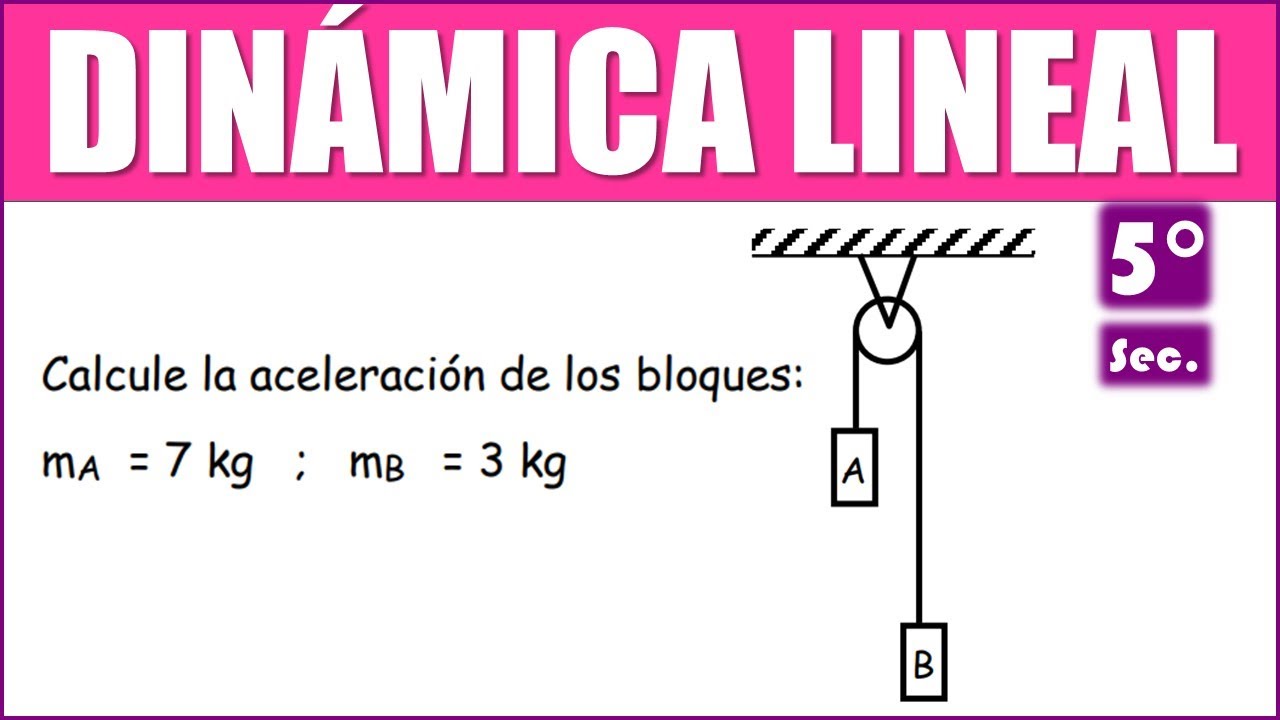
Calcule la aceleración de los bloques: mA = 7 kg ; mB = 3 kg
5.0 / 5 (0 votes)

