為什麼鏡子裡的你比照片好看? 哪個才是你真實的樣子?【生活】(#CC字幕) | 維思維
Summary
TLDRIn this video, Wei explores why we tend to look better in mirrors than in photos. He explains psychological factors like the mere-exposure effect, where familiarity with our reflection makes us prefer it, and the frozen face effect, where motion in the mirror makes us look more flattering. Wei also discusses how photo distortion, from angles and lenses, can create a less accurate representation of us, while mirrors offer flexibility in how we pose. Ultimately, he suggests that mirrors may reflect the real us more accurately due to the influence of psychological and environmental factors in photos.
Takeaways
- 😀 The way we perceive ourselves in mirrors and photos can be quite different due to psychological factors.
- 😀 The 'mere-exposure effect' explains why we tend to find ourselves more attractive in mirrors, as we are more familiar with our reflected image.
- 😀 While mirrors show a flipped version of ourselves, this can feel strange when viewed in photos, especially since our faces are not perfectly symmetrical.
- 😀 The 'frozen face effect' explains how motion makes us look more flattering—our faces appear better in motion (as seen in mirrors) than in still photos.
- 😀 Photos capture still images, highlighting details we often overlook in real life, which can make us feel self-conscious about flaws.
- 😀 Albert Mehrabian's research suggests that our perception of others is influenced more by body language and tone than by what they actually say.
- 😀 In photos, we are often focused on a single point, making flaws more noticeable, while in mirrors, we can look at ourselves from different angles.
- 😀 The angle at which a photo is taken can significantly impact how we look, and an unflattering angle can result in a permanent image.
- 😀 Cameras distort images due to their lenses (wide-angle vs. telephoto), making faces look different depending on the lens and shooting distance.
- 😀 While photos can show us more flaws, mirrors are generally more consistent, but lighting, angle, and camera filters still play a crucial role in how we appear in photos.
Q & A
Why do people often think they look better in mirrors than in photos?
-People often prefer their mirror image due to psychological effects like the mere-exposure effect, motion perception, and selective focus, combined with technical factors in photography such as lighting, angle, and lens distortion.
What is the mere-exposure effect and how does it affect our perception of ourselves?
-The mere-exposure effect is a psychological phenomenon where people tend to like things they see frequently. Because we regularly see our reflection in mirrors, we become familiar with and more comfortable with that image, often preferring it over photos.
How does the 'frozen face effect' contribute to looking worse in photos?
-The frozen face effect occurs because mirrors show us in motion, which appears more natural and flattering. Photos capture a single, stationary moment, which can make facial features look less appealing.
Why do we notice flaws more in photos than in mirrors?
-When viewing a photo, the brain focuses on every stationary detail without the distractions of motion, highlighting imperfections. In contrast, motion in mirrors diverts attention away from minor flaws.
What role do camera angles and lenses play in how we look in photos?
-Camera angles and lenses, such as wide-angle or telephoto lenses, can distort facial features, making faces appear longer, wider, or otherwise different from reality. Mirrors, being flat reflections, show proportions more accurately.
Does symmetry affect how we perceive ourselves in mirrors versus photos?
-Yes. Most people are not perfectly symmetrical, and because we are used to seeing our reversed, symmetrical mirror image, seeing ourselves in a non-reversed photo can feel unfamiliar and less attractive.
How do psychological factors influence our perception of our own photos?
-Psychological factors, such as familiarity with our mirror image and the selective attention to perceived flaws, make us judge photos more harshly. We may perceive the photo version as the 'ugly' version of ourselves.
Are photos always a more accurate representation of reality than mirrors?
-Not necessarily. Photos are affected by lighting, angle, lens distortion, camera distance, and even filters. Mirrors can sometimes provide a more stable and familiar representation of our appearance.
What can we do to take more flattering photos?
-To take better photos, pay attention to lighting, angles, lens selection, and pose. Moving naturally or posing at preferred angles can help reduce distortions and highlight more flattering features.
Why do moving images in mirrors appear more familiar than stationary photos?
-We interact with our reflection while moving, and motion helps the brain perceive the image as natural. Stationary photos lack this dynamic aspect, making the image feel less familiar and less attractive.
Can filters or photo editing affect whether someone looks better in photos?
-Yes. Filters and editing can artificially improve appearance, which may make photos seem better than the mirror image. Conversely, unedited photos might emphasize flaws, creating the opposite effect.
Ultimately, which shows the 'real you'—mirrors or photos?
-While both have biases, mirrors may provide a more reliable version of yourself due to familiarity and fewer distortions, although photos can capture more objective details influenced by technical factors.
Outlines

Этот раздел доступен только подписчикам платных тарифов. Пожалуйста, перейдите на платный тариф для доступа.
Перейти на платный тарифMindmap

Этот раздел доступен только подписчикам платных тарифов. Пожалуйста, перейдите на платный тариф для доступа.
Перейти на платный тарифKeywords

Этот раздел доступен только подписчикам платных тарифов. Пожалуйста, перейдите на платный тариф для доступа.
Перейти на платный тарифHighlights

Этот раздел доступен только подписчикам платных тарифов. Пожалуйста, перейдите на платный тариф для доступа.
Перейти на платный тарифTranscripts

Этот раздел доступен только подписчикам платных тарифов. Пожалуйста, перейдите на платный тариф для доступа.
Перейти на платный тарифПосмотреть больше похожих видео
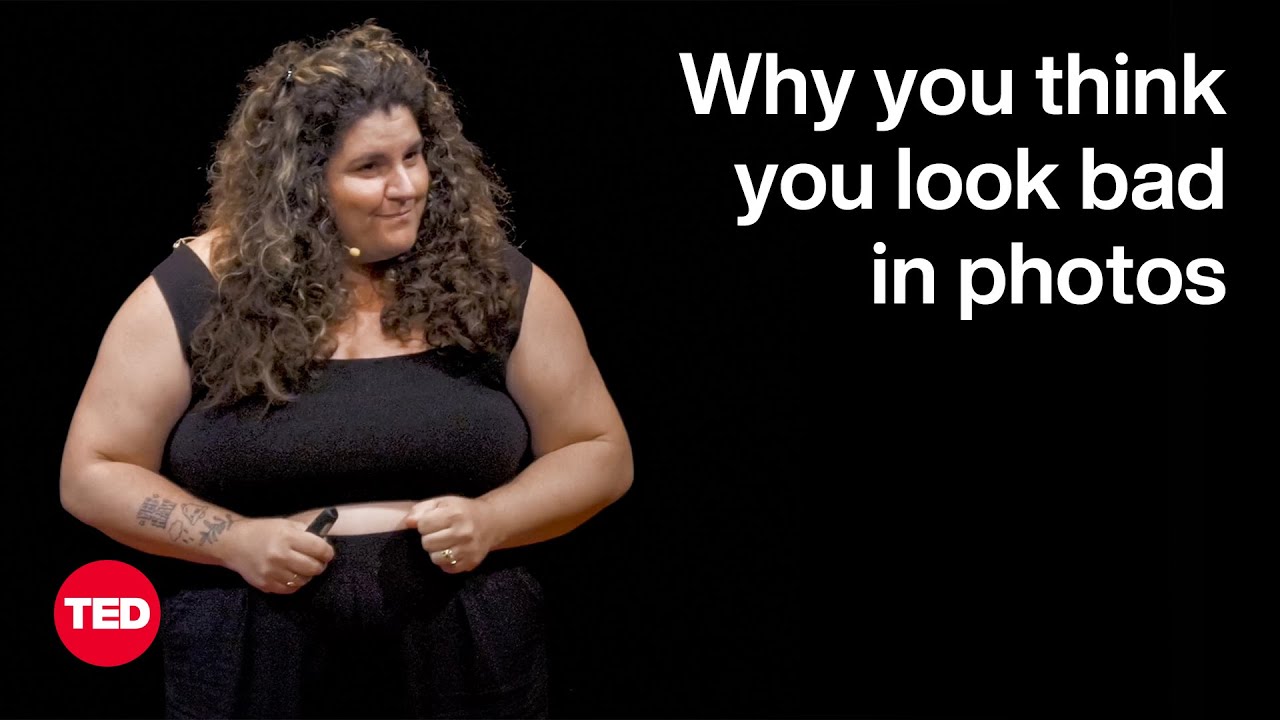
Why You Think You Look Bad in Photos | Teri Hofford | TED

Why Did Men Used to Look Older? | Make It Make Sense

5 reasons you look bad in photos | Teri Hofford | TEDxWinnipeg

Why Do We Fart? - The Dr. Binocs Show | Best Learning Videos For Kids | Peekaboo Kidz

Okuduklarını Unutmama Sanatı: Kitaplardan Öğrendiklerinizi Kalıcı Kılmanın Yolları
How Mirrors are Made | History of Mirrors from 8,000 BC to Modern Day
5.0 / 5 (0 votes)

