A.9 Income and substitution effects | Consumption - Microeconomics
Summary
TLDRThis video explains the effects of price changes on consumer behavior, focusing on the income and substitution effects. The income effect suggests that lower prices increase purchasing power, while the substitution effect leads to consumers choosing cheaper alternatives. The video further delves into Eugene Slutsky's equation to decompose these effects and explores how they apply to different goods. It distinguishes between normal, inferior, and Giffen goods, explaining how their price changes impact consumer welfare. The analysis is enriched with graphical depictions of utility maximization and equilibrium adjustments, offering a detailed view of consumer decision-making processes.
Takeaways
- 😀 Price decreases lead to increased consumption due to the income and substitution effects.
- 😀 The **income effect** occurs because a price drop increases purchasing power, allowing consumers to buy more.
- 😀 The **substitution effect** happens as lower prices make a good more attractive compared to alternatives.
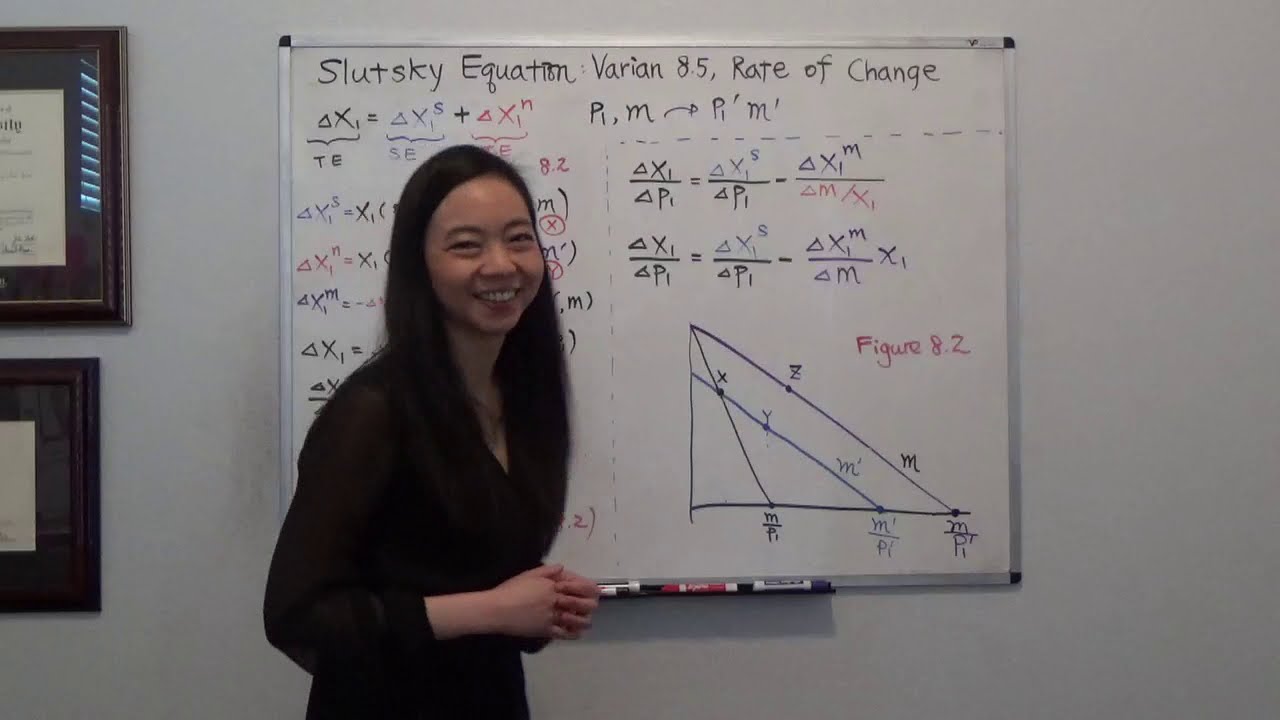
- 😀 **Slutsky's equation** decomposes the total effect of a price change into substitution and income effects using Marshallian and Hixian demand curves.
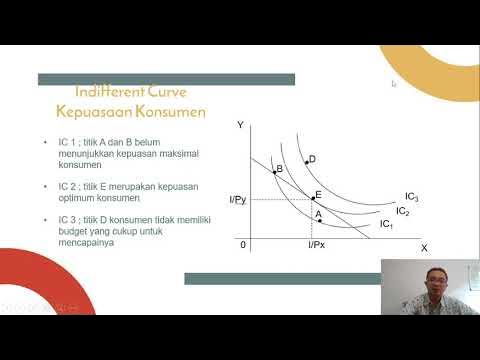
- 😀 Graphically, price changes shift the budget constraint, resulting in a new equilibrium point on a higher indifference curve.
- 😀 **Marshallian demand** curves show how quantity changes with income and price, while **Hixian demand** curves focus on changes in price holding utility constant.
- 😀 The distance between initial and final equilibrium points reflects the total welfare change due to a price change.
- 😀 Adjusting the income (via Hixian demand) allows us to isolate the substitution effect from the income effect.
- 😀 For **normal goods**, price increases reduce welfare due to both negative income and substitution effects.
- 😀 **Inferior goods** show mixed effects: a negative substitution effect but a positive income effect, which can lead to increased consumption if the income effect is stronger.
- 😀 **Giffen goods** are a type of inferior good where the positive income effect outweighs the substitution effect, leading to increased consumption even as prices rise.
- 😀 **Independent goods** experience only a negative substitution effect, with no income effect, always leading to a decrease in welfare when prices rise.
Q & A
What are the income and substitution effects?
-The income effect occurs when the price of a good decreases, making the consumer feel they have more purchasing power. The substitution effect happens when a price decrease makes a good more attractive relative to other goods, leading consumers to substitute it for alternatives.
What role does Eugene Slutsky play in the analysis of price changes?
-Eugene Slutsky developed an equation that decomposes the total effect of price changes into substitution and income effects. His work uses Marshallian and Hixian demand curves to mathematically describe how each effect influences consumer behavior.
What are Marshallian and Hixian demand curves?
-Marshallian demand curves represent the total demand for a good, considering both the price and the consumer's income. Hixian demand curves adjust for price changes while keeping utility constant, helping to isolate the substitution effect.
How does the Slutsky equation break down the total effect?
-The Slutsky equation breaks down the total effect of a price change into two parts: the substitution effect (based on the Hixian demand curve) and the income effect (based on the Marshallian demand curve).
What is the graphical representation of the substitution and income effects?
-Graphically, a decrease in the price of a good shifts the consumer's budget constraint, allowing them to reach a higher indifference curve. The difference in utility between the initial and new points shows the total welfare change, with the substitution effect represented by the shift to a new equilibrium point and the income effect captured by adjusting the income to keep utility constant.
What happens to welfare when the price of a normal good increases?
-For normal goods, an increase in price results in a decrease in welfare. This is because both the substitution and income effects are negative: the good becomes less attractive compared to alternatives, and the consumer has less purchasing power.
What is the effect of a price increase on inferior goods?
-For inferior goods, the substitution effect is negative, but the income effect is positive. The overall effect on welfare depends on which effect is stronger. If the substitution effect dominates, welfare decreases. If the income effect dominates, welfare increases, which occurs in the case of Giffen goods.
What are Giffen goods?
-Giffen goods are a type of inferior good where the income effect outweighs the substitution effect. In these cases, when the price increases, the consumer buys more of the good because the positive income effect (due to perceived greater purchasing power) dominates the negative substitution effect.
How do independent goods behave when their price changes?
-For independent goods, the substitution effect is always negative (since the price increase makes them less attractive), but there is no income effect. Therefore, the overall welfare effect of a price increase is always negative.
Why is it important to differentiate the substitution and income effects?
-Differentiating the substitution and income effects helps economists understand how consumers allocate their budget between different goods and how sensitive their consumption is to price changes. It allows for more accurate predictions of consumer behavior and welfare changes.
Outlines

このセクションは有料ユーザー限定です。 アクセスするには、アップグレードをお願いします。
今すぐアップグレードMindmap

このセクションは有料ユーザー限定です。 アクセスするには、アップグレードをお願いします。
今すぐアップグレードKeywords

このセクションは有料ユーザー限定です。 アクセスするには、アップグレードをお願いします。
今すぐアップグレードHighlights

このセクションは有料ユーザー限定です。 アクセスするには、アップグレードをお願いします。
今すぐアップグレードTranscripts

このセクションは有料ユーザー限定です。 アクセスするには、アップグレードをお願いします。
今すぐアップグレード関連動画をさらに表示

Substitution Effect and Income Effect |Meaning | Diagram | Simple Numerical Example | 21 |

Example Income and Subsitution Effects For Normal and Inferior Goods

Eco 155: Principles of Macroeconomics Class 10
PERILAKU KONSUMEN DENGAN PENDEKATAN Ordinal dengan Kurva Indifferent

Budget Line | Ekonomi | Alternatifa
Slutsky Equation (5): Rate of Change (Varian 8.5)
5.0 / 5 (0 votes)

