VIDIO PERKULIAHAN KEWIRAUSAHAAN BMC
Summary
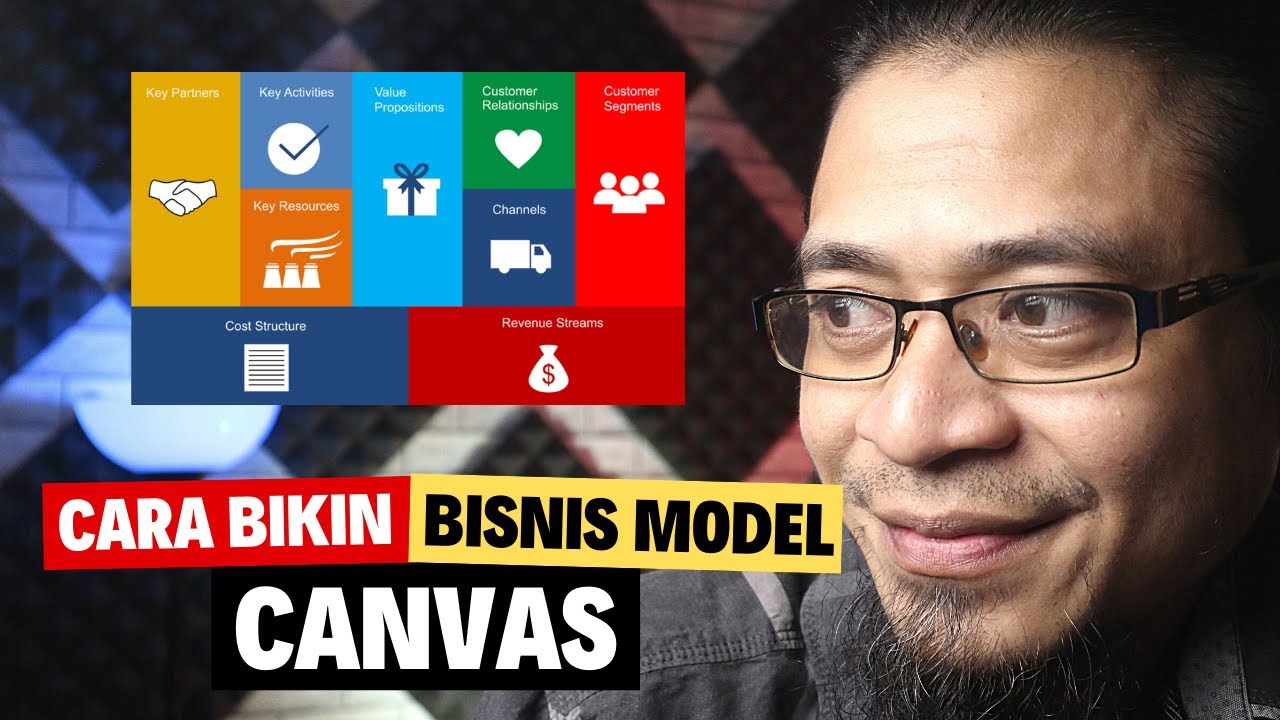
TLDRThis lecture explains the Business Model Canvas (BMC), a strategic tool used to map out and evaluate business models. The BMC consists of key components such as Customer Segments, Value Proposition, Channels, Customer Relationships, Revenue Streams, Key Resources, Key Activities, Key Partnerships, and Cost Structure. Each component is discussed in detail, highlighting their importance in building a successful business. The lecture emphasizes the value of understanding these elements to optimize operations, address customer needs, and achieve business goals.
Takeaways
- 😀 Business Model Canvas (BMC) helps visualize the key components of a business, aiding in better analysis and decision-making.
- 😀 Customer Segments represent different groups or organizations that a business aims to serve, each with unique needs and requirements.
- 😀 Value Proposition combines products and services to create unique value for specific customer segments, with elements like novelty, performance, and cost reduction.
- 😀 Channels represent how a business communicates with and reaches its customer segments to deliver its value proposition.
- 😀 Customer Relationship refers to the various ways a business can build and maintain relationships with its customers, aiming for both customer acquisition and retention.
- 😀 Revenue Streams describe the cash flow a business generates from its customer segments, including sales, subscriptions, and licensing.
- 😀 Key Resources are the critical assets needed for the business model to function, including physical, financial, intellectual, and human resources.
- 😀 Key Activities are the essential actions or operations that a business must carry out to create and deliver its value proposition.
- 😀 Key Partners refer to suppliers, collaborators, or other companies that help a business achieve its objectives, often to optimize operations, acquire resources, or access new markets.
- 😀 Cost Structure outlines the expenses associated with operating the business, including costs related to creating, delivering, and maintaining its products/services and customer relationships.
Q & A
What is the purpose of the Business Model Canvas?
-The Business Model Canvas is a tool designed to provide a comprehensive view of a business, helping to analyze key components, identify weaknesses, and develop strategies to achieve business objectives.
What are Customer Segments in the Business Model Canvas?
-Customer Segments are groups of people or organizations that a business aims to reach or serve, each with specific needs, ways of interaction, profitability, and value perceptions.
How is a Value Proposition defined in the Business Model Canvas?
-A Value Proposition describes the combination of products and services that create unique value for a specific customer segment, addressing their needs, improving performance, or offering benefits like convenience, cost reduction, or innovation.
What functions do Channels serve in a business model?
-Channels communicate the value proposition to customers and help increase awareness, facilitate evaluation, enable purchases, deliver value, and provide post-purchase support.
What types of Customer Relationships can a business establish?
-Businesses can establish various types of relationships including personal assistance, dedicated personal assistance, self-service, automated services, communities, and co-creation with customers.
What are Revenue Streams and what are some examples?
-Revenue Streams represent the cash a business generates from each customer segment. Examples include asset sales, usage fees, subscription fees, leasing, licensing, intermediary services, commissions, and advertising.
What are Key Resources in a business model?
-Key Resources are the essential assets required for a business to operate. They can be physical (machinery, technology), financial, intellectual (brands, patents), or human resources.
What are Key Activities, and what types are typically involved?
-Key Activities are the most important actions a business must perform to deliver its value proposition. They generally include production or operational activities, service delivery, and platform or network management.
Why are Key Partnerships important, and what are their purposes?
-Key Partnerships involve networks of suppliers and collaborators. They are important to optimize operations, acquire resources, gain knowledge, and expand or access new markets.
What does Cost Structure represent in the Business Model Canvas?
-Cost Structure represents all costs incurred to operate a business model, including costs for creating and delivering value, maintaining customer relationships, and generating revenue.
How does understanding Customer Segments help in business strategy?
-By understanding Customer Segments, a business can tailor products, services, communication channels, and pricing strategies to meet specific needs, improving customer satisfaction and profitability.
What are the elements that contribute to creating a strong Value Proposition?
-Elements include product novelty, performance, customization, solving customer problems, design, brand/status, price, cost reduction, risk reduction, access, and convenience for the customer.
Outlines

このセクションは有料ユーザー限定です。 アクセスするには、アップグレードをお願いします。
今すぐアップグレードMindmap

このセクションは有料ユーザー限定です。 アクセスするには、アップグレードをお願いします。
今すぐアップグレードKeywords

このセクションは有料ユーザー限定です。 アクセスするには、アップグレードをお願いします。
今すぐアップグレードHighlights

このセクションは有料ユーザー限定です。 アクセスするには、アップグレードをお願いします。
今すぐアップグレードTranscripts

このセクションは有料ユーザー限定です。 アクセスするには、アップグレードをお願いします。
今すぐアップグレード




5.0 / 5 (0 votes)

