Cardiopatias Congênitas | PEDIATRIA | 35/365
Summary
TLDRThis video provides a detailed explanation of congenital heart diseases in pediatrics, focusing on common conditions such as atrial and ventricular septal defects, patent ductus arteriosus, and more. It highlights their causes, symptoms, and the physiological consequences of these conditions, including cyanosis and pulmonary hypertension. The video also covers the complex mechanisms behind each heart defect and emphasizes the importance of early diagnosis and surgical intervention. Viewers will gain a deeper understanding of these conditions and their management, with insights into how the heart's blood flow is affected in congenital heart diseases.
Takeaways
- 😀 Congenital heart diseases are common in pediatrics and important for both cardiology and pediatrics to understand.
- 😀 Atrial septal defect (ASD) leads to a left-to-right shunt, causing right atrial volume overload, but no cyanosis.
- 😀 A small ASD may close by age two, but larger defects may require surgery to prevent complications like heart failure.
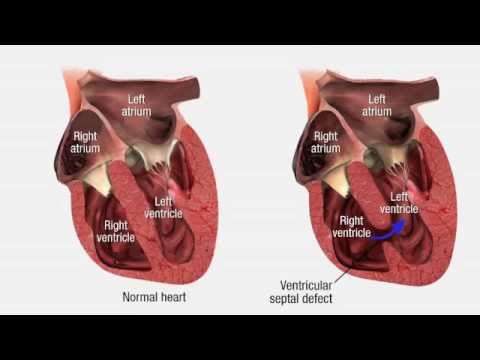
- 😀 Ventricular septal defect (VSD) causes a left-to-right shunt with a risk of pulmonary hypertension, potentially progressing to Eisenmenger syndrome.
- 😀 Persistent ductus arteriosus (PDA) keeps blood flowing from the aorta to the pulmonary artery, leading to left heart overload and potential pulmonary hypertension.
- 😀 Coarctation of the aorta causes high blood pressure in the upper body and low pressure in the lower limbs due to aortic obstruction.
- 😀 All the aforementioned congenital heart defects are considered acyanotic because they do not directly result in systemic blood mixing.
- 😀 Cyanotic congenital heart defects involve the mixing of venous and arterial blood, leading to oxygen-poor blood circulating in the body.
- 😀 Tetralogy of Fallot is a cyanotic condition that combines a VSD, pulmonary stenosis, right ventricular hypertrophy, and displaced aorta.
- 😀 In Tetralogy of Fallot, the mixing of blood and reduced pulmonary flow causes hypoxia, leading to critical conditions during increased cardiac demand.
- 😀 Transposition of the great arteries is a life-threatening condition where the aorta and pulmonary artery are reversed, causing parallel circulations that do not mix. Immediate surgical intervention is required.
Q & A
What is the main focus of the video?
-The video discusses congenital heart diseases, particularly their relevance in cardiology and pediatrics, explaining various conditions in an easily understandable way.
What is a common characteristic of congenital heart diseases discussed in the video?
-Many of the congenital heart diseases discussed in the video are categorized as 'acyanotic,' meaning they do not cause cyanosis (a lack of oxygen in the blood).
What is the first congenital heart condition mentioned in the video?
-The first condition discussed is Atrial Septal Defect (ASD), which involves a defect in the atrial septum, allowing blood to flow from the left atrium to the right atrium.
Why is Atrial Septal Defect (ASD) considered a non-cyanotic condition?
-ASD is considered non-cyanotic because there is no mixing of venous blood with arterial blood going into the systemic circulation. The problem results in increased blood flow to the lungs, causing pulmonary symptoms instead.
What happens to the right side of the heart in Atrial Septal Defect (ASD)?
-The right side of the heart experiences a volume overload as more blood enters the right atrium due to the communication between the atria. Over time, this can lead to right-sided heart dilation.
What is the most common congenital heart condition discussed in the video?
-The most common condition discussed is Ventricular Septal Defect (VSD), which involves a defect in the ventricular septum, allowing blood to flow from the left ventricle to the right ventricle.
What is the main difference between Atrial Septal Defect (ASD) and Ventricular Septal Defect (VSD)?
-The key difference is that ASD occurs between the atria, while VSD occurs between the ventricles. In VSD, the blood flow causes a volume overload on the left side of the heart, whereas ASD primarily affects the right side.
What condition occurs if pulmonary hypertension develops as a result of VSD?
-If pulmonary hypertension develops due to VSD, it can lead to Eisenmenger syndrome, where the pressures in the lungs exceed the pressures in the heart, causing blood flow to reverse and resulting in cyanosis.
What is Persistent Ductus Arteriosus (PDA) and how does it affect the circulation?
-Persistent Ductus Arteriosus (PDA) is when the ductus arteriosus, a vessel that connects the pulmonary artery to the aorta, fails to close after birth. This results in a continuous flow of blood from the aorta to the pulmonary artery, causing excessive blood flow to the lungs.
What is the main clinical feature of Coarctation of the Aorta (CoA)?
-Coarctation of the Aorta causes an obstruction in the aorta, resulting in high blood pressure in the upper limbs and low blood pressure in the lower limbs, leading to deficits in circulation to the lower body.
What is Tetralogy of Fallot and what are its main characteristics?
-Tetralogy of Fallot is a congenital heart defect involving four main features: ventricular septal defect, pulmonary stenosis, right ventricular hypertrophy, and dextroposition of the aorta. This condition leads to mixed oxygenated and deoxygenated blood being circulated, resulting in cyanosis.
Why can a child with Tetralogy of Fallot become more cyanotic during certain episodes?
-During episodes like crying or increased heart rate, the blood flow to the lungs becomes restricted due to pulmonary stenosis, causing an increase in deoxygenated blood entering the systemic circulation and worsening cyanosis.
What is the treatment for the conditions discussed in the video?
-Surgical intervention is often required to correct the congenital defects. For Tetralogy of Fallot, surgery is necessary to repair the defects, and in some cases, prostaglandins are used to maintain the ductus arteriosus temporarily until surgery can be performed.
Outlines

このセクションは有料ユーザー限定です。 アクセスするには、アップグレードをお願いします。
今すぐアップグレードMindmap

このセクションは有料ユーザー限定です。 アクセスするには、アップグレードをお願いします。
今すぐアップグレードKeywords

このセクションは有料ユーザー限定です。 アクセスするには、アップグレードをお願いします。
今すぐアップグレードHighlights

このセクションは有料ユーザー限定です。 アクセスするには、アップグレードをお願いします。
今すぐアップグレードTranscripts

このセクションは有料ユーザー限定です。 アクセスするには、アップグレードをお願いします。
今すぐアップグレード関連動画をさらに表示

Congenital Heart Malformations Made Easy (8 Main Types)

Heart murmurs for beginners Part 2: Atrial septal defect, ventricular septal defect & PDA🔥🔥🔥🔥
Cardiovascular Pathology - Heart Disease

Fetal Circulation | Cardiovascular system | Step 1 Simplified

Heart diseases in pregnancy | Obstetrics | Med Vids made simple

Minggu 6 - Subtopik 1 - Kursus USG Obstetri Dasar Terbatas
5.0 / 5 (0 votes)

