‘EDSA@40,’ dokumentaryo ni Howie Severino (Full Episode) | I-Witness
Summary
TLDRThe documentary explores the legacy of EDSA People Power, revisiting the iconic site and reflecting on the transformative events of the 1986 revolution. It examines how the Filipino people, through collective action, overthrew the dictatorship of Ferdinand Marcos. The narrative delves into the changes in Philippine society since then, from improvements in infrastructure like bike lanes to the struggles for justice, symbolized by the Freedom Memorial Museum. Through personal accounts, the film highlights the courage and sacrifices of ordinary Filipinos, raising questions about the nation’s progress and the lessons learned from this pivotal moment in history.
Takeaways
- 😀 The EDSA People Power Revolution in 1986 was a historic, peaceful uprising of over two million Filipinos united to end the dictatorship of Ferdinand Marcos.
- 😀 Despite physical changes like the introduction of bike lanes on EDSA, the core issues of inequality and traffic congestion persist in modern-day Philippines.
- 😀 The EDSA spirit is remembered as a symbol of freedom and unity, yet the struggles of marginalized groups such as cyclists and pedestrians remain largely ignored by the authorities.
- 😀 The role of ordinary Filipinos, including religious figures, soldiers, and civilians from various walks of life, was pivotal in the success of the revolution.
- 😀 The assassination of Benigno Aquino Jr. in 1983 acted as a catalyst for the People Power Revolution, triggering widespread national outrage against the Marcos regime.
- 😀 The absence of a Martial Law Museum and delayed progress in its establishment reflect the country's struggle to fully reckon with its past and ensure historical memory is preserved.
- 😀 The memorials like the Bantayog ng mga Bayani stand as important symbols of the sacrifices made during the Martial Law era, but are often underfunded and lack adequate governmental support.
- 😀 The Marcos regime's cultural and political legacy is still felt today, with major renovations taking place in sites associated with the regime, such as the Cultural Center of the Philippines.
- 😀 The documentary highlights the importance of preserving historical memory, not just for reflection but also as a guide to avoid repeating the mistakes of the past.
- 😀 The impact of People Power was not limited to the Philippines; the revolution inspired the world, demonstrating the power of unity and love in the face of authoritarianism.
Q & A
What is the significance of EDSA in Metro Manila?
-EDSA, known for its heavy traffic, is also a historical landmark symbolizing the 1986 People Power Revolution, where millions of Filipinos united to end the dictatorship of Ferdinand Marcos.
What was the atmosphere like during the EDSA revolution?
-During the EDSA revolution, the atmosphere was charged with a sense of unity and courage. Ordinary Filipinos, including children, women, priests, and activists, stood together to fight for democracy, defying tanks and soldiers.
How did the situation on EDSA change from 1986 to the present?
-While the political situation has shifted, certain challenges persist, such as the lack of respect for pedestrians and cyclists. For example, despite the introduction of bike lanes in 2010, issues like motorcycles using these lanes remain a concern.
How does the EDSA Shrine symbolize the Filipino struggle for freedom?
-The EDSA Shrine is a memorial to the peaceful resistance of the People Power Revolution. It stands as a symbol of courage, where Filipinos faced soldiers and tanks in the fight for their freedom.
What role did the church play in the People Power Revolution?
-The church played a pivotal role by encouraging Filipinos to take action. Cardinal Sin’s call to the people of EDSA was a turning point in rallying the public to oppose the Marcos regime.
Why do some people still view the EDSA revolution as a miracle?
-Many regard the EDSA revolution as a miracle because it marked a peaceful transition of power, where Filipinos from all walks of life came together to peacefully overthrow a dictator, inspiring the world.
What is the current state of the proposed Martial Law Museum?
-The Martial Law Museum, intended to honor victims of human rights violations during Marcos' regime, has faced delays and is still pending approval. While some efforts to build it continue, much of the funding and support remains uncertain.
Why is the Bantayog ng mga Bayani important?
-The Bantayog ng mga Bayani is a vital memorial that honors those who fought against the martial law regime. It houses the faces and stories of those who sacrificed their lives for freedom, offering a physical space to remember their contributions.
What is the current perspective on the Marcos regime in the Philippines?
-While the Marcos regime is often seen with mixed emotions, many still recall the economic crises and repression of the time. The recent renovations to cultural sites associated with the Marcoses reflect ongoing debates about their legacy.
How has the People's Power Revolution impacted the current generation of Filipinos?
-The People Power Revolution, although celebrated by some as a moment of unity and victory, has left a complex legacy. Many of the current generation either do not fully grasp its significance or view it through different political lenses.
Outlines

このセクションは有料ユーザー限定です。 アクセスするには、アップグレードをお願いします。
今すぐアップグレードMindmap

このセクションは有料ユーザー限定です。 アクセスするには、アップグレードをお願いします。
今すぐアップグレードKeywords

このセクションは有料ユーザー限定です。 アクセスするには、アップグレードをお願いします。
今すぐアップグレードHighlights

このセクションは有料ユーザー限定です。 アクセスするには、アップグレードをお願いします。
今すぐアップグレードTranscripts

このセクションは有料ユーザー限定です。 アクセスするには、アップグレードをお願いします。
今すぐアップグレード関連動画をさらに表示
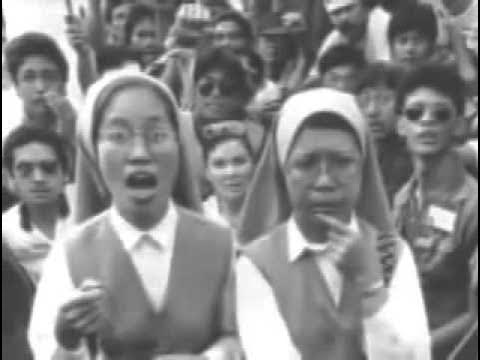
EDSA 30—Inquirer documentary special

Ika-39 anibersaryo ng EDSA People Power Revolution, ginugunita ngayong araw | Unang Balita
Philippines | EDSA 1986 | People Power Revolution | FULL EPISODE

September 2, 2024

‘Katapusan na’: This 80-year-old nun thought she would die at EDSA

ERA VARGAS - Resumo Desenhado
5.0 / 5 (0 votes)

