Cell Junctions | Cells | MCAT | Khan Academy
Summary
TLDRIn this video, we explore the three major types of cell junctions: tight junctions, desmosomes, and gap junctions. Tight junctions form a watertight seal between cells, preventing water and ions from passing through, and are crucial in organs like the bladder. Desmosomes act as spot welds, holding cells together while allowing small molecules to pass, typically in stress-experiencing tissues like skin. Gap junctions, on the other hand, are tunnels connecting cells, allowing for ion flow and electrical coupling, essential in cardiac muscle and neurons for propagating signals. These junctions work together to maintain cellular integrity and communication.
Takeaways
- 🔹 Cell junctions are structures that connect cells to each other, mainly found in epithelial tissue.
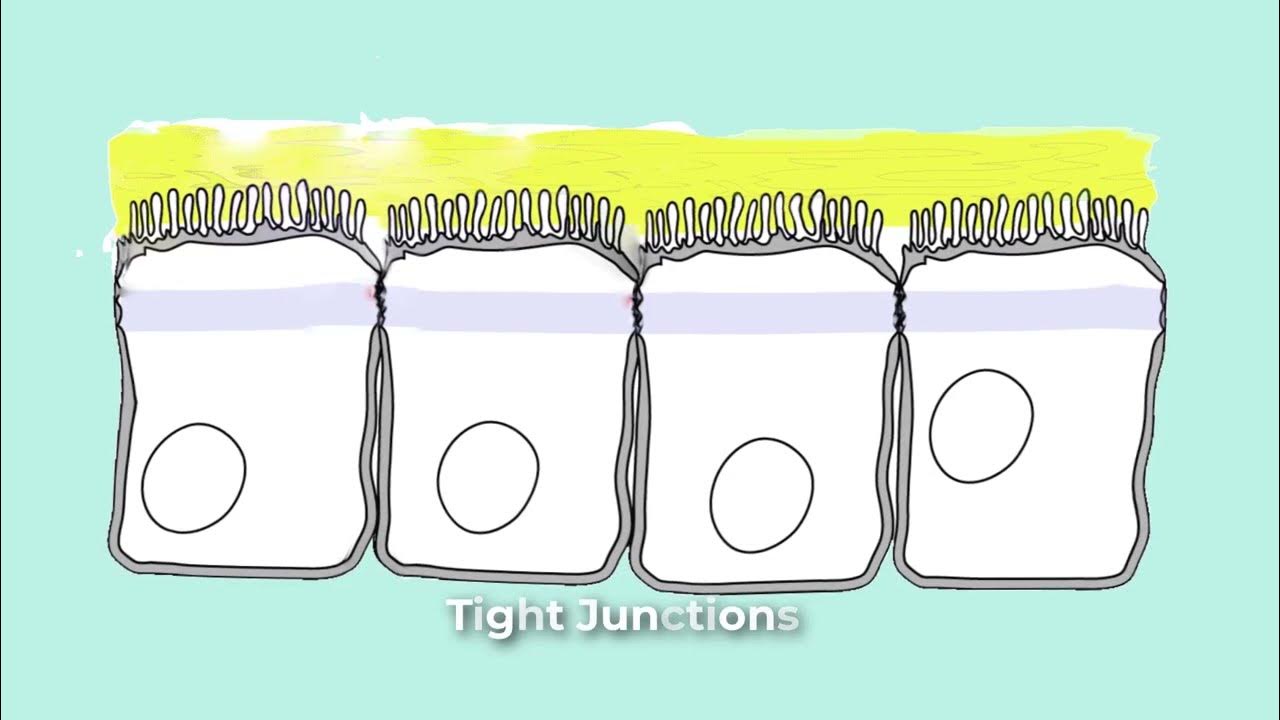
- 💧 Tight junctions form a watertight seal that prevents water, ions, and other molecules from passing between cells.
- 🚰 Tight junctions are commonly located in the bladder, intestines, and kidneys where fluid barriers are essential.
- 🔧 Desmosomes act like spot welds, holding cells together while allowing water, ions, and small molecules to pass between them.
- 💪 Desmosomes provide mechanical strength and flexibility, making them common in tissues exposed to stress like skin and intestines.
- 🌉 Gap junctions form tunnels between cells that allow the direct flow of water, ions, and small molecules.
- ⚡ Gap junctions enable electrical coupling, allowing action potentials to propagate in tissues like cardiac muscle and neurons.
- 🧩 Some tissues, like the intestines, can contain both tight junctions and desmosomes in the same cell layer.
- 📌 Tight junctions block passage completely, desmosomes hold cells together but allow some flow, and gap junctions allow free exchange of molecules and signals.
- 🫀 Gap junctions are crucial for coordinated cell function, such as heartbeats, by facilitating rapid ion exchange.
Q & A
What are cell junctions?
-Cell junctions are structures that connect cells to one another. They are particularly common in epithelial tissue, where they help maintain tissue integrity and regulate the passage of materials between cells.
What is the main function of tight junctions?
-The main function of tight junctions is to create a watertight seal between adjacent cells. This prevents the passage of water, ions, and other molecules between cells, ensuring a barrier that helps protect organs like the bladder and intestines.
In what types of tissues are tight junctions typically found?
-Tight junctions are typically found in tissues where a watertight seal is crucial, such as the bladder, intestines, and kidneys, where leakage of fluid or waste would be detrimental.
What are desmosomes and how do they function?
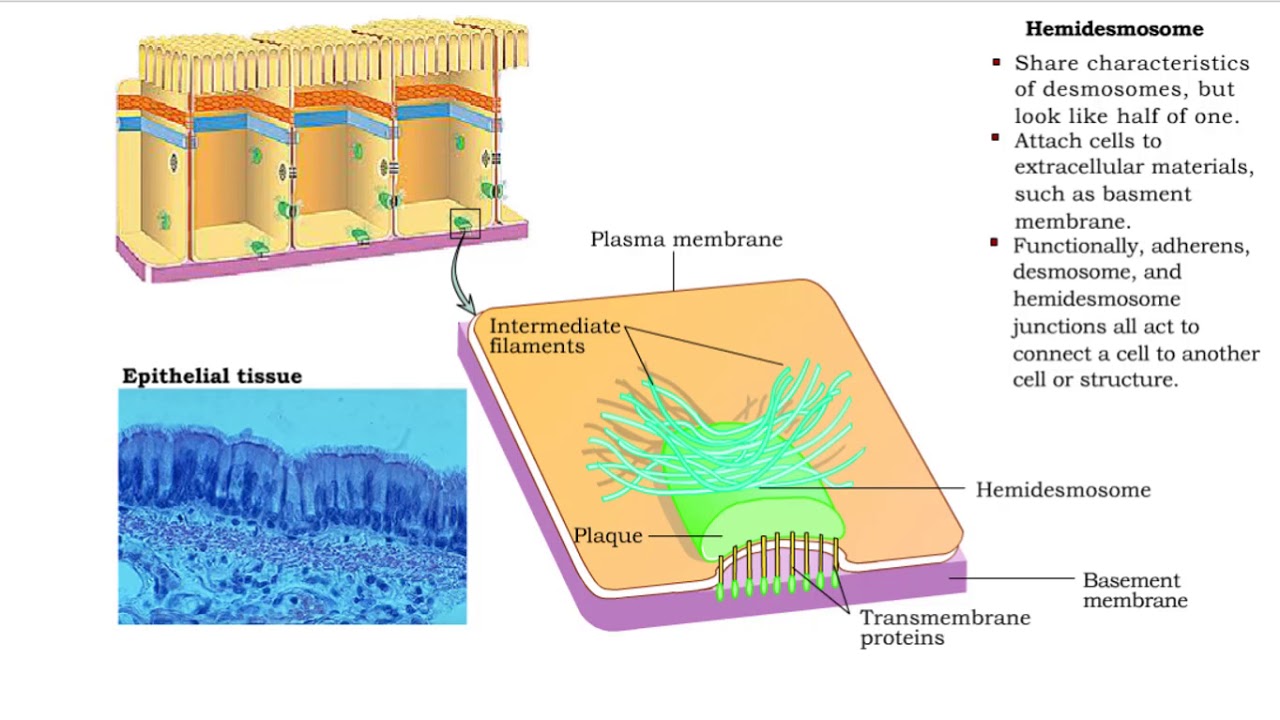
-Desmosomes are structures that link cells together by anchoring to the cytoskeleton. They allow some movement between cells, enabling small molecules, like ions and water, to pass through. They are designed to provide structural stability, especially in tissues subject to mechanical stress.
What is the main difference between tight junctions and desmosomes?
-The main difference is that tight junctions form a complete barrier, preventing the flow of water and ions between cells, while desmosomes act like spot welds that hold cells together but allow for the passage of small molecules, providing flexibility under stress.
Where are desmosomes commonly found in the body?
-Desmosomes are commonly found in tissues that experience mechanical stress, such as the skin and intestines, helping to provide resilience and maintain structural integrity.
Can tight junctions and desmosomes be found in the same tissue?
-Yes, both tight junctions and desmosomes can be found in the same tissue, such as the intestinal tissue, where they perform different roles in regulating molecular passage and providing mechanical support.
What are gap junctions and how do they work?
-Gap junctions are specialized connections between cells that form tunnels, allowing ions, water, and other small molecules to flow directly from one cell to another. They are important for electrical coupling and the spread of action potentials in tissues like cardiac muscle and neurons.
What role do gap junctions play in cardiac muscle?
-In cardiac muscle, gap junctions allow the rapid spread of action potentials between cells, which is essential for synchronized heartbeats and proper heart function.
Why are gap junctions important in neurons?
-Gap junctions are important in neurons because they allow electrical signals to propagate quickly between cells, facilitating rapid communication in neural circuits and aiding in functions like reflexes and synchronized neural activity.
Outlines

このセクションは有料ユーザー限定です。 アクセスするには、アップグレードをお願いします。
今すぐアップグレードMindmap

このセクションは有料ユーザー限定です。 アクセスするには、アップグレードをお願いします。
今すぐアップグレードKeywords

このセクションは有料ユーザー限定です。 アクセスするには、アップグレードをお願いします。
今すぐアップグレードHighlights

このセクションは有料ユーザー限定です。 アクセスするには、アップグレードをお願いします。
今すぐアップグレードTranscripts

このセクションは有料ユーザー限定です。 アクセスするには、アップグレードをお願いします。
今すぐアップグレード関連動画をさらに表示
Cell Junctions for Anatomy and Physiology - Gap, Cadherens, Adherens, Anchoring, Tight, Desmisomes..

Aula 5 - Especializações da Membrana Plasmática

Histology4: Apical & Lateral Surface Features

Cell Junctions

Sistemi di giunzione cellulare. Giunzioni cellulari biologia
Type of Cell Junctions - Desmosome, Hemidesmosomes and Gap Junctions
5.0 / 5 (0 votes)

