[이슈] "AI 특이점 와있다, 2030년엔 결국..." 머스크 '인류 생존' 작심 인터뷰 풀영상/2026년 1월 12일(월)/KBS
Summary
TLDRIn this engaging conversation, the speakers delve into the transformative power of AI and robotics, discussing their potential to revolutionize industries, including medicine, and to reshape the future of human life. They touch on the concept of universal basic income, productivity surges, and the possibility of extending human longevity. With optimism, they explore how AI could bring prosperity and solve complex challenges, while also acknowledging the uncertainty surrounding these advancements. They reflect on the inevitability of rapid technological progress and the profound implications for society's future.
Takeaways
- 😀 AI and exponential technologies, particularly robotics, will drive massive productivity increases, making goods and services essentially free by reducing costs to the minimum—primarily materials and energy.
- 😀 Traditional concepts like retirement will become irrelevant as the cost of living decreases dramatically due to advancements in AI and automation.
- 😀 The **Universal High Service System (UHSS)** is proposed as a future model where high-quality services (e.g., healthcare, entertainment, housing) are universally available and free, replacing the concept of Universal Basic Income (UBI).
- 😀 The acceleration of AI's capabilities will lead to deflation in the economy, as goods and services can be produced more efficiently, outpacing the growth of money supply.
- 😀 AI and robotics are predicted to rapidly outperform humans in fields like surgery, where the best robot surgeons could surpass human professionals in just a few years, democratizing access to top-quality medical care worldwide.
- 😀 Longevity, or extending the human lifespan, is seen as an extremely solvable problem, with the potential for humans to double their lifespan through advancements in biotechnology and AI.
- 😀 The concept of immortality is rejected in favor of a more achievable goal: extending life to 120-150 years, while acknowledging that the rapid acceleration of AI may lead to people living longer than ever before.
- 😀 There is an increasing need for society to adapt to AI-driven changes, as exponential growth in AI's intelligence and capabilities is unavoidable. Governments, businesses, and individuals must prepare for these disruptions.
- 😀 The singularity (the point when AI exceeds human intelligence) is believed to be already underway, with predictions that AI will surpass the combined intelligence of all humans by 2030.
- 😀 AI's exponential growth will result in widespread underreaction from society and governments, which are largely unprepared for the scale of AI's transformative power and the economic shifts it will cause.
Q & A
What does the speaker mean by 'AI and robotics the supersonic tsunami'?
-The speaker is referring to the rapid and overwhelming pace at which AI and robotics are advancing. The term 'supersonic tsunami' suggests that these technological changes will be both fast and transformative, potentially creating massive disruptions in society.
Why does the speaker believe that saving for retirement might become irrelevant?
-The speaker suggests that with advancements in AI and robotics, the cost of living could dramatically decrease, as goods and services will become nearly free, and people's needs could be met without the traditional financial structures, making the idea of saving for retirement obsolete.
What is the speaker's view on Universal High Income (UHI) and Universal High Stuff and Services (UHSS)?
-The speaker proposes that rather than a traditional UHI, which involves taxing and redistributing wealth, a Universal High Stuff and Services (UHSS) approach might be more effective. This concept involves providing everyone with access to goods and services without a heavy financial burden, driven by AI's ability to lower production costs and improve efficiency.
How does the speaker explain the potential for deflation in the future economy?
-The speaker explains that as AI and automation increase the efficiency of production and service provision, prices for goods and services could drop. With a faster growth rate of production than the money supply, deflation could occur, leading to a decrease in overall costs in the economy.
What is the 'singularity,' and how does the speaker see it unfolding?
-The singularity refers to a point in time when AI reaches a level of self-improvement that it accelerates beyond human control or comprehension. The speaker suggests that we are already within this period of rapid change and that the timeline for further developments, including AGI (Artificial General Intelligence), is rapidly approaching, with 2026 being a potential target for its emergence.
How does the speaker envision the role of AI in reshaping medicine?
-The speaker believes that AI and robotics will revolutionize medicine, with machines like humanoid robots outperforming human surgeons in terms of skill and efficiency. In a few years, AI-powered robots will likely be performing surgeries better and more precisely than the best human doctors, with low costs due to the technological advancements in AI and robotics.
What are the ethical considerations discussed in the transcript regarding AI's development?
-The speaker stresses the importance of ensuring that AI is programmed to seek the truth and not be forced to believe falsehoods. They also discuss the idea of programming AI to respect sentient life, including humans, and to foster curiosity and beauty, which would lead to a more harmonious relationship with humanity.
How does the speaker perceive the future of longevity and human life extension?
-The speaker believes that longevity or semi-immortality is an achievable goal, arguing that the process of aging is a program that can be altered. They draw parallels with species that live significantly longer lives, such as the Greenland shark, and suggest that humans could extend their lifespan significantly within the next decade through advances in technology.
What is meant by 'exponential improvements' in AI, and how does this impact society?
-Exponential improvements refer to the rapid and accelerating pace of growth in AI capabilities. As AI and robotics advance, their intelligence and efficiency will increase at an accelerating rate, leading to breakthroughs that disrupt industries and fundamentally change the economy, from medicine to manufacturing.
How does the speaker describe the global economic impact of AI and robotics?
-The speaker believes that AI and robotics will lead to a fundamental transformation of the global economy, with traditional job structures being replaced by AI-driven efficiency. This could lead to massive increases in productivity and profitability, but the challenge lies in ensuring that people still have the means to access goods and services, as labor costs become irrelevant.
Outlines

Cette section est réservée aux utilisateurs payants. Améliorez votre compte pour accéder à cette section.
Améliorer maintenantMindmap

Cette section est réservée aux utilisateurs payants. Améliorez votre compte pour accéder à cette section.
Améliorer maintenantKeywords

Cette section est réservée aux utilisateurs payants. Améliorez votre compte pour accéder à cette section.
Améliorer maintenantHighlights

Cette section est réservée aux utilisateurs payants. Améliorez votre compte pour accéder à cette section.
Améliorer maintenantTranscripts

Cette section est réservée aux utilisateurs payants. Améliorez votre compte pour accéder à cette section.
Améliorer maintenantVoir Plus de Vidéos Connexes

How Ai Is About To Transform The World’s Economy
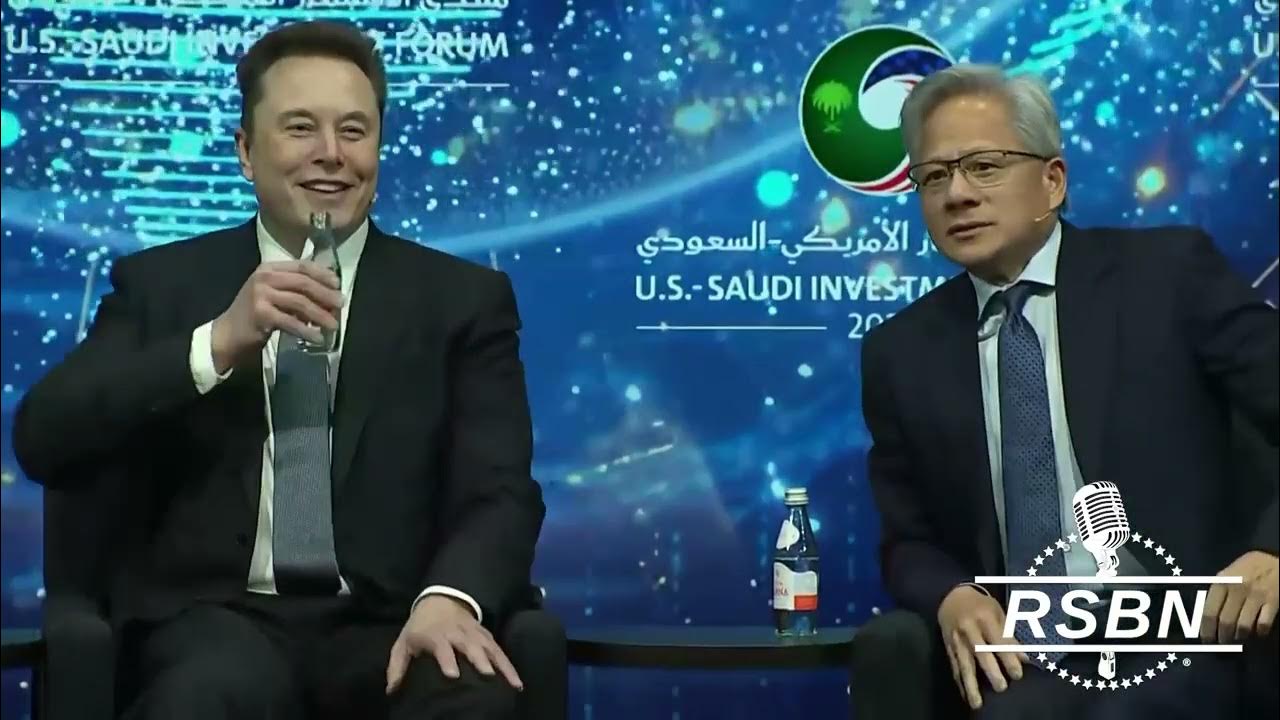
WATCH: Elon Musk Delivers Remarks at the U.S. - Saudi Investment Forum - 11/19/25

AI Hype Vs. Reality 2024 - The State of Emerging Technologies w/ Salim Ismail | EP #115

The Science and Technology of Tomorrow

AI News: Here's What We'll Get From AI in 2025

Bill Gates Joked with Steve Jobs About Taking the Wrong LSD, Talks AI and Optimism for the Future
5.0 / 5 (0 votes)

