Políticas Públicas - Unidade 1
Summary
TLDRThis video introduces the fundamentals of public policy, exploring key concepts, distinctions, and processes. It explains the difference between political decisions and public policies, highlighting how policies aim to address societal needs through non-coercive conflict resolution. The content covers the policy cycle—agenda setting, formulation, decision-making, implementation, and evaluation—and emphasizes the roles of various actors, including public officials, private stakeholders, international organizations, and opinion leaders. Viewers gain a clear understanding of how policies are developed, analyzed, and improved, providing a foundational framework for studying public administration and effectively engaging with societal issues.
Takeaways
- 😀 The main objective of Unit 1 is to provide basic theoretical concepts about public policies.
- 😀 Specific goals include understanding public policy concepts, distinguishing between politics and public policy, and analyzing policies systematically.
- 😀 Society is defined as a group of individuals with diverse interests and resources who interact to satisfy their needs, creating social complexity.
- 😀 Conflict management is a core focus, which can be approached through coercion or political negotiation, with an emphasis on political solutions.
- 😀 Political activities involve procedures that express power relations and aim to influence behavior or resolve conflicts peacefully in public decision-making.
- 😀 Public policies are formulated, decided, and implemented by public organizations to address collective issues, mobilizing interests and managing conflicts.
- 😀 Not all political decisions become public policies; public policies are broader and address societal needs, such as healthcare, education, or income transfer programs.
- 😀 Policy analysis is essential to understand why public policies are created, who they serve, and how to improve them.
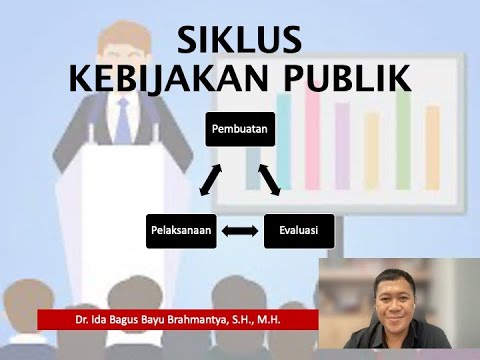
- 😀 The public policy cycle includes agenda formation, policy formulation, decision-making, implementation, and evaluation.
- 😀 Multiple actors are involved in public policy, including public officials, private stakeholders, international organizations, and opinion formers like media and researchers.
Q & A
What is the general objective of the first unit in the course on public policies?
-The general objective is to provide basic theoretical concepts about public policies.
How does the course differentiate between political activities and public policies?
-Political activities involve procedures to influence behavior and resolve conflicts peacefully, while public policies are proposals, decisions, and implementations by public organizations that affect the collective and mobilize interests and conflicts.
Why is understanding the concept of society important for public policies?
-Society is composed of individuals with different interests and resources of power, and understanding this helps in managing conflicts and addressing collective needs through public policies.
What are the two main ways to manage societal conflicts mentioned in the lecture?
-Conflicts can be managed either through coercion or through politics aimed at satisfying societal needs and interests.
Can every political decision be considered a public policy? Why or why not?
-No, not every political decision becomes a public policy. While all public policies are based on political decisions, they specifically aim to address societal interests and collective needs, unlike other political decisions which may focus on narrower or different objectives.
What are some examples of political decisions that are not public policies?
-Examples include constitutional amendments for re-election, maintaining certain taxes, or creating a new state in the federation.
What are examples of public policies mentioned in the transcript?
-Examples include agrarian reform, the Unified Health System (SUS), funding for higher education, and mechanisms for income transfer.
What is the policy cycle described in the lecture?
-The policy cycle includes agenda formation (identifying societal problems), policy formulation, decision-making, implementation, and evaluation, ensuring that policies meet societal needs effectively.
Who are the actors involved in the formation and implementation of public policies?
-Actors include public actors (politicians, parliamentarians, bureaucrats), private actors (businesses, workers, unions, associations), international agents (e.g., UN, WHO, UNESCO), and opinion leaders (media, artists, researchers).
Why is analyzing public policies important according to the lecture?
-Analyzing public policies helps understand why they were created, which interests they serve, and how they can be improved to better meet societal needs.
Outlines

Dieser Bereich ist nur für Premium-Benutzer verfügbar. Bitte führen Sie ein Upgrade durch, um auf diesen Abschnitt zuzugreifen.
Upgrade durchführenMindmap

Dieser Bereich ist nur für Premium-Benutzer verfügbar. Bitte führen Sie ein Upgrade durch, um auf diesen Abschnitt zuzugreifen.
Upgrade durchführenKeywords

Dieser Bereich ist nur für Premium-Benutzer verfügbar. Bitte führen Sie ein Upgrade durch, um auf diesen Abschnitt zuzugreifen.
Upgrade durchführenHighlights

Dieser Bereich ist nur für Premium-Benutzer verfügbar. Bitte führen Sie ein Upgrade durch, um auf diesen Abschnitt zuzugreifen.
Upgrade durchführenTranscripts

Dieser Bereich ist nur für Premium-Benutzer verfügbar. Bitte führen Sie ein Upgrade durch, um auf diesen Abschnitt zuzugreifen.
Upgrade durchführenWeitere ähnliche Videos ansehen



5.0 / 5 (0 votes)

