Delay Off Timer Circuit Explained – Control Lights, Fans & More Without a Microcontroller!
Summary
TLDRThis video demonstrates how to build a smart delay-off timer circuit using the LM393 comparator IC. Pressing a button turns on a light, which remains on for about a minute after release, automatically switching off. The tutorial explains the role of comparators, resistors, and capacitors in controlling timing, and shows how to safely drive LEDs or high-power AC loads using a transistor and relay with a flyback diode for protection. It also covers calculating resistor values for desired delays and making the delay adjustable with a potentiometer. Ideal for DIY electronics enthusiasts seeking a reliable, low-power timer solution.
Takeaways
- 💡 The video demonstrates how to build a delay-off timer circuit that keeps a light on for a set period after a button press.
- 🔌 The LM393 IC is the core component, featuring dual comparators, and operates from 3V to 38V, with 5V used in this project.
- ⚡ Comparators compare two voltages: if the non-inverting input exceeds the reference, the output goes high; otherwise, it stays low.
- 📏 Pin 2 of the LM393 is set as a reference voltage using a voltage divider, typically around 0.877V in this circuit.
- 🔋 A capacitor connected to pin 3 charges quickly when the button is pressed, then discharges slowly to create the timing delay.
- ⏱️ The RC time constant (resistance × capacitance) determines how long the output stays high after releasing the button.
- 💡 The LM393 output is open-collector, so a pull-up resistor is required to produce a true high signal for LEDs or transistors.
- 🔧 To control high-current devices like relays, use a transistor (e.g., 2N2222) as a switch between the LM393 output and the load.
- 🛡️ A flyback diode across the relay coil protects components from voltage spikes caused by collapsing magnetic fields.
- 🔄 Using a potentiometer instead of a fixed resistor allows the delay time to be adjustable, up to about 2 minutes with a 1 MΩ pot.
- 💵 Higher resistor values in the voltage divider reduce power consumption, though smaller values also work but draw more current.
- ✅ The circuit is fully analog, requires no microcontroller, and can control LEDs, fans, motors, and even high-power AC appliances via relays.
Q & A
What is the main function of the delay-off timer circuit described in the video?
-The delay-off timer circuit allows a light or device to stay on for a set period after a button is pressed and released, automatically turning off after the delay time elapses.
Which IC is used as the 'brain' of the circuit, and why is it chosen?
-The LM393 IC is used because it contains two built-in voltage comparators, works with a wide voltage range (3V to 38V), is affordable, and can handle timing without needing a microcontroller.
How does a comparator in the LM393 work?
-A comparator compares two voltages, A and B. If voltage A is higher than B, the output goes high (5V). If A is lower than B, the output goes low (0V). This produces a clean, digital on/off signal.
How is the timing delay implemented in this circuit?
-Timing is controlled by a capacitor that charges quickly when the button is pressed and discharges slowly afterward. The capacitor voltage at pin 3 is compared to a reference voltage at pin 2. The output stays high while pin 3 is above the reference, creating the delay.
What is the role of the voltage divider in the circuit?
-The voltage divider sets a stable reference voltage at pin 2 of the comparator. This ensures the comparator can reliably detect when the capacitor voltage drops below the reference and turn the output off.
Why are high-value resistors preferred in the voltage divider?
-High-value resistors reduce current draw, lowering power consumption. For example, using 47kΩ and 10kΩ resistors draws only 0.088 mA, compared to higher current if smaller resistors were used.
Why is a pull-up resistor needed on the LM393 output?
-The LM393 output is open-collector, meaning it can only pull low but not provide a high voltage. A pull-up resistor connects the output to the positive supply, ensuring a proper high signal when the output is floating.
How can the circuit drive high-current devices like relays?
-A transistor, such as a 2N2222 NPN, is used as a switch between the LM393 output and the relay. The LM393 sends a small signal to the transistor base, which then switches the larger current needed for the relay.
What is the purpose of a flyback diode across a relay coil?
-The flyback diode protects the circuit from high-voltage spikes generated when the relay coil is turned off. It provides a safe path for the current to dissipate, preventing damage to the transistor or IC.
How can the delay time be adjusted in this circuit?
-The delay can be adjusted by changing the resistor in the capacitor’s discharge path. Replacing the fixed resistor with a potentiometer allows manual tuning of the delay, for example, up to about 2 minutes with a 1 MΩ potentiometer.
Why does the capacitor need separate charge and discharge paths?
-The capacitor charges quickly through a low-resistance path for a fast response when the button is pressed, and discharges slowly through a higher-resistance path to create the desired delay before turning the output off.
Can this circuit control devices other than LEDs and relays?
-Yes, the circuit can control various 5V devices like fans, motors, or, with a relay, high-power AC appliances, as long as the transistor handles the required current.
Outlines

Dieser Bereich ist nur für Premium-Benutzer verfügbar. Bitte führen Sie ein Upgrade durch, um auf diesen Abschnitt zuzugreifen.
Upgrade durchführenMindmap

Dieser Bereich ist nur für Premium-Benutzer verfügbar. Bitte führen Sie ein Upgrade durch, um auf diesen Abschnitt zuzugreifen.
Upgrade durchführenKeywords

Dieser Bereich ist nur für Premium-Benutzer verfügbar. Bitte führen Sie ein Upgrade durch, um auf diesen Abschnitt zuzugreifen.
Upgrade durchführenHighlights

Dieser Bereich ist nur für Premium-Benutzer verfügbar. Bitte führen Sie ein Upgrade durch, um auf diesen Abschnitt zuzugreifen.
Upgrade durchführenTranscripts

Dieser Bereich ist nur für Premium-Benutzer verfügbar. Bitte führen Sie ein Upgrade durch, um auf diesen Abschnitt zuzugreifen.
Upgrade durchführenWeitere ähnliche Videos ansehen
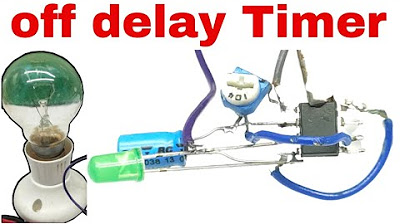
Off Delay Timer | how to make off delay timer | how to make delay timer | delay timer

Práctica 9: Circuito integrado 555

Como Fazer um Sequencial de Leds (muito simples)
How to Make a Digital Stopwatch | DLD Project | Engineering 7.0 |

Cara Membuat Rangkaian Lampu Menggunakan Sensor Cahaya di Proteus | Tutorial skematik
⚡ Proyecto con temporizador biestable con el NE555 y arranque de motor electrico SR con SET y RESET
5.0 / 5 (0 votes)

