Stephen Fry on God | The Meaning Of Life | RTÉ One
Summary
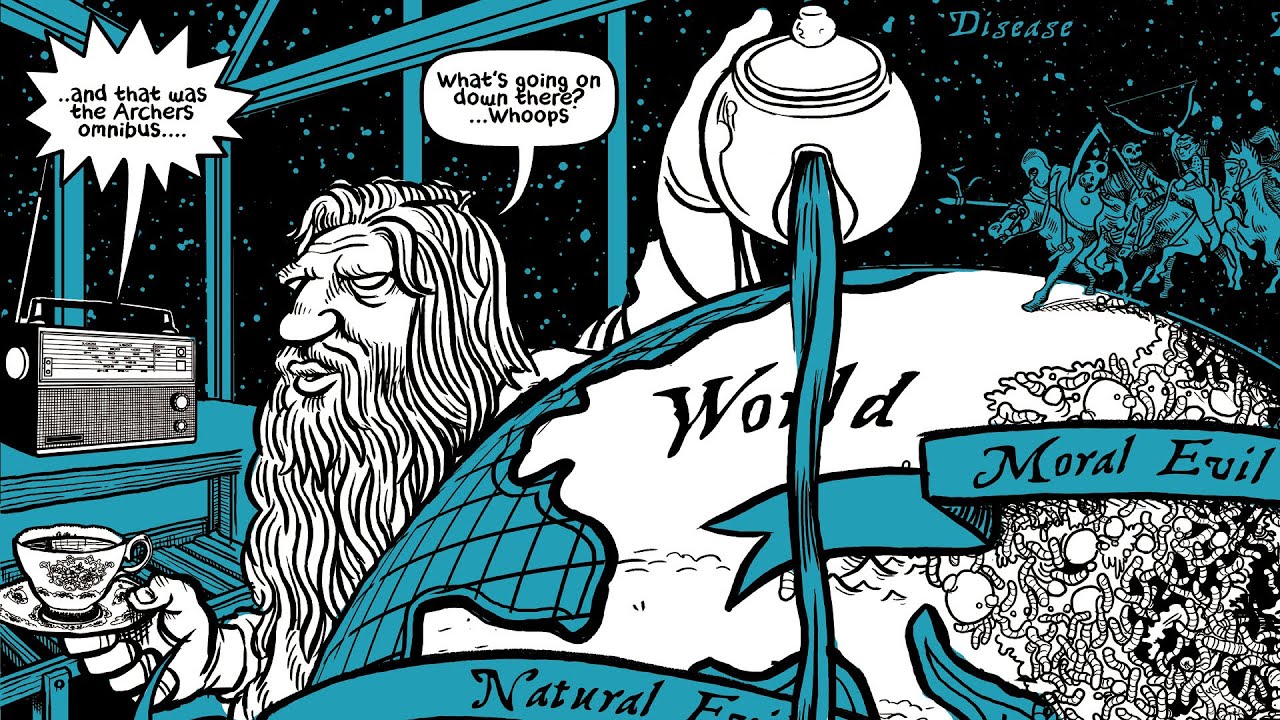
TLDRIn this thought-provoking dialogue, the speaker, reflecting on theodicy, challenges the existence of a benevolent God in a world filled with suffering and injustice. Expressing outrage at the pain caused by seemingly unnecessary natural processes, like the suffering of children, they argue that a truly benevolent deity would not create such a world. The speaker contrasts this with the Greek gods, who, though capricious, did not pretend to be all-wise or all-good. Ultimately, the speaker advocates for atheism, asserting that life without a monstrous God is simpler, purer, and more meaningful.
Takeaways
- 😀 The speaker critiques the concept of a benevolent God in light of suffering and injustice in the world.
- 😀 The problem of evil (why suffering exists if God is all-powerful and all-good) is a central focus of the argument.
- 😀 The speaker expresses a rejection of a 'capricious, selfish' God who creates a world filled with unnecessary misery.
- 😀 The suffering of children, particularly diseases like bone cancer, and the horror of parasitic insects blinding children are used as examples of the world's injustice.
- 😀 The speaker argues that a world designed by such a God would be 'utterly evil' and 'not acceptable'.
- 😀 Atheism, according to the speaker, isn't just about disbelief in God but also about rejecting the moral nature of a God who would create such a world.
- 😀 If confronted with God, the speaker would challenge Him directly, asking why such suffering exists and questioning His moral character.
- 😀 The speaker contrasts the Christian God with the Greek gods, who, despite their flaws, did not pretend to be benevolent or all-knowing.
- 😀 The Greek gods, with all their human-like flaws, are seen as more relatable than a perfect but indifferent deity.
- 😀 The speaker suggests that rejecting the idea of such a God makes life 'simpler, purer, cleaner' and ultimately more meaningful.
Q & A
What philosophical issue is Stephen Fry discussing in the transcript?
-Stephen Fry is discussing the problem of theodicy, which addresses why an all-powerful and benevolent God would allow suffering and evil in the world.
How does Fry react to the idea of meeting God at the Pearly Gates?
-Fry imagines confronting God with moral outrage, questioning the existence of a God who allows suffering, especially of innocent children, and calls such a God monstrous and undeserving of respect.
Why does Fry contrast the Judeo-Christian God with the Greek gods?
-Fry finds the Greek gods more relatable because they openly display human flaws and capriciousness, whereas the Judeo-Christian God claims to be all-knowing, all-good, and benevolent, making the existence of suffering harder to justify.
What examples of suffering does Fry mention in his critique of God?
-Fry cites bone cancer in children and insects that burrow into the eyes of children, causing blindness, as examples of suffering that cannot be morally justified.
How does Fry define atheism in the context of his argument?
-Fry defines atheism not just as disbelief in God, but as a moral stance against a deity who allows suffering and injustice, leading to a life that is simpler, purer, and more ethically coherent.
Why does Fry reject the idea of life 'on God's terms'?
-He rejects it because he sees God as morally corrupt, capricious, and selfish; living under such a God’s rules would require submission and gratitude toward a being unworthy of respect.
What is Fry's stance on the ethical legitimacy of God?
-Fry believes that a God who allows gratuitous suffering is utterly immoral and does not deserve any respect or worship.
How does Fry perceive the world despite its beauty?
-While acknowledging the world's splendor, Fry emphasizes that the existence of preventable suffering and cruelty makes it morally unacceptable to revere a deity who created it.
What emotional tone does Fry use in this discussion?
-Fry’s tone is passionate, indignant, and confrontational, reflecting moral outrage at the idea of an unjust and capricious God.
What does Fry suggest happens to life after rejecting belief in such a God?
-He suggests that life becomes simpler, clearer, and more worth living, as one is no longer morally obligated to respect or thank a deity that is unjust and harmful.
Why does Fry prefer mythological gods over an omnipotent God?
-Fry prefers mythological gods because they are flawed and human-like, making them more relatable and morally transparent, whereas an omnipotent God claiming perfect goodness creates moral tension when suffering exists.
Outlines

Dieser Bereich ist nur für Premium-Benutzer verfügbar. Bitte führen Sie ein Upgrade durch, um auf diesen Abschnitt zuzugreifen.
Upgrade durchführenMindmap

Dieser Bereich ist nur für Premium-Benutzer verfügbar. Bitte führen Sie ein Upgrade durch, um auf diesen Abschnitt zuzugreifen.
Upgrade durchführenKeywords

Dieser Bereich ist nur für Premium-Benutzer verfügbar. Bitte führen Sie ein Upgrade durch, um auf diesen Abschnitt zuzugreifen.
Upgrade durchführenHighlights

Dieser Bereich ist nur für Premium-Benutzer verfügbar. Bitte führen Sie ein Upgrade durch, um auf diesen Abschnitt zuzugreifen.
Upgrade durchführenTranscripts

Dieser Bereich ist nur für Premium-Benutzer verfügbar. Bitte führen Sie ein Upgrade durch, um auf diesen Abschnitt zuzugreifen.
Upgrade durchführenWeitere ähnliche Videos ansehen

The Argument from Evil, Clip 1 (Philosophy of Education Part 2, Section 18)

God is a Delusion | Oxford Union Speech - Alex O'Connor

Theodicy - God, Suffering, and Evil

UNIVERSITY DEBATE: MUSLIM VERSUS PHILOSOPHER | DOES GOD EXIST?

Sean McDowell Answers Your MOST-ASKED Apologetics Questions | Kirk Cameron on TBN
The Free Will Defence: A Good God vs The Problem of Evil
5.0 / 5 (0 votes)

