3-component Seismograms—Capturing the motion of an earthquake
Summary
TLDRThis script explains how earthquakes generate different types of seismic waves and why seismograph stations record motion in three components: vertical, north-south, and east-west. Because Earth moves in three dimensions, each component captures a different direction of ground motion. The script illustrates how various wave types affect structures, showing that P waves primarily produce vertical motion, while S waves generate stronger horizontal movement. Surface waves create complex motion recorded across all components. By analyzing the combined signals from these three recordings, seismologists can determine an earthquake’s magnitude, distance, and characteristics.
Takeaways
- 🌍 Earthquakes generate different types of seismic waves detectable on seismograms.
- 📈 Each seismograph station produces three seismograms for a single earthquake, reflecting movement in different directions.
- ⬆️ The three components measured are vertical (up-down), north-south, and east-west motions.
- 🏠 Movement in a specific direction only appears on the corresponding seismogram component.
- 🔄 Earthquakes can move the ground in all directions simultaneously, requiring three components to capture the full motion.
- 🌊 Body waves, like P waves and S waves, travel through the Earth along curved paths and reach seismic stations from below.
- 💨 P waves are compressive and mostly recorded on the vertical component due to movement in the wave's direction.
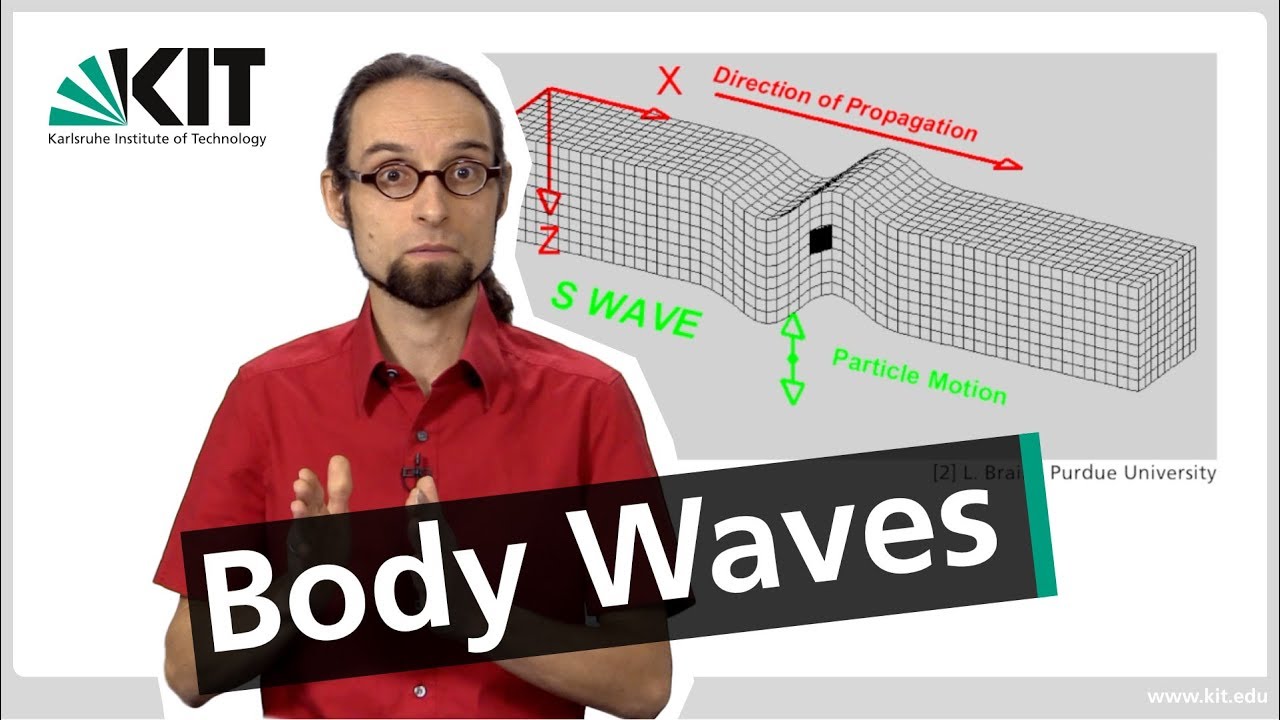
- ↔️ S waves are shearing waves, moving perpendicular to travel direction, mainly affecting horizontal components and causing more destruction.
- 🌊 Surface waves, such as Love and Rayleigh waves, have complex undulating motions and appear on all three components of a seismogram.
- 📊 By analyzing all three components together, seismologists can determine the earthquake's magnitude, distance, and type.
Q & A
Why does each seismograph station produce three different seismograms for each earthquake?
-Each seismograph station produces three seismograms because Earth's movement is three-dimensional. Each component measures a different direction of motion: vertical (up-down), north-south, and east-west. This helps seismologists understand the full range of ground movement during an earthquake.
What do the three components of a seismograph measure?
-The three components of a seismograph measure different directions of motion: vertical motion (up and down), north-south motion, and east-west motion. These allow for a complete understanding of how the ground moves during an earthquake.
Why is it important to have all three components on a seismograph?
-Having all three components allows seismologists to capture the full, three-dimensional movement of the Earth's surface. If only one component were used, it would only capture movement in one direction, leaving out crucial information about the earthquake's behavior.
How does the east-west direction of motion appear on a seismograph?
-When the Earth moves in the east-west direction, the motion is recorded on the seismograph's lower component. There will be no movement recorded on the north-south or vertical components.
What happens when the house moves in a north-south direction during an earthquake?
-When the house shifts north-south, the movement is recorded on the middle component of the seismograph, while there is no recorded motion on the vertical or east-west components.
How does vertical motion affect the seismograph?
-Vertical motion, or up-down movement, is recorded only on the top component of the seismograph. The north-south and east-west components do not capture this type of motion.
Why do earthquakes produce different types of seismic waves?
-Earthquakes produce different types of seismic waves, like body waves (P and S waves) and surface waves (Love and Rayleigh waves), because they move through the Earth in different ways and affect the ground in distinct manners.
How do body waves, such as P and S waves, travel through the Earth?
-Body waves, like P waves and S waves, travel through the Earth along curving paths. P waves are compressive waves, moving in the direction of the wave, while S waves are shear waves, moving perpendicular to the wave's direction.
Why are S waves more destructive than P waves?
-S waves are more destructive because they move more slowly than P waves and cause a shearing motion, which is harder on structures and the Earth's surface. They also arrive later, intensifying the shaking after the initial P wave.
What is the difference between how P waves and S waves are recorded on a seismograph?
-P waves primarily affect the vertical component of the seismograph, causing vertical motion. S waves, on the other hand, cause horizontal motion (back-and-forth movement), so they are primarily recorded on the horizontal components of the seismograph.
How do surface waves like Love and Rayleigh waves move, and how are they recorded?
-Surface waves, such as Love and Rayleigh waves, move in more complex, undulating patterns and affect all three components of the seismograph: vertical, north-south, and east-west. They are slower than body waves and can cause significant shaking across multiple directions.
How do seismologists use the combination of seismic wave data to understand an earthquake?
-Seismologists analyze the combined data from all three components of the seismograms to determine the earthquake's magnitude, its distance from the station, and the type of seismic waves that were produced. This information helps in understanding the earthquake's behavior and impact.
Outlines

Dieser Bereich ist nur für Premium-Benutzer verfügbar. Bitte führen Sie ein Upgrade durch, um auf diesen Abschnitt zuzugreifen.
Upgrade durchführenMindmap

Dieser Bereich ist nur für Premium-Benutzer verfügbar. Bitte führen Sie ein Upgrade durch, um auf diesen Abschnitt zuzugreifen.
Upgrade durchführenKeywords

Dieser Bereich ist nur für Premium-Benutzer verfügbar. Bitte führen Sie ein Upgrade durch, um auf diesen Abschnitt zuzugreifen.
Upgrade durchführenHighlights

Dieser Bereich ist nur für Premium-Benutzer verfügbar. Bitte führen Sie ein Upgrade durch, um auf diesen Abschnitt zuzugreifen.
Upgrade durchführenTranscripts

Dieser Bereich ist nur für Premium-Benutzer verfügbar. Bitte führen Sie ein Upgrade durch, um auf diesen Abschnitt zuzugreifen.
Upgrade durchführenWeitere ähnliche Videos ansehen

MK Geofisika Dasar-Pertemuan ke-3- Seismograf dan Gelombang Seismik Bagian 1

Seismic waves earthquake
Basic Geophysics: Body Waves

Earth’s Interior, Seismic Waves and Tsunami | Grade 8 Science DepEd MELC Quarter 2 Module 2
Focal Mechanisms Explained: What are those “beach balls”? (Educational)

HOW A SEISMIC MOVEMENT IS PRODUCED EARTHQUAKE WAVES SEISMOLOGY ANIMATION WELL EXPLAINED
5.0 / 5 (0 votes)

