Skupenské teplo varu
Summary
TLDRThe video provides a detailed guide on calculating the heat required for phase changes, specifically the heat needed to boil water and ethanol using the formula q = m × L. It explains the concept of latent heat of vaporization, its use for both boiling and condensation, and emphasizes careful attention to units (J, kJ, MJ, GJ) and proper substitution in formulas. The tutorial includes practical examples, demonstrating calculations for 10 kg of water and 10 tons of ethanol, along with unit conversions. It encourages mastering basic problems before tackling advanced multi-step exercises, highlighting the importance of physics understanding and mathematical skills to succeed in these challenges.
Takeaways
- 😀 Always read the problem carefully and identify what is known and what needs to be calculated.
- 😀 For phase change calculations, you need the mass of the substance and its specific latent heat of vaporization.
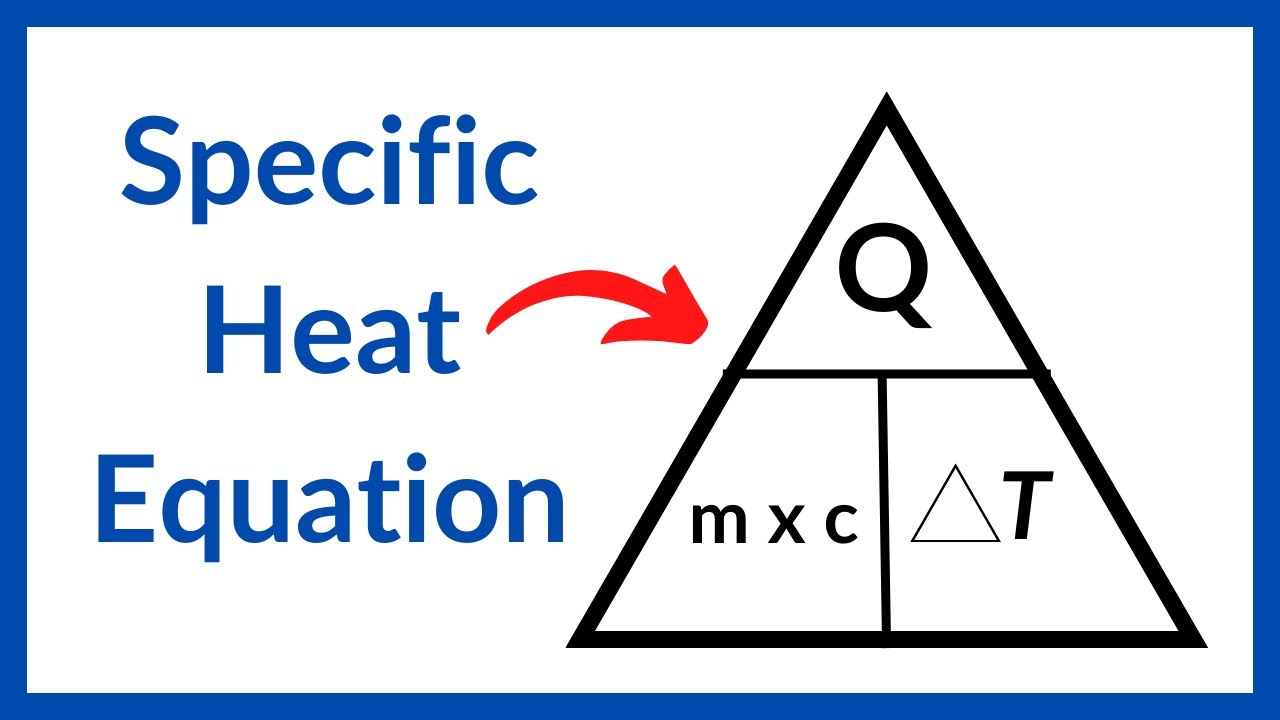
- 😀 The formula for calculating heat for a phase change is q_v = m × L_v, where q_v is heat, m is mass, and L_v is the specific latent heat.
- 😀 Specific latent heat values for boiling or condensation can be found in tables and are denoted with an index 'v'.
- 😀 The heat required for condensation is calculated the same way as for boiling, using the same specific latent heat.
- 😀 Unit conversions are important: 1 MJ = 1,000 kJ, 1 GJ = 1,000 MJ, and 1 kJ = 1,000 J.
- 😀 When solving problems, ensure correct order of operations and proper substitution into formulas.
- 😀 Example problems include calculating the heat required to boil 10 kg of water or 10 tons of ethanol.
- 😀 Compare the calculated heat with the available energy to determine if it is sufficient to complete the phase change.
- 😀 Mastery of basic examples builds confidence, but advanced problems may require combining multiple physics concepts and mathematical manipulation.
- 😀 Converting results between different energy units (J, kJ, MJ, GJ) is a key skill for problem-solving and comparison.
- 😀 Clear answers should indicate both the quantity calculated and the context of the problem, making them understandable without reading the original question.
Q & A
What is the formula used to calculate the heat required for a phase change?
-The heat required for a phase change is calculated using the formula q_v = m × L_v, where q_v is the heat, m is the mass of the substance, and L_v is the specific latent heat of vaporization or condensation.
What does the term 'specific latent heat of vaporization' (L_v) refer to?
-Specific latent heat of vaporization (L_v) is the amount of heat in kJ needed to convert 1 kg of a substance from liquid to gas without changing its temperature.
Can the same latent heat value be used for condensation?
-Yes, the same specific latent heat value (L_v) is used for condensation, because the energy released during condensation is equal to the energy required for vaporization.
How would you convert kJ to MJ or J?
-To convert kJ to MJ, divide by 1,000. To convert kJ to J, multiply by 1,000.
If you have 10 kg of water, how would you calculate the heat required to completely vaporize it?
-You multiply the mass of water (10 kg) by the specific latent heat of vaporization for water (L_v), then convert the result to the desired unit, such as kJ, MJ, or J.
Why is it important to pay attention to the order of values when substituting into the formula?
-Substituting the values in the correct order ensures the formula is applied correctly and avoids calculation errors, especially when working with units like kg and kJ.
How do you check if a given amount of heat is sufficient to boil a certain mass of liquid?
-Calculate the required heat using q_v = m × L_v and compare it to the available heat. If the available heat is less than the calculated q_v, it is not sufficient to boil the liquid completely.
What unit conversions are mentioned for handling large quantities of energy?
-The script mentions converting between joules (J), kilojoules (kJ), megajoules (MJ), and gigajoules (GJ). For example, 1 MJ = 1,000 kJ and 1 GJ = 1,000 MJ.
How is mass handled differently when the substance is given in tons rather than kilograms?
-Mass in tons should be converted to kilograms (1 t = 1,000 kg) before using it in the heat formula to ensure consistency with the units of specific latent heat.
What is the purpose of the first three examples in the script?
-The first three examples are basic exercises designed to practice calculating the heat for phase changes and unit conversions. They establish a foundation before moving on to more complex examples that require combining multiple physics and math skills.
What additional skills are needed for the more advanced examples (4–6)?
-Advanced examples require combining knowledge of physics concepts, such as phase changes and heat calculations, with mathematical skills, including rearranging and manipulating equations.
Why is it recommended to convert available heat to the same unit as the calculated heat?
-Converting to the same unit ensures a direct comparison between the required and available heat, preventing misinterpretation due to unit differences.
Outlines

Dieser Bereich ist nur für Premium-Benutzer verfügbar. Bitte führen Sie ein Upgrade durch, um auf diesen Abschnitt zuzugreifen.
Upgrade durchführenMindmap

Dieser Bereich ist nur für Premium-Benutzer verfügbar. Bitte führen Sie ein Upgrade durch, um auf diesen Abschnitt zuzugreifen.
Upgrade durchführenKeywords

Dieser Bereich ist nur für Premium-Benutzer verfügbar. Bitte führen Sie ein Upgrade durch, um auf diesen Abschnitt zuzugreifen.
Upgrade durchführenHighlights

Dieser Bereich ist nur für Premium-Benutzer verfügbar. Bitte führen Sie ein Upgrade durch, um auf diesen Abschnitt zuzugreifen.
Upgrade durchführenTranscripts

Dieser Bereich ist nur für Premium-Benutzer verfügbar. Bitte führen Sie ein Upgrade durch, um auf diesen Abschnitt zuzugreifen.
Upgrade durchführen



5.0 / 5 (0 votes)

