Pengujian Fosfat | Dinas Lingkungan Hidup Kab. Wonosobo
Summary
TLDRThis video demonstrates the process of testing phosphate samples in water and waste matrices according to the SNI 06 96989 31, 2005 standard. It details the preparation of reagent mixtures, including sulfuric acid, potassium antimonyl tartrate, ammonium molybdate, and ascorbic acid, to create a yellow solution for testing. Samples, including aquabidest, CRM solutions, and phosphate standards, are prepared and treated with the reagent mix. After resting for 15 minutes, the absorbance of the samples is measured using a spectrophotometer. The results are recorded and calculations are made using a calibration curve for accurate analysis of phosphate content.
Takeaways
- 🧪 The procedure describes phosphate testing in water and wastewater samples according to SNI 06-6989.31-2005 standards.
- 📋 Quality control is implemented using aquabidest as a blank, CRM nutrient solution for accuracy and precision control, and 0.5 mg/L phosphate solution as a calibration check standard (CCS).
- ⚗️ A mixed reagent solution is prepared from 5N sulfuric acid, potassium antimonyl tartrate, ammonium molybdate, and ascorbic acid.
- 🟡 The mixed reagent turns light yellow after homogenization, indicating it is ready for use in the test.
- 🧴 Sample, blank, CRM, and standard phosphate solutions are each pipetted (50 mL) into 100 mL Erlenmeyer flasks.
- ➕ Eight milliliters of the mixed reagent are added to each prepared solution before homogenization.
- 🕒 The reaction mixtures are covered with aluminum foil and allowed to stand for 15 minutes before measurement.
- 🌡️ The spectrophotometer is warmed up for 20 minutes prior to analysis to ensure stable measurements.
- 📏 The phosphate measurement is conducted at a wavelength of 886 nm, and the instrument is zeroed using the auto-zero function.
- 🧼 Cuvettes are rinsed with distilled water and a small amount of sample, then wiped clean to prevent interference in absorbance readings.
- 📊 Absorbance values are recorded in a laboratory worksheet for all tested solutions.
- 📈 Final phosphate concentrations are calculated using a calibration curve based on the recorded absorbance data.
Q & A
What is the purpose of the phosphate testing described in the script?
-The phosphate testing is conducted to analyze the phosphate content in water and wastewater samples following SNI 06 96989 31, 2005 standards.
What is used as a blank in the testing process?
-Aquabidest is used as the blank solution in this phosphate testing process.
What are the main solutions involved in the preparation of the testing mixture?
-The main solutions involved are 5N sulfuric acid, potassium antimonyl tartrate, ammonium molybdate, and ascorbic acid.
How much of each solution is used to prepare the mixture?
-50 mL of 5N sulfuric acid, 5 mL of potassium antimonyl tartrate, 15 mL of ammonium molybdate, and 30 mL of ascorbic acid are mixed.
What color does the solution turn after preparation, and what does this indicate?
-The solution turns pale yellow, indicating that it is ready for testing.
How are the samples prepared for the test?
-Each sample solution, including the sample, CRM (Certified Reference Material), and phosphate standard solution, is mixed and transferred to 100 mL Erlenmeyer flasks.
What is the next step after the preparation of the sample solutions?
-8 mL of the prepared mixture is added to each sample solution, and the solutions are homogenized.
How long are the sample solutions left to stand after mixing?
-The sample solutions are left to stand for 15 minutes after being sealed with aluminum foil.
What equipment is used to measure the absorbance of the samples?
-A spectrophotometer is used to measure the absorbance of the samples.
What is the wavelength used in the spectrophotometer for this test?
-The wavelength used for the phosphate testing is 886 nm.
What is done before testing each sample in the spectrophotometer?
-Before testing, the cuvette is rinsed with aquabidest and a little sample solution. It is then wiped clean with tissue to avoid any contamination that could affect the absorbance reading.
What should be done with the absorbance readings after they are taken?
-The absorbance readings should be recorded in a laboratory notebook for further analysis.
What calibration method is mentioned for determining the phosphate content?
-The calibration curve method is used to calculate the phosphate content, based on the absorbance readings of the samples.
Outlines

Dieser Bereich ist nur für Premium-Benutzer verfügbar. Bitte führen Sie ein Upgrade durch, um auf diesen Abschnitt zuzugreifen.
Upgrade durchführenMindmap

Dieser Bereich ist nur für Premium-Benutzer verfügbar. Bitte führen Sie ein Upgrade durch, um auf diesen Abschnitt zuzugreifen.
Upgrade durchführenKeywords

Dieser Bereich ist nur für Premium-Benutzer verfügbar. Bitte führen Sie ein Upgrade durch, um auf diesen Abschnitt zuzugreifen.
Upgrade durchführenHighlights

Dieser Bereich ist nur für Premium-Benutzer verfügbar. Bitte führen Sie ein Upgrade durch, um auf diesen Abschnitt zuzugreifen.
Upgrade durchführenTranscripts

Dieser Bereich ist nur für Premium-Benutzer verfügbar. Bitte führen Sie ein Upgrade durch, um auf diesen Abschnitt zuzugreifen.
Upgrade durchführenWeitere ähnliche Videos ansehen
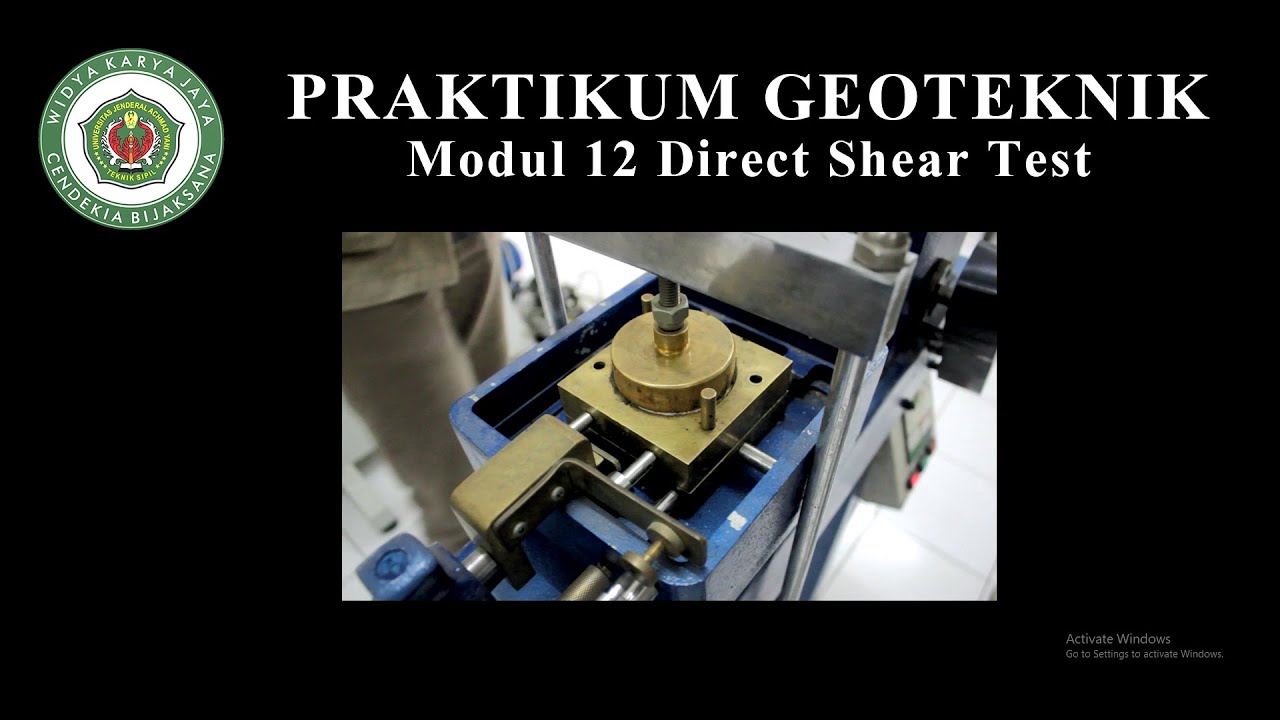
Praktikum Geoteknik - MODUL 12 UJI KUAT GESER LANGSUNG TANAH (DIRECT SHEAR TEST)

Pengujian Penetrasi Aspal

Panduan Penerapan SNI Getah Jelutung

ANALISA ALKALINITY, TDS, TSS PADA AIR SUNGAI DAN AIR FILTRASI

Pengujian Penetrasi Aspal

Part 1 : Analisa Cu : Air Minum Dalam Kemasan (SNI 3553:2015) dengan Instrumen AAS Shimadzu AA7000
5.0 / 5 (0 votes)

