The “More Content” Lie That’s Destroying Your SEO (Shopify Example)
Summary
TLDRIn this episode, PR Singh discusses the pitfalls of low-effort, AI-generated content in SEO, particularly focusing on Google’s recent algorithm updates. He emphasizes the risks of over-publishing content and targeting broad, low-quality keywords, which may work temporarily for large companies but can severely harm small businesses in the long run. The conversation also touches on the importance of quality over quantity in content creation, the challenges of recovering from Google penalties, and the dangers of mimicking high-authority sites like Shopify without understanding the full scope of their strategies. Ultimately, the message is clear: think long-term and be strategic with SEO efforts.
Takeaways
- 😀 Google is targeting low-effort AI-generated content, especially on large websites with a high volume of pages, such as Shopify's blog subfolders.
- 😀 Just because a strategy works for big companies like Shopify doesn’t mean it's a good approach for smaller businesses, as they are more likely to be penalized by Google.
- 😀 AI-generated content isn't inherently bad, but it becomes problematic when it's generic, filler content that adds little value to users.
- 😀 SEO success comes from creating high-quality, targeted content rather than publishing a large volume of generic pages.
- 😀 Google’s algorithm updates can severely affect a site’s traffic, especially if it uses large amounts of AI-generated content without providing real value.
- 😀 Small businesses should avoid replicating the tactics of larger companies, especially when they rely on mass content publishing, as it’s not sustainable in the long run.
- 😀 Building domain authority gradually is key to SEO success, especially for smaller businesses that don’t have the same leverage as big corporations.
- 😀 High-converting pages with well-targeted keywords should be the focus for long-term SEO growth, not trying to rank for every possible query.
- 😀 AI-generated content can be improved by adding human elements like unique insights or multimedia (images and videos), which help provide real value to users.
- 😀 SEO strategies that involve mass content publishing, like targeting a wide array of 'best' keywords, often lead to temporary traffic spikes followed by long-term declines once Google updates its algorithm.
Q & A
What is the main issue being discussed regarding AI-generated content in SEO?
-The main issue discussed is how Google’s recent algorithm updates are targeting low-effort AI-generated content, particularly in large volumes. This content often lacks real value and leads to a decline in organic traffic, especially for websites that scale content rapidly without focusing on quality.
Why do larger companies like Shopify seem to get away with mass content publishing?
-Larger companies like Shopify have high domain authority and strong backlink profiles, which allow them to absorb the negative effects of scaling content quickly. However, this strategy still leads to a decline in organic traffic over time, especially when their content lacks true value.
What is meant by 'low-effort AI-generated content'?
-Low-effort AI-generated content refers to generic, filler content that provides little value to the user. This includes common phrases, listicles, or articles with overly broad topics and no meaningful insights, often produced quickly with AI tools without much human oversight.
How does Google's algorithm treat AI-generated content?
-Google’s algorithm targets AI-generated content that appears to lack originality or real value. This content is often flagged for being overly generic or repetitive, and websites publishing such content can see a drop in their search engine rankings and organic traffic.
What are 'best articles' in the context of SEO, and why are they problematic?
-'Best articles' are SEO-focused content that list top products, services, or tools (e.g., 'Best affiliate programs'). While they can attract traffic, they are often written using AI to rank for specific keywords. The problem arises when these articles are overly broad or lack depth, making them less useful for users and more likely to be penalized by Google’s algorithm.
What role does 'domain authority' play in SEO for large companies?
-Domain authority is a key factor that helps larger companies maintain their search rankings even when using less optimal SEO tactics like mass content publishing. High domain authority allows these websites to absorb the negative effects of algorithm changes for a longer period compared to smaller websites.
How can small businesses avoid the pitfalls of low-effort content?
-Small businesses should focus on creating high-quality, niche-specific content that answers specific user queries. Instead of publishing vast amounts of content, they should prioritize value-driven, high-converting pages that align with their target audience's needs.
What is the concept of 'compact keywords' in SEO?
-Compact keywords is an SEO strategy where businesses create shorter, more targeted content pages (around 400-500 words) that directly address specific buyer intents. This method requires less work than traditional SEO and tends to have higher conversion rates.
What are some signs of AI-generated writing, and how can they be detected?
-Signs of AI-generated writing include generic opening phrases, repetition, lack of nuance, and unnatural phrasing. Tools like Wikipedia's 'signs of AI writing' offer guidelines on recognizing these patterns, and SEO experts often use their experience to spot these indicators in content.
How can businesses recover from the effects of a Google algorithm update?
-Recovery from a Google algorithm update can take years for some businesses. It requires rethinking content strategy, ensuring high-quality content that meets user intent, and adhering to white-hat SEO practices. In some cases, businesses may need to reconsider their entire domain strategy to regain ranking and visibility.
Outlines

Dieser Bereich ist nur für Premium-Benutzer verfügbar. Bitte führen Sie ein Upgrade durch, um auf diesen Abschnitt zuzugreifen.
Upgrade durchführenMindmap

Dieser Bereich ist nur für Premium-Benutzer verfügbar. Bitte führen Sie ein Upgrade durch, um auf diesen Abschnitt zuzugreifen.
Upgrade durchführenKeywords

Dieser Bereich ist nur für Premium-Benutzer verfügbar. Bitte führen Sie ein Upgrade durch, um auf diesen Abschnitt zuzugreifen.
Upgrade durchführenHighlights

Dieser Bereich ist nur für Premium-Benutzer verfügbar. Bitte führen Sie ein Upgrade durch, um auf diesen Abschnitt zuzugreifen.
Upgrade durchführenTranscripts

Dieser Bereich ist nur für Premium-Benutzer verfügbar. Bitte führen Sie ein Upgrade durch, um auf diesen Abschnitt zuzugreifen.
Upgrade durchführenWeitere ähnliche Videos ansehen

Does Google Penalize AI Content? New SEO Case Study (2024)

How AI Is Destroying the Lives of Creators (Including Us)
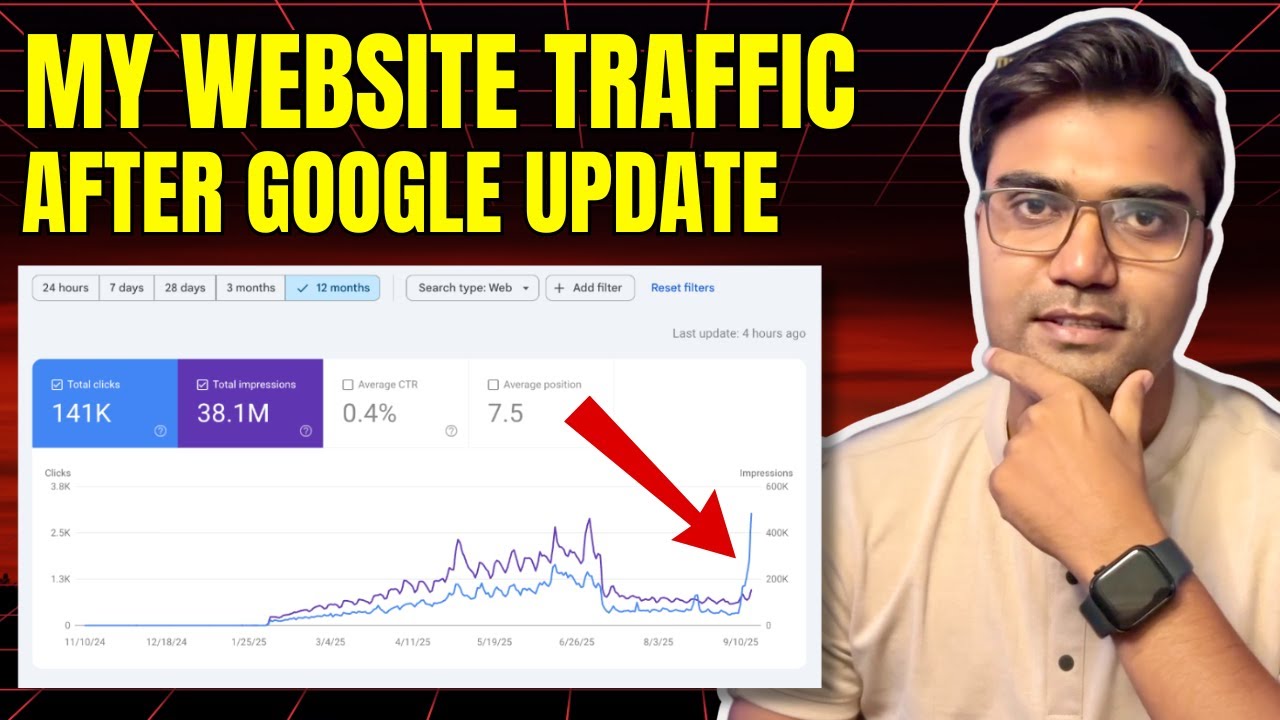
My Website Traffic After Google Spam Update 2025
Google Killed SEO: Here’s what to do next…

SEO Experiments That Prove Everyone Wrong - Google Leaks, AI Myths & Ranking Signals

Google Maps Ranking 2026: 10 Proven Signals That STILL Work (LIVE)
5.0 / 5 (0 votes)

