การใช้งานลิขสิทธิ์ที่เป็นธรรม ตอนที่ 1/2 (วิทยาการคำนวณ ม.3 บทที่ 6)
Summary
TLDRThis video explains the concept of copyright and fair use, emphasizing the importance of understanding intellectual property rights. It covers the definition of copyright, the protection it offers creators, and the exceptions for fair use, such as using copyrighted works for educational purposes. Key factors for fair use include the purpose of usage, the originality of the work, the amount used, and the potential market impact. The video aims to guide students on how to use copyrighted works ethically while respecting the rights of creators.
Takeaways
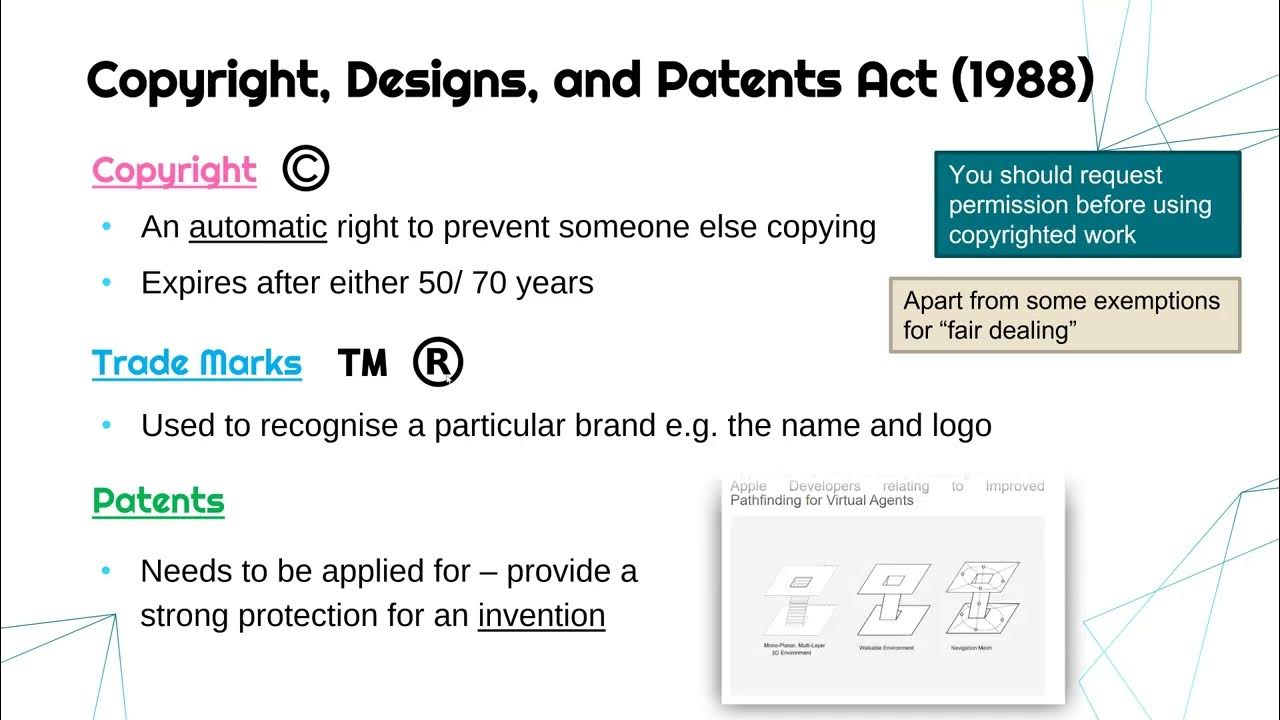
- 😀 Copyright refers to the exclusive rights of the creator to their original work, preventing others from copying or using it without permission.
- 😀 Works protected by copyright include music, books, movies, and other creative content.
- 😀 Copyright protection is automatic and does not require formal registration in many jurisdictions.
- 😀 Fair use allows limited use of copyrighted works without permission for purposes like education or commentary, depending on the jurisdiction's laws.
- 😀 When using copyrighted material, it's important to get permission from the owner unless the use falls under fair use exceptions.
- 😀 Fair use is evaluated based on several factors, including the purpose, nature, amount, and impact on the market for the original work.
- 😀 The purpose of using copyrighted content must not be for commercial gain or profit for it to be considered fair use.
- 😀 The nature of the copyrighted content must also be considered—using highly creative or original works is less likely to be deemed fair use.
- 😀 Using large portions or significant parts of a copyrighted work could be seen as infringement, even if used for non-commercial purposes.
- 😀 Fair use must not harm the market value of the original work or affect its commercial viability, such as copying a book that is still being sold.
Q & A
What is the main topic of the video script?
-The main topic of the video is about copyright and fair use, specifically how students can understand and apply these concepts in a legal context.
What is the definition of copyright mentioned in the video?
-Copyright is described as the exclusive right of an individual to create and use a work that is original, requiring creativity, effort, and skill, without copying from others. This work is protected by law even without formal registration.
What are the two key aspects to be considered when using copyrighted work?
-The two key aspects are the purpose and nature of the use, and the impact on the market value of the copyrighted work.
What are the exceptions to needing permission to use copyrighted works?
-One exception is fair use, where certain uses, like for education or critique, might not require explicit permission from the copyright holder.
What are the considerations for using copyrighted material fairly?
-The considerations include the purpose of use (such as for non-profit or educational purposes), the nature of the work, the amount of the work used, and the potential impact on the market value of the original work.
How does the script describe fair use in the context of education?
-Fair use in education refers to using copyrighted materials for educational purposes, such as in teaching, without seeking permission, as long as the use meets certain legal criteria.
What is said about the amount of copyrighted material that can be used under fair use?
-The script advises against using too much of a copyrighted work. The amount should not be excessive to avoid infringing on the copyright holder’s rights.
What happens if copyrighted work is used in a way that negatively impacts the market?
-If the use negatively affects the market value of the work, such as by reducing sales, it would be considered an unfair use, potentially violating copyright laws.
What examples of copyrighted works are mentioned in the video?
-Examples include books, songs, and movies, which are all works that may be protected under copyright law.
How should students approach using copyrighted material for reviews or critiques?
-Students should ensure that the use of copyrighted material is within the fair use guidelines, especially by considering how much of the work is used and ensuring it does not harm the original work's market value.
Outlines

Dieser Bereich ist nur für Premium-Benutzer verfügbar. Bitte führen Sie ein Upgrade durch, um auf diesen Abschnitt zuzugreifen.
Upgrade durchführenMindmap

Dieser Bereich ist nur für Premium-Benutzer verfügbar. Bitte führen Sie ein Upgrade durch, um auf diesen Abschnitt zuzugreifen.
Upgrade durchführenKeywords

Dieser Bereich ist nur für Premium-Benutzer verfügbar. Bitte führen Sie ein Upgrade durch, um auf diesen Abschnitt zuzugreifen.
Upgrade durchführenHighlights

Dieser Bereich ist nur für Premium-Benutzer verfügbar. Bitte führen Sie ein Upgrade durch, um auf diesen Abschnitt zuzugreifen.
Upgrade durchführenTranscripts

Dieser Bereich ist nur für Premium-Benutzer verfügbar. Bitte führen Sie ein Upgrade durch, um auf diesen Abschnitt zuzugreifen.
Upgrade durchführen



5.0 / 5 (0 votes)

