Marbury v. Madison | US government and civics | Khan Academy
Summary
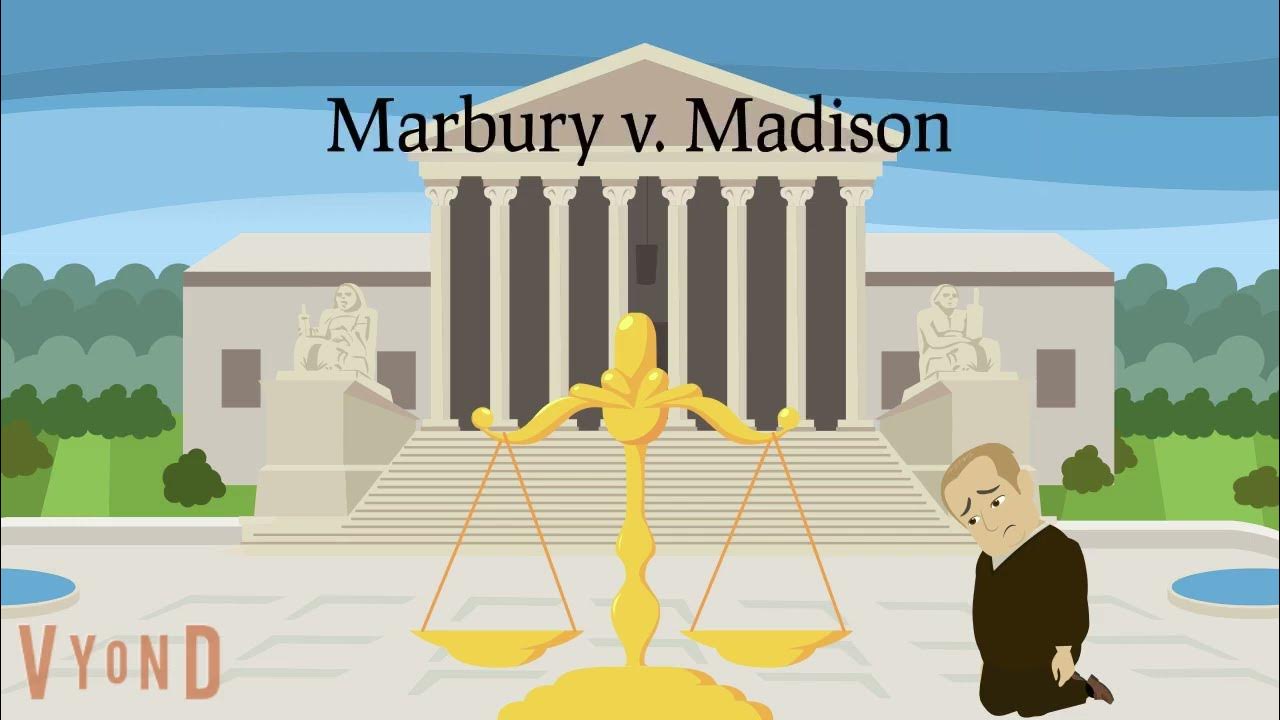
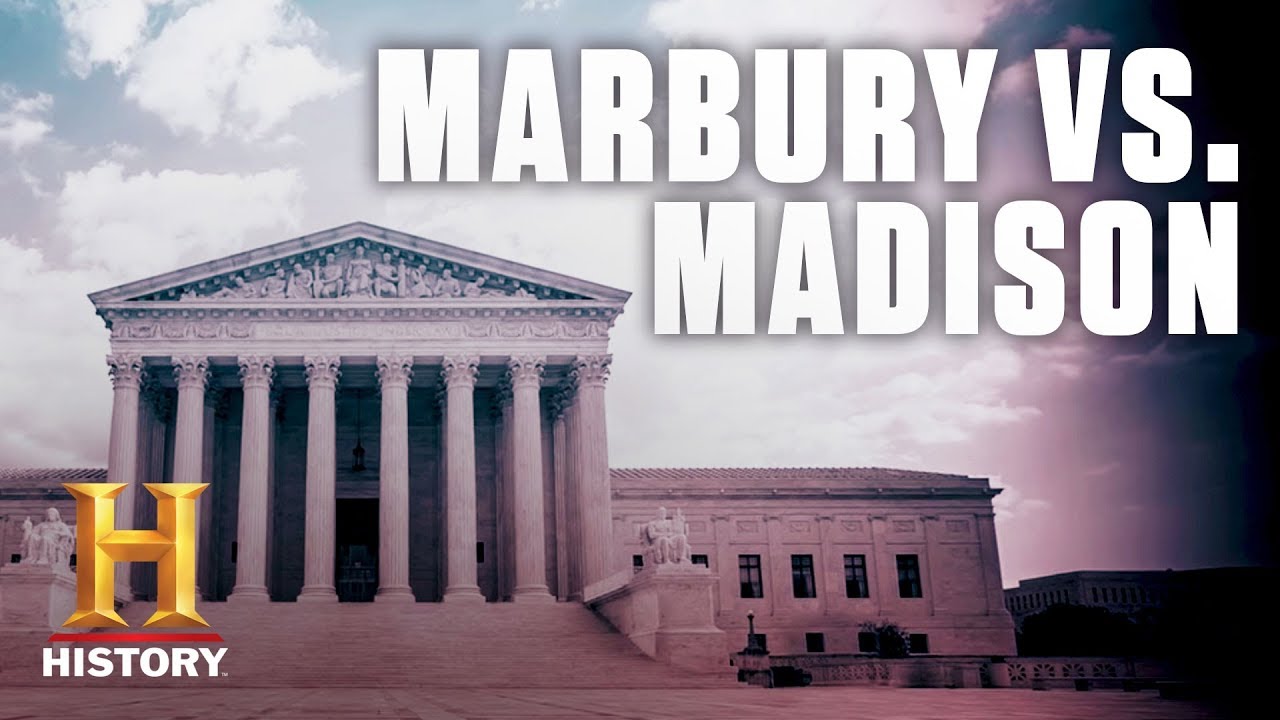
TLDRThe video explores the historical significance of the 1803 Supreme Court case Marbury v. Madison, which established the principle of Judicial Review. It details the political tensions following the 1800 election, where outgoing President John Adams appointed Federalist judges in a last-minute effort to influence the judiciary, provoking the incoming Jefferson Administration. William Marbury sued for his appointment as a justice of the peace, and Chief Justice John Marshall's ruling ultimately denied his claim, asserting that the Constitution supersedes conflicting laws. This case set the stage for the Court’s role in reviewing the constitutionality of laws, ensuring a balance of power between the branches of government.
Takeaways
- 😀 The Marbury v. Madison case (1803) established the principle of judicial review, giving the Supreme Court the power to declare laws and actions unconstitutional.
- 😀 The case arose after President John Adams appointed several 'midnight judges' just before leaving office, including William Marbury, who was denied his commission by Jefferson's administration.
- 😀 Thomas Jefferson’s administration, led by Secretary of State James Madison, refused to deliver the commission, leading Marbury to file a lawsuit in the Supreme Court.
- 😀 Marbury filed his lawsuit directly in the Supreme Court, which was unusual as the Court typically hears appeals, not original cases.
- 😀 Chief Justice John Marshall faced a dilemma: ordering Madison to deliver the commission would likely be ignored, but not issuing a ruling could weaken the Court’s authority.
- 😀 Marshall ruled that the law allowing Marbury’s case to be heard was unconstitutional because it gave the Court jurisdiction beyond what the Constitution allowed.
- 😀 This decision established the principle of judicial review, where the Court has the authority to invalidate laws or actions that contradict the Constitution.
- 😀 Judicial review became a key function of the judiciary, allowing the Court to act as a check on the powers of the executive and legislative branches.
- 😀 Marbury v. Madison did not result in Marbury getting his commission, but it profoundly shaped the role of the Supreme Court in American government.
- 😀 The ruling emphasized that no one, not even the President or Congress, is above the law, setting a precedent for future legal cases regarding constitutionality.
- 😀 The decision was critical in strengthening the judicial branch of the U.S. government and continues to be central to legal debates about the balance of power among the branches.
Q & A
What is Marbury v. Madison primarily known for in U.S. constitutional law?
-Marbury v. Madison is primarily known for establishing the principle of judicial review, which gives the Supreme Court the authority to declare acts of Congress or the President unconstitutional.
What historical event set the stage for the Marbury v. Madison case?
-The election of 1800 set the stage for the case. It marked the first peaceful transfer of power between political parties, from the Federalists under John Adams to the Democratic-Republicans under Thomas Jefferson.
Who was William Marbury, and why did he bring the lawsuit?
-William Marbury was a Federalist appointee named as a justice of the peace in Washington, DC, by President John Adams. He brought the lawsuit because his commission was not delivered after Thomas Jefferson took office.
Why were the judges appointed by John Adams called the 'Midnight Judges'?
-They were called the 'Midnight Judges' because they were appointed in the final hours of John Adams’ presidency, just before Thomas Jefferson assumed office.
What role did John Marshall play in this case?
-John Marshall was the Chief Justice of the Supreme Court who authored the decision in Marbury v. Madison. He was also Secretary of State under John Adams and had failed to deliver Marbury’s commission.
Why did the Jefferson administration refuse to deliver Marbury’s commission?
-The Jefferson administration viewed the late Federalist appointments as an attempt to pack the judiciary and undermine the new Democratic-Republican government, so they refused to deliver the commissions.
What is a writ of mandamus, and why was it important in this case?
-A writ of mandamus is a court order directing a government official to perform a specific duty. Marbury sought a writ of mandamus to force Secretary of State James Madison to deliver his commission.
Why did the Supreme Court ultimately rule against Marbury?
-The Court ruled against Marbury because it determined that it lacked original jurisdiction in the case. The federal statute granting the Court that jurisdiction was found to be unconstitutional.
How did John Marshall balance legal reasoning with political strategy in his decision?
-Marshall avoided directly ordering the Jefferson administration to act, which would likely have been ignored, while still asserting the Court’s authority by declaring part of a federal law unconstitutional.
How does judicial review function as a check on the other branches of government?
-Judicial review allows courts to invalidate laws or executive actions that violate the Constitution, preventing Congress or the President from enforcing unconstitutional measures.
Did the framers of the Constitution explicitly authorize judicial review?
-No, the Constitution does not explicitly authorize judicial review. While some framers supported the idea, it was not thoroughly debated or clearly stated in the Constitution.
Why is Marbury v. Madison considered a foundational case for the Supreme Court?
-The case strengthened the Supreme Court’s role as the interpreter of the Constitution and established its power to review and invalidate unconstitutional laws, shaping the balance of power in the U.S. government.
Outlines

Dieser Bereich ist nur für Premium-Benutzer verfügbar. Bitte führen Sie ein Upgrade durch, um auf diesen Abschnitt zuzugreifen.
Upgrade durchführenMindmap

Dieser Bereich ist nur für Premium-Benutzer verfügbar. Bitte führen Sie ein Upgrade durch, um auf diesen Abschnitt zuzugreifen.
Upgrade durchführenKeywords

Dieser Bereich ist nur für Premium-Benutzer verfügbar. Bitte führen Sie ein Upgrade durch, um auf diesen Abschnitt zuzugreifen.
Upgrade durchführenHighlights

Dieser Bereich ist nur für Premium-Benutzer verfügbar. Bitte führen Sie ein Upgrade durch, um auf diesen Abschnitt zuzugreifen.
Upgrade durchführenTranscripts

Dieser Bereich ist nur für Premium-Benutzer verfügbar. Bitte führen Sie ein Upgrade durch, um auf diesen Abschnitt zuzugreifen.
Upgrade durchführenWeitere ähnliche Videos ansehen



5.0 / 5 (0 votes)

