ASCENSÃO DA ALEMANHA NAZISTA
Summary
TLDRThis video, presented by Professor Raphael, explores the rise of Nazism in Germany, contextualizing it within the aftermath of World War I and the economic and political crises of the Weimar Republic. It covers key events such as the abdication of Kaiser Wilhelm II, the Spartacist Revolt, Hitler’s early involvement in the National Socialist German Workers' Party, and the failed Beer Hall Putsch. The video also examines Hitler’s rise to chancellorship, the Reichstag fire, the establishment of a one-party state, the creation of concentration camps, and the implementation of discriminatory laws against Jews and other groups. Pivotal episodes like the Night of the Long Knives and Kristallnacht illustrate the consolidation of Nazi power and the onset of systemic persecution.
Takeaways
- 🌍 The aftermath of World War I created political and economic instability in Germany, setting the stage for extremist movements like Nazism.
- 🏛️ The abdication of Kaiser Wilhelm II in 1918 led to the establishment of the Weimar Republic, Germany's first democratic government.
- ⚔️ The Spartacist uprising in 1919 was an early attempt at a socialist revolution, suppressed with the help of nationalist militias.
- 🎯 Adolf Hitler joined the German Workers' Party, later renamed the National Socialist German Workers' Party (NSDAP), attracted by its nationalist ideology.
- 📜 Hitler’s book 'Mein Kampf,' written during his imprisonment after the failed Munich Putsch in 1923, outlined the ideological foundations of Nazism, including antisemitism and Aryan superiority.
- 📉 The Great Depression in 1929 worsened Germany's economic crisis, significantly increasing support for the Nazi Party.
- 🏛️ By 1932, the Nazi Party became the largest parliamentary force, though Hitler initially lost the presidential election to Paul von Hindenburg.
- 💼 Hitler was appointed Chancellor in January 1933, marking the beginning of Nazi consolidation of power.
- 🔥 The Reichstag Fire in 1933 allowed the Nazis to suppress civil liberties, target political opponents, and establish authoritarian rule.
- 🔒 The Night of the Long Knives in 1934 eliminated internal party rivals, securing Hitler’s absolute control over the Nazi Party.
- ⚖️ Nuremberg Laws in 1935 institutionalized racial discrimination against Jews, restricting their rights and laying groundwork for later persecution.
- 💣 Kristallnacht in 1938 was a violent pogrom against Jews, signaling the intensification of state-sponsored antisemitism and the approach of the Holocaust.
Q & A
What was the political situation in Germany after World War I?
-After World War I, Germany was devastated both economically and politically. The abdication of Kaiser Wilhelm II led to the establishment of the Weimar Republic in 1918, a new republican government. This was initially dominated by the Social Democratic Party (SPD), but it faced challenges from both far-right and far-left movements, including the Spartacist Revolution of 1919.
How did the Weimar Republic deal with extremist movements?
-The Weimar Republic struggled with internal instability, especially from extremist movements on both the far-right and far-left. In 1919, the government collaborated with nationalist military groups, such as the Freikorps, to suppress the left-wing Spartacist uprising. Despite this, the government remained vulnerable to further political unrest.
What role did Adolf Hitler play in the early stages of the Nazi Party?
-Adolf Hitler initially became involved with the German Workers' Party (DAP), a nationalist and far-right group, in 1919. Recognizing his oratory skills, the party leadership recruited him. By 1920, Hitler became an official member, and the party was renamed the National Socialist German Workers' Party (NSDAP), or the Nazi Party. Hitler's leadership was instrumental in the party's growth.
What was the significance of the 'Beer Hall Putsch' in 1923?
-The Beer Hall Putsch was a failed coup attempt by Hitler and the Nazi Party in November 1923, aimed at overthrowing the Weimar government. The coup was crushed, and Hitler was arrested and sentenced to prison. This event, however, provided Hitler with a platform to spread his ideas, and he used his time in prison to write his autobiography and ideological work 'Mein Kampf.'
What was the impact of the 1929 Great Depression on Nazi Germany?
-The 1929 Great Depression severely worsened Germany's economic crisis, leading to widespread unemployment and social unrest. This created an environment where extremist parties, including the Nazis, gained significant support. In the 1930 federal elections, the Nazi Party saw a dramatic rise in its representation in the Reichstag, becoming the second-largest party in the German parliament.
How did Hitler rise to power in Germany?
-Hitler's rise to power was facilitated by the political and economic instability of the Weimar Republic. In 1932, the Nazi Party became the largest party in the Reichstag, though it did not have a majority. After a series of backroom deals and political pressures, President Paul von Hindenburg appointed Hitler as Chancellor in January 1933. This marked the beginning of Hitler's authoritarian rule.
What happened after the Reichstag fire in February 1933?
-The Reichstag fire in February 1933, which remains controversial in terms of who was responsible, allowed the Nazis to consolidate power. Hitler used the event to push through the Reichstag Fire Decree, which suspended civil liberties and allowed for the arrest of political opponents. This paved the way for the Nazis to suppress opposition and move toward totalitarian rule.
What was the 'Night of the Long Knives' in 1934?
-The 'Night of the Long Knives' in 1934 was a purge in which Hitler ordered the execution of key leaders within the Nazi Party and the SA (Sturmabteilung), including Ernst Röhm, who was seen as a potential rival. This action solidified Hitler's control over the Nazi Party and eliminated internal threats to his leadership.
What were the Nuremberg Laws of 1935?
-The Nuremberg Laws, enacted in 1935, were a set of discriminatory laws aimed at marginalizing Jews and other minorities in Nazi Germany. The laws deprived Jews of their citizenship, prohibited intermarriage between Jews and Aryans, and restricted their rights to participate in public life. These laws institutionalized racial segregation and discrimination.
What was the role of the SS (Schutzstaffel) in Nazi Germany?
-The SS (Schutzstaffel) played a central role in the enforcement of Nazi policies and the suppression of opposition. Originally created as Hitler's personal bodyguard, it grew into a powerful organization with multiple branches. The SS managed the concentration camps, carried out mass arrests of political enemies, and was responsible for implementing the Final Solution, which led to the systematic genocide of Jews and other targeted groups.
Outlines

هذا القسم متوفر فقط للمشتركين. يرجى الترقية للوصول إلى هذه الميزة.
قم بالترقية الآنMindmap

هذا القسم متوفر فقط للمشتركين. يرجى الترقية للوصول إلى هذه الميزة.
قم بالترقية الآنKeywords

هذا القسم متوفر فقط للمشتركين. يرجى الترقية للوصول إلى هذه الميزة.
قم بالترقية الآنHighlights

هذا القسم متوفر فقط للمشتركين. يرجى الترقية للوصول إلى هذه الميزة.
قم بالترقية الآنTranscripts

هذا القسم متوفر فقط للمشتركين. يرجى الترقية للوصول إلى هذه الميزة.
قم بالترقية الآنتصفح المزيد من مقاطع الفيديو ذات الصلة

¿Qué es el Nazismo alemán? | Historia Educatina
The Whole of AQA GCSE History; Germany 1890–1945. Democracy and Dictatorship | GCSE History Revision
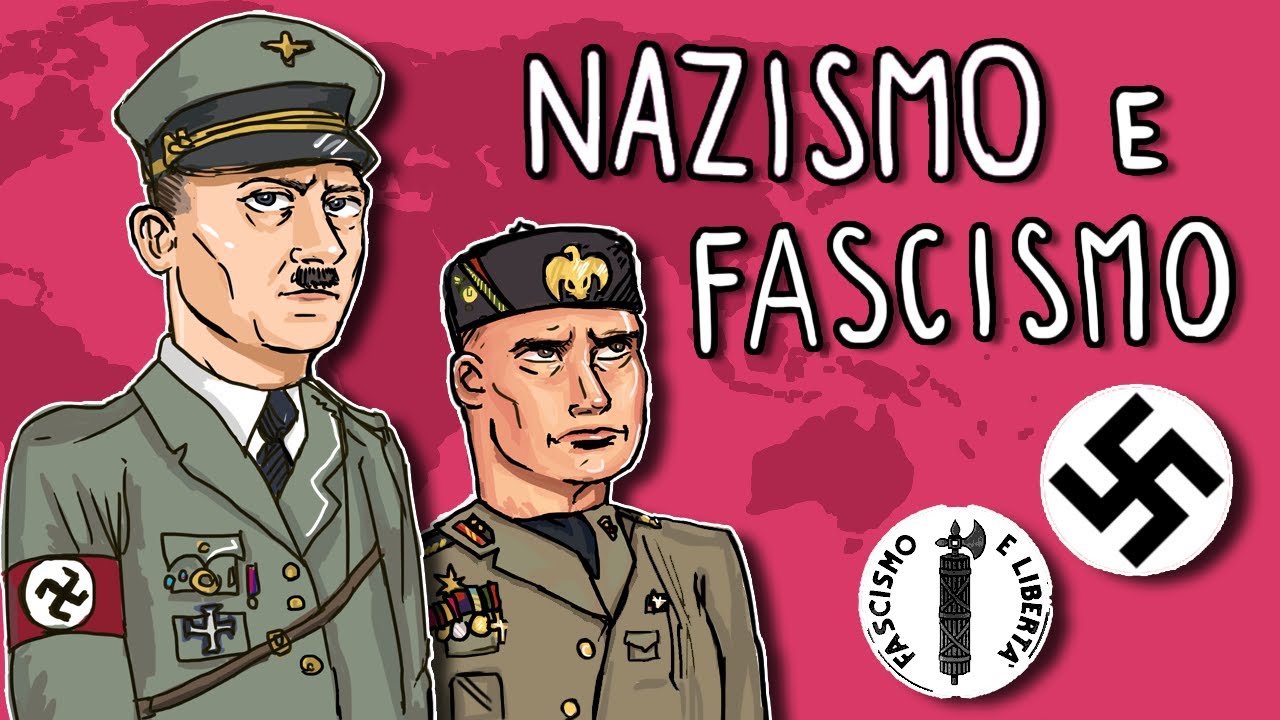
NAZISMO E FASCISMO - Resumo Desenhado
What Caused the Rise of Nazi Germany

Geschichte: Österreich in der Zwischenkriegszeit einfach und kurz erklärt

Totalitarianism After WWI: The Rise of Italian Fascism, German Nazism, and Soviet Stalinism
5.0 / 5 (0 votes)

