Fizyka od podstaw: Czy Fale elektromagnetyczne, promieniowanie, światło jest tym samym?
Summary
TLDRThis video explores the fascinating world of electromagnetic waves, explaining how they are invisible yet essential to our daily lives. The script covers the discovery and theory behind these waves, from early experiments by Faraday and Maxwell to the modern-day uses in technology, medicine, and space exploration. It delves into the different types of electromagnetic waves, including visible light, radio waves, microwaves, and X-rays, while discussing their varying energy levels and applications. The video also highlights how scientists use these waves to study distant planets and improve our everyday lives.
Takeaways
- 😀 Electromagnetic waves are invisible but essential to our daily lives, surrounding us and even penetrating our bodies.
- 😀 These waves were first theorized in the 1800s, with major discoveries by scientists like Faraday and Maxwell.
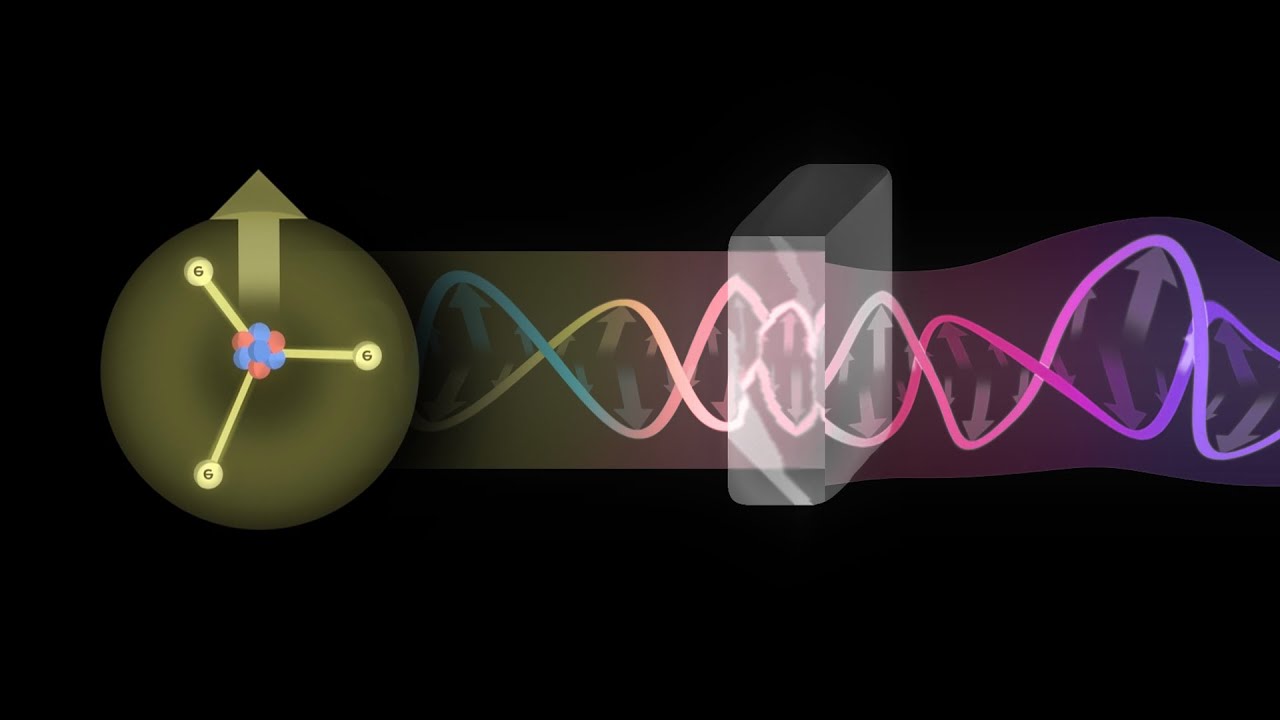
- 😀 Electromagnetic waves consist of changing electric and magnetic fields that propagate through space.
- 😀 The spectrum of electromagnetic waves ranges from very short gamma rays to very long radio waves.
- 😀 Different types of electromagnetic waves have different energies, with gamma rays having the highest and radio waves the lowest.
- 😀 The human eye can only detect visible light, which is a small part of the electromagnetic spectrum (400–700 nanometers).
- 😀 Some animals, like reindeer and certain rodents, can see ultraviolet light, which is invisible to humans.
- 😀 Electromagnetic waves are used in a wide range of technologies, including Wi-Fi, cellphones, GPS, and television broadcasts.
- 😀 These waves can be reflected, absorbed, or transmitted when they interact with objects, such as leaves reflecting green light.
- 😀 Devices like telescopes, infrared cameras, and X-ray machines use electromagnetic waves to study space, detect heat, and ensure safety in medicine and airports.
- 😀 Understanding the properties of electromagnetic waves helps us with practical applications in science, medicine, and technology, such as diagnosing fractures or analyzing distant planets.
Q & A
What are electromagnetic waves, and why are they significant?
-Electromagnetic waves are waves that propagate through space and carry energy. They are significant because they surround us daily and are crucial for various technologies, even though we cannot always see or feel them. Without these waves, our modern world, with its communication systems and scientific advancements, wouldn't exist as we know it.
How did the discovery of electromagnetic waves evolve over time?
-The discovery of electromagnetic waves began with the observation of magnetic and electric fields in the early 19th century. Michael Faraday in 1831 discovered electromotive force, and in 1861, James Clerk Maxwell formulated the laws of electrodynamics, predicting the existence of electromagnetic waves. Heinrich Hertz experimentally confirmed their existence in 1886.
What is the relationship between electric and magnetic fields in electromagnetic waves?
-Electromagnetic waves are formed when a changing electric field creates a changing magnetic field, and vice versa. This interplay between the electric and magnetic fields propagates through space, carrying energy in the form of waves.
What is the electromagnetic spectrum, and how is it classified?
-The electromagnetic spectrum is the range of all electromagnetic waves, classified by wavelength and frequency. It includes waves from very short gamma rays to long radio waves. This spectrum is divided into categories based on their usage in technology and how they interact with matter, including gamma rays, X-rays, ultraviolet, visible light, infrared, microwaves, and radio waves.
What makes electromagnetic waves different from mechanical waves?
-Unlike mechanical waves, which need a medium like air or water to propagate, electromagnetic waves can travel through a vacuum, like space. Mechanical waves require an elastic medium, while electromagnetic waves can move without any medium at the speed of light.
Why can't humans see all electromagnetic waves?
-Humans can only see electromagnetic waves within the visible light range, which is between 400 to 700 nanometers. Waves outside this range, such as ultraviolet or infrared, are not detectable by the human eye.
How does visible light interact with objects to create color?
-When visible light interacts with objects, different wavelengths of light may be absorbed, reflected, or transmitted. For example, a leaf appears green because it reflects wavelengths between 492 and 577 nanometers, which are interpreted as green by the human eye, while other wavelengths are absorbed.
What are some practical applications of electromagnetic waves?
-Electromagnetic waves have numerous applications in daily life. These include visible light for vision, microwaves for cooking and communication, X-rays for medical imaging, infrared for thermal cameras, and radio waves for communication like Wi-Fi and GPS systems.
How do scientists use electromagnetic waves to study distant planets?
-By analyzing the spectrum of electromagnetic waves reflected from the surface of distant planets, scientists can determine their chemical composition, temperature, density, and even the presence of organic molecules or water.
What types of electromagnetic waves are used in medicine and technology?
-In medicine, X-rays are used for imaging, ultraviolet waves are used for sterilization, and infrared waves help detect heat sources. In technology, microwaves are used in cell phones and Wi-Fi, while radio waves enable communication systems like television and radio broadcasts.
Outlines

هذا القسم متوفر فقط للمشتركين. يرجى الترقية للوصول إلى هذه الميزة.
قم بالترقية الآنMindmap

هذا القسم متوفر فقط للمشتركين. يرجى الترقية للوصول إلى هذه الميزة.
قم بالترقية الآنKeywords

هذا القسم متوفر فقط للمشتركين. يرجى الترقية للوصول إلى هذه الميزة.
قم بالترقية الآنHighlights

هذا القسم متوفر فقط للمشتركين. يرجى الترقية للوصول إلى هذه الميزة.
قم بالترقية الآنTranscripts

هذا القسم متوفر فقط للمشتركين. يرجى الترقية للوصول إلى هذه الميزة.
قم بالترقية الآنتصفح المزيد من مقاطع الفيديو ذات الصلة



5.0 / 5 (0 votes)

