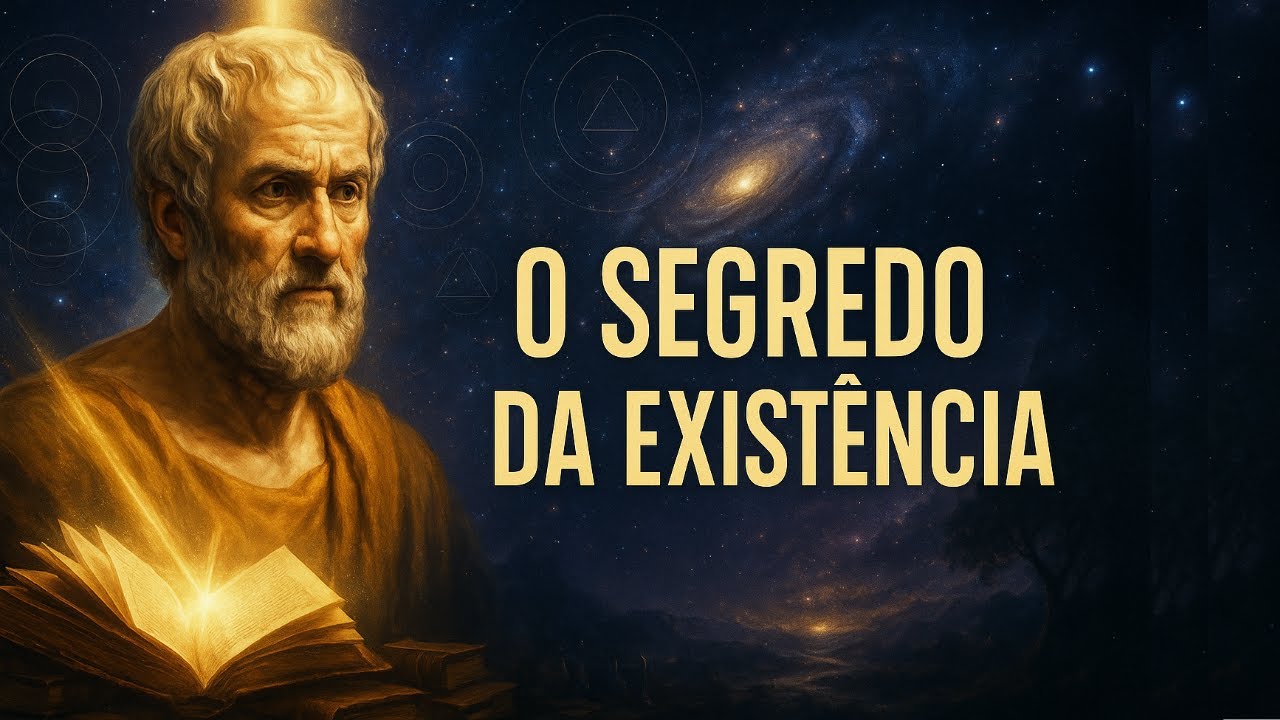
Matéria, forma, ato, potência, essência, acidente e substância | Aristóteles
Summary
TLDRAristotle explored the nature of reality, change, and the composition of beings, introducing key concepts such as matter, form, act, potency, essence, accident, and substance. He saw matter as the physical component containing potential, while form represents the actualized essence of a thing. Act and potency describe the current state versus possibilities. For humans, the body is matter, and the soul is form, responsible for life and rationality. Unlike Plato, Aristotle believed ideas are abstracted from real beings through observation. Essence defines what a thing fundamentally is, accidents are its non-essential traits, and substances combine these elements, forming the foundation of existence.
Takeaways
- 📚 Aristotle studied movement and change to understand how reality and beings transform.
- 🧱 Matter is the physical substance of things and contains the potential to become something else.
- ✨ Form is the essence of a thing that defines what it is and individualizes matter.
- ⚡ Potency (potentiality) is the capacity of something to become what it is not yet.
- 🎯 Act (actuality) is the realized state of a thing, what it already is.
- 🏺 Example: A lump of clay has the potential to become a jar or sculpture, and when shaped into a jar, it is the act.
- 🧍 Human example: The body is matter, the soul is form, responsible for rationality, sensation, movement, and life functions.
- 💡 Aristotle’s ideas (forms) are abstracted from real beings, unlike Plato’s ideas which exist separately.
- 🔑 Essence refers to essential characteristics that define a being, e.g., a human is a rational and political animal.
- 🎨 Accident refers to non-essential properties that do not change a being’s essence, like height or skin color.
- 🔗 Substance is the combination of matter and form, essence, accidents, and act/potency, representing each individual being.
- 🧠 Understanding a being involves observing real examples, separating matter and form, and identifying its essential characteristics.
Q & A
What was Aristotle trying to explain through his study of movement and transformation?
-Aristotle sought to explain how reality and living beings change and transform, as well as what composes beings and the necessary conditions for their existence.
What does Aristotle mean by 'matter'?
-Matter is the physical substance from which a thing is made. It is perceptible through the senses and contains the potential for transformation into something else.
What is the concept of 'potentiality' in Aristotle’s philosophy?
-Potentiality refers to the capacity or possibility for something to become another form. It represents what a thing is not yet, but could become.
How does Aristotle define 'form'?
-Form is the essence or defining characteristic of a thing. It is what gives individuality to matter and makes something what it truly is.
What is the difference between 'potentiality' and 'actuality'?
-Potentiality is the possibility of becoming something, while actuality is the fulfilled state in which that possibility has already been realized.
How does the example of clay illustrate Aristotle’s concepts?
-Clay has the potential to become many things, such as a jar or sculpture. Once it takes a specific shape, that new form represents its actuality.
What example does Aristotle use to explain potentiality and actuality in humans?
-A 20-year-old person is young in actuality but old in potentiality, meaning the person currently is young but has the capacity to become old.
According to Aristotle, what are the matter and form of a human being?
-The matter of a human is the body, composed of cells, organs, and systems. The form is the soul, which gives life and enables rationality, sensation, movement, and biological functions.
How does Aristotle’s view of forms differ from Plato’s theory of ideas?
-Plato believed ideas exist independently outside physical beings, while Aristotle argued that forms are derived from observing real objects and abstracting their essence through thought.
How would Aristotle explain understanding the idea of a cat?
-Aristotle would say we understand the idea of a cat by observing real cats and mentally separating their matter from their form to grasp the essence of 'catness.'
What is 'essence' according to Aristotle?
-Essence is the set of characteristics that make a thing what it fundamentally is. It refers to the defining function or nature of an object or being.
What example is given for the essence of an axe?
-The essence of an axe is being a cutting tool composed of a wooden handle and a metal blade positioned perpendicularly.
What does Aristotle consider the essential characteristic of human beings?
-Aristotle considers humans essentially rational and political animals, meaning their defining trait is the ability to reason and live in organized societies.
What are 'accidents' in Aristotle’s philosophy?
-Accidents are non-essential characteristics that can vary without changing the fundamental nature of a being.
Can you give examples of accidental characteristics in humans?
-Examples include being tall or short, male or female, or having different skin colors. These traits do not alter the essential nature of being human.
What is 'substance' according to Aristotle?
-Substance is the complete unity of matter and form, including essence, accidents, actuality, and potentiality. Every existing being is considered a substance.
Why is the soul important in Aristotle’s philosophy?
-The soul is the principle that gives life to the body. In humans, it is especially responsible for rational thought, sensations, movement, and vital biological functions.
How does Aristotle connect change to matter?
-Aristotle believes matter changes because it contains potentiality, which allows it to transform into different forms and states.
Outlines

此内容仅限付费用户访问。 请升级后访问。
立即升级Mindmap

此内容仅限付费用户访问。 请升级后访问。
立即升级Keywords

此内容仅限付费用户访问。 请升级后访问。
立即升级Highlights

此内容仅限付费用户访问。 请升级后访问。
立即升级Transcripts

此内容仅限付费用户访问。 请升级后访问。
立即升级


5.0 / 5 (0 votes)

