Biblioteca STL - Introdução
Summary
TLDRThis video explores the use of libraries and the Standard Template Library (STL) in C++, emphasizing their role in accelerating program development and promoting code reuse. It introduces key concepts such as containers, iterators, and algorithms, and explains how generic programming allows the same code to work with different data types using templates. The lesson highlights the advantages of STL, including efficient data organization, standardized access, and reliable implementations. Examples include sequential and associative containers, showing how elements are stored and retrieved. The video also touches on modularization and encourages understanding library interfaces over internal implementations.
Takeaways
- 📚 Libraries are collections of pre-written code that save time and effort by allowing reuse of implementations instead of writing everything from scratch.
- 📝 A library must have a well-defined interface and behavior, usually documented, to guide its proper usage.
- 🔧 The main goal is to use libraries effectively rather than fully understanding their internal implementation at first.
- 💡 Standard libraries, like C++’s Standard Template Library (STL), provide ready-to-use components for common programming tasks.
- 🗂️ STL is composed of three main components: containers (store elements), iterators (access elements), and algorithms (process elements).
- 🔀 Containers are data structures that store collections of elements; they can be sequential (maintain insertion order) or associative (maintain an internal sorted order).
- ⚙️ Iterators generalize pointers and allow consistent access and manipulation of elements in containers.
- 🔄 Algorithms operate on containers to process data, and their generic design allows them to work with multiple data types using templates.
- 🎛️ Templates enable generic programming by allowing components to work with unspecified types until instantiation, avoiding redundant code for different data types.
- 📈 Using STL containers improves program efficiency, ensures standardized access and manipulation of data, and leverages well-tested implementations.
- 🧩 Modular programming involves identifying parts of a program that can use libraries and those that need custom implementations, like skeleton components for further development.
- 🖇️ Choosing the appropriate container depends on the problem: sequential containers are good for ordered data, associative containers for fast searches and sorted organization.
Q & A
What is the main purpose of using libraries in programming?
-Libraries allow programmers to reuse existing code instead of writing everything from scratch, saving time and effort while ensuring reliable and well-documented implementations.
What defines a library in programming?
-A library is a collection of implementations written in a programming language that provides well-defined interfaces and behaviors, usually documented for correct usage.
What is the C++ standard library and what namespace does it use?
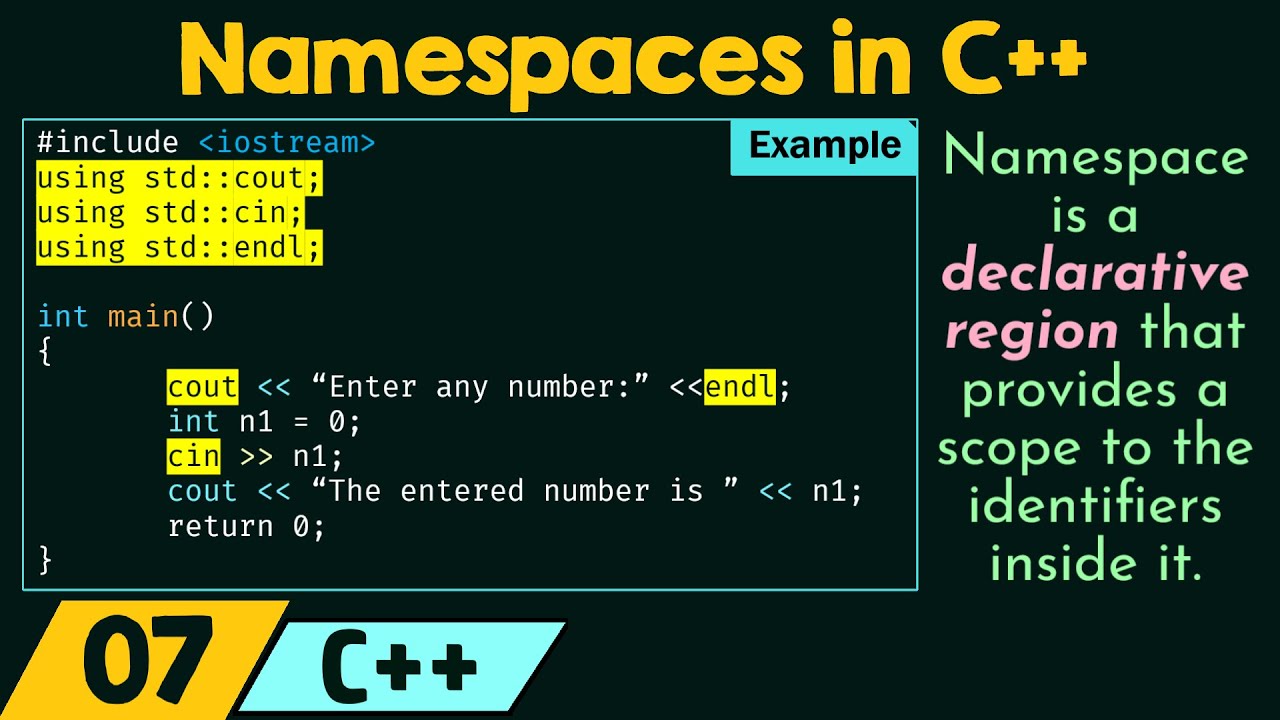
-The C++ standard library is a set of components for common programming tasks, such as strings, containers, and input/output operations. It uses the `std` namespace.
What are the three main components of the Standard Template Library (STL)?
-The three main components are containers (to store elements), iterators (to access elements in containers), and algorithms (to process container data).
What is the difference between sequential and associative containers in STL?
-Sequential containers maintain the order of elements as they are inserted, while associative containers organize elements internally, often using structures like binary search trees, independent of insertion order.
How does C++ implement generic programming and what advantage does it provide?
-C++ uses templates for generic programming, allowing the same code to work with different data types. This increases code flexibility and reduces duplication, as the specific type is provided when the component is used.
Why is focusing on the interface or contract of a library more important than understanding its internal implementation?
-Focusing on the interface allows programmers to correctly use a library without worrying about internal complexity. It ensures standardized, reliable access to components and data.
What is the role of iterators in STL?
-Iterators generalize pointers to provide access to elements stored in containers, allowing traversal and manipulation without depending on the container’s internal structure.
Why is it generally not recommended to import an entire namespace in C++?
-Importing an entire namespace can lead to name collisions and reduced code clarity. It's better to import only the components you need for safer and cleaner code.
What are some advantages of using containers from the STL?
-Advantages include efficient data organization, uniform access and manipulation of elements, reliable implementation, and well-documented, reusable components.
How do containers in STL improve program efficiency?
-Containers provide structured ways to store and retrieve data, which optimizes memory usage and processing time, and standardizes operations like insertion, access, and search.
When might it be necessary to implement your own collection instead of using a library?
-You might need a custom collection when the existing library solutions do not meet specific performance, behavior, or storage requirements for your application.
Outlines

このセクションは有料ユーザー限定です。 アクセスするには、アップグレードをお願いします。
今すぐアップグレードMindmap

このセクションは有料ユーザー限定です。 アクセスするには、アップグレードをお願いします。
今すぐアップグレードKeywords

このセクションは有料ユーザー限定です。 アクセスするには、アップグレードをお願いします。
今すぐアップグレードHighlights

このセクションは有料ユーザー限定です。 アクセスするには、アップグレードをお願いします。
今すぐアップグレードTranscripts

このセクションは有料ユーザー限定です。 アクセスするには、アップグレードをお願いします。
今すぐアップグレード関連動画をさらに表示

Iterators in c++ | STL | Part-1/2 | OOPs in C++ | Lec-58 | Bhanu Priya

Modular Programming, Widely-used C++ functions
Pointers and Dynamic Memory in C++ (Memory Management)
Namespaces in C++

26. OCR A Level (H446) SLR5 - 1.2 Linkers, loaders and libraries

C++ 01 | Cara Instalasi Dev C++ | Tutorial Dev C++ Indonesia
5.0 / 5 (0 votes)

